Allada, the Cradle of Toussaint Louverture and a Living Royal Court
Allada, an hour from Cotonou, holds the ancestral roots of Toussaint Louverture and a working royal palace where the king still holds court.
- Flag
-

- ISO code
- BJ
- Population
- 23,287
- Currency
- XOF
- Timezone
- Africa/Porto-Novo
Allada is Not a Stop. it is the Point.
The road from Cotonou to Abomey runs straight through Allada, and almost everyone blinks past it. That is a mistake. This small commune 60 km north of the capital holds three layered histories that most travelers never connect. It was the seat of the Kingdom of Allada, a 16th and 17th century power that predated Dahomey and fed the Atlantic slave trade. It is the birthplace of Gaou Guinou, taken from Allada as a captive, whose son became Toussaint Louverture, the leader of the Haitian Revolution. And it remains a working royal court. The monarch sits here today, not behind glass in a museum, but holding audiences in the same palace compound where his predecessors ruled. Most visitors who speed north to Abomey for its UNESCO palaces miss the living counterpart on Route Nationale Inter-Etats 2. You should not.
Arrive by bush taxi from Cotonou. Shared taxi-brousse vehicles leave continuously from the Dantokpa Market area and the Gare Routière de Cotonou. The journey takes roughly one hour on a paved but potholed road. Expect to pay around XOF 1,500 to 2,000 per person. Negotiate the fare before boarding. The driver will drop you at the central roundabout in Allada. That roundabout is where you find the first landmark you came for.
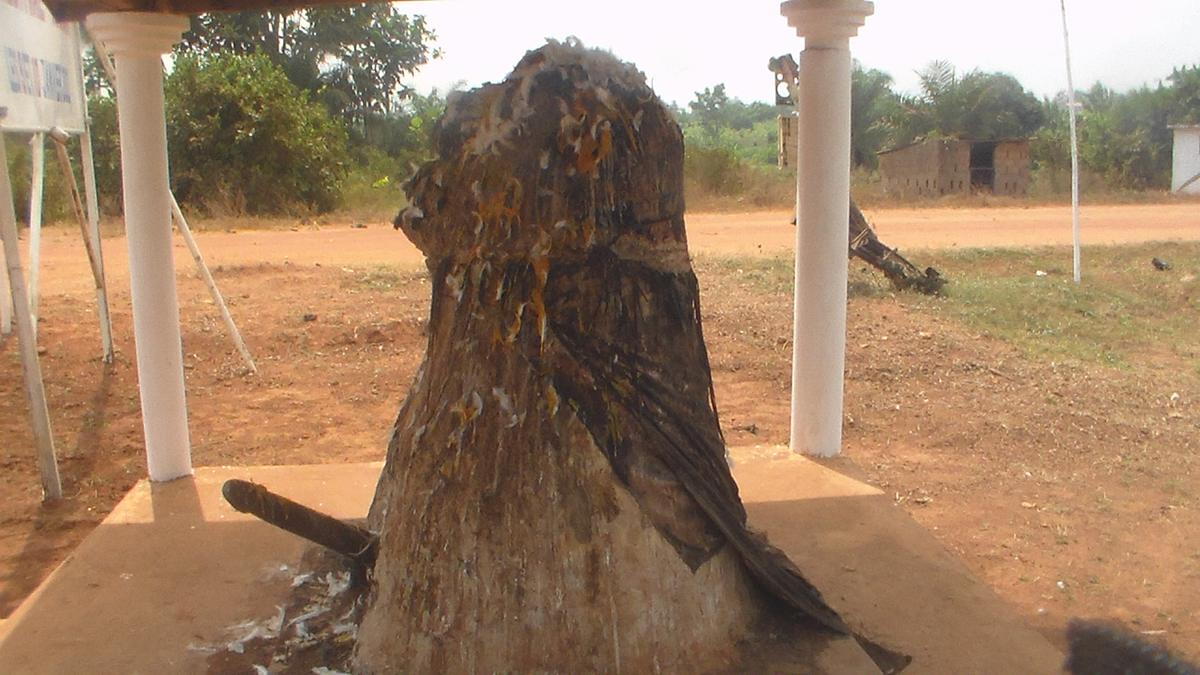

The Toussaint Louverture Statue and What it Asks of You
The Statue and the Palace Entrance
At the center of Allada stands a statue of Toussaint Louverture. The plaque names his father Gaou Guinou, taken from this kingdom as a captive. Stand here and read the inscription. Then ask yourself what it means that the father of the man who broke the Haitian plantations was sold from a palace steps away.
The statue is not the main event. It is the marker. From the roundabout, walk east on the main road for three minutes. You will see the entrance to the Royal Palace of Allada. This is a small museum inside a functioning royal compound. Do not treat it like a tourist site. Treat it like someone's home, because it is. The current monarch, the 13th King of Allada, holds court here. Audiences happen irregularly. If you want to meet him or observe a session, arrive early and ask the palace caretaker if the king is receiving visitors. Dress conservatively: covered shoulders and long trousers or skirts. Remove your shoes before entering interior rooms. Do not photograph the king or the interior without explicit permission. The royal guards enforce protocol, and they enforce it firmly.
Inside the Museum
The museum portion contains artifacts from the Kingdom of Allada: royal stools, ceremonial swords, pottery, and documents in French that explain the kingdom's role as a tributary to the Oyo Empire and its later conquest by Dahomey in 1724. Read the panels slowly. The Kingdom of Allada, also called Ardra or Arda, was not a minor chiefdom. It controlled the coast between modern Togo and Nigeria and supplied the European slave ships that anchored off Ouidah. That history sits uncomfortably next to the pineapple plantations that now define the local economy. Sugarloaf pineapples, the Cayenne lisse variety, grow in red-earth fields around the town. Vendors sell them from roadside tables for XOF 500 each. Buy one. They are so sweet they sting the inside of your mouth.
A Pre-Dahomean Kingdom That Fed the Slave Trade and a Living Court
A Kingdom That Refuses to Be a Museum
The Kingdom of Allada peaked in the 16th and 17th centuries. Dahomey, which later became the dominant power in southern Benin, began as a tributary of Allada. That relationship reversed violently in 1724, when Dahomey conquered Allada and absorbed its territory. The palace you visit today was rebuilt after that conquest and later restored in the 20th century, but the site itself has been a royal seat for generations.
What makes Allada different from the Royal Palaces of Abomey is that Abomey is a UNESCO World Heritage site preserved as a museum. Allada is not. The palace compound functions as a residence, a court, and a ceremonial space. If you come during a Vodun festival or a royal ceremony, you may see drumming, libations, and rituals that are not staged for photography. Do not record them without asking. Vodun is a living religion here, not a tourist show, and the ancestors of these families were part of the slave trade in ways that are still felt. Respect the weight of that history.
Where to Stay and How to Get North
The main road passing through Allada, RNIE 2, continues north 80 km to Abomey, a drive of about 1.5 hours. If you are staying in Cotonou and have only a day, you can visit Allada in the morning and reach Abomey by early afternoon. But that schedule is tight. The better plan is to overnight near Abomey or in Allada itself. Allada has no tourist hotels, but a few basic guesthouses, called auberges, operate near the market. Ask at the palace caretaker's office for the nearest clean option. Expect no Wi-Fi and no running water after sundown. Carry a power bank and your own toilet paper.
Market Day, Pineapple Routes, and What to Skip
Market Day
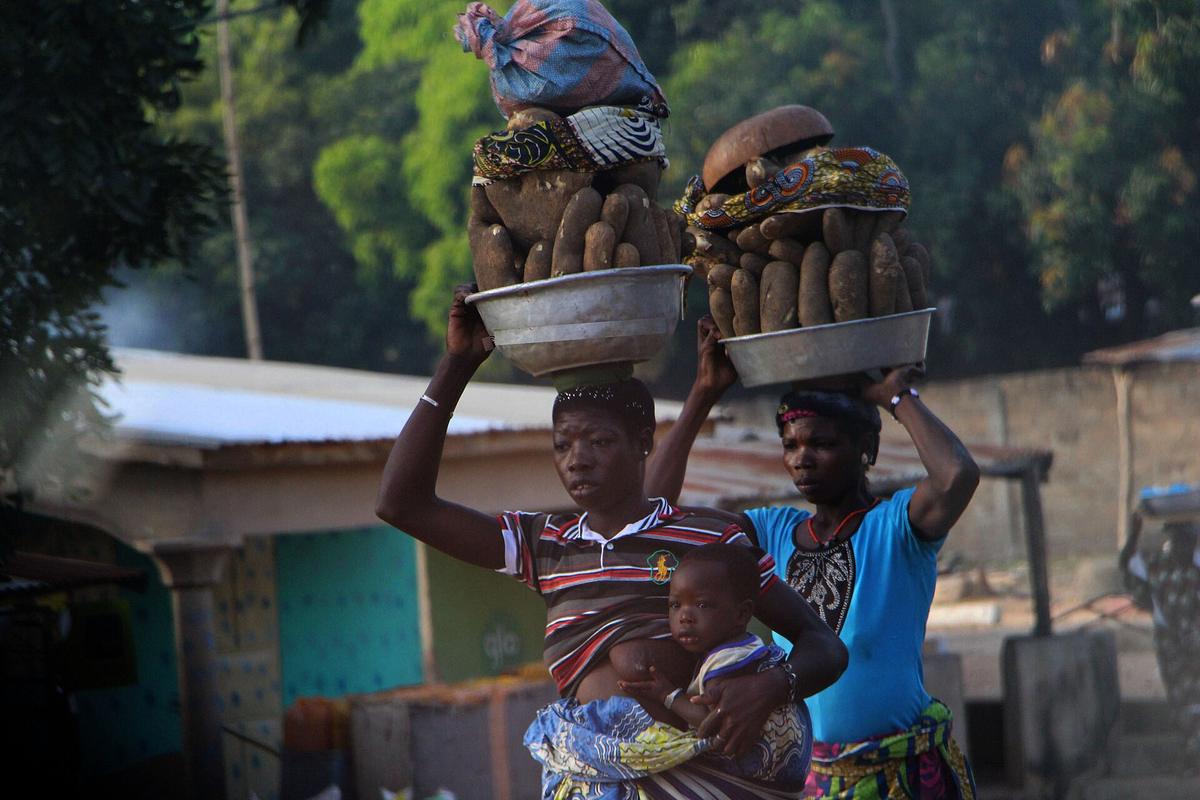
Allada's market operates on a four-day rotating cycle, standard across southern Benin. If you arrive on market day, the main road becomes impassable to vehicles for hours. That is a feature, not a bug. The market is the best place to eat: grilled fish, igname pilée, fried wagasi cheese. Carry small bills in XOF 500 and 1,000 denominations.
What to Skip
Skip the idea of visiting Ouidah's Temple of Pythons from Allada. The temple is in Ouidah, not Allada, and the two are not connected by a direct road. If you want to see both, do Ouidah as a day trip from Cotonou on a separate day. Allada is for the palace, the statue, the monarchy, and the pineapples. That is enough.
.jpg)
| Route | Distance | Approximate Time | Road Condition |
|---|---|---|---|
| Cotonou to Allada | 60 km | 1 hour | Paved, potholed |
| Allada to Abomey | 80 km | 1.5 hours | Paved, rougher north of Allada |
Who Should Make the Detour and Who Should Stay on the Highway
This town suits anthropology researchers, history buffs focused on the transatlantic slave trade, and adventurous solo travelers who speak enough French to ask permission. It is not for first-time Africa visitors, anyone unwilling to navigate patchy infrastructure, or travelers who need reliable Wi-Fi and predictable comfort. Benin is raw, humid, and culturally dense. The roads are slow, English is rare, and the pace frustrates those who expect polished West African tourism. Allada rewards those who slow down enough to let a royal court tell its own story.
What to See in Allada
Common Questions
Why is Allada important to the Haitian Revolution?
Toussaint Louverture's father, Gaou Guinou, was taken from Allada as a captive during the slave trade. A statue of Toussaint stands at the central roundabout in Allada, and the palace grounds include historical references to this connection.
Can I see the king of Allada when I visit?
Possibly, but not on demand. The current monarch holds audiences irregularly. Arrive early, ask the palace caretaker in French, and be prepared to wait. If you are granted an audience, follow protocol: dress modestly, remove shoes inside, and do not photograph without explicit permission.
Is the Royal Palace of Allada a museum?
Partially. One section displays artifacts and historical panels. But the compound is also a working royal residence and court. Treat it as a private home, not a tourist attraction. Protocol and respect matter more than photography.
What is the best way to reach Allada from Cotonou?
Take a shared bush taxi from the Gare Routière de Cotonou or near Dantokpa Market. The journey costs about XOF 1,500 to 2,000 per person and takes roughly one hour. Drivers will drop you at the central roundabout in Allada.
What should I buy or eat in Allada?
Sugarloaf pineapples sold by roadside vendors for about XOF 500 each. The variety is Cayenne lisse and unusually sweet. If it is market day (every four days), eat grilled fish and fried wagasi cheese.
Read next
-
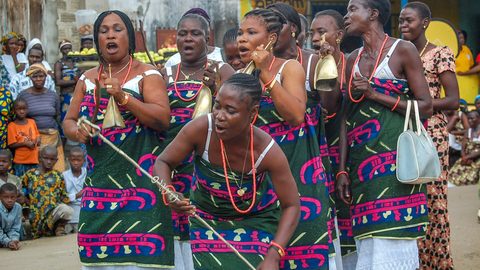 Allada Royal Palace
The Allada royal palace is a living court an hour from Cotonou where the king still receives visitors, with strict protocol and a small museum.
Allada Royal Palace
The Allada royal palace is a living court an hour from Cotonou where the king still receives visitors, with strict protocol and a small museum.
-
 Benin End to End: Cotonou, the Vodun Coast and the Atakora Hills
Benin end to end: a travel guide for adventurous travellers covering Cotonou, the Vodun coast, the Dahomey palaces, and the remote Atakora hills.
Benin End to End: Cotonou, the Vodun Coast and the Atakora Hills
Benin end to end: a travel guide for adventurous travellers covering Cotonou, the Vodun coast, the Dahomey palaces, and the remote Atakora hills.
-
 Getting to Nauru, the Pacific State Where Air Schedules Define Your Stay
A logistics briefing on reaching Nauru by air — covering weekly flights from Brisbane and Honiara, visa-on-arrival requirements, and planning around fixed departure dates.
Getting to Nauru, the Pacific State Where Air Schedules Define Your Stay
A logistics briefing on reaching Nauru by air — covering weekly flights from Brisbane and Honiara, visa-on-arrival requirements, and planning around fixed departure dates.
-
 Nauru, the Pacific Republic That Phosphate Built and Nearly Erased
Nauru is one of the Pacific's most overlooked republics. A candid guide to topside, Buada Lagoon, colonial history, and how to actually get there.
Nauru, the Pacific Republic That Phosphate Built and Nearly Erased
Nauru is one of the Pacific's most overlooked republics. A candid guide to topside, Buada Lagoon, colonial history, and how to actually get there.
-
 Planning Independent Travel in the Wakhan Corridor, Tajikistan
Independent travel in Tajikistan's Wakhan Corridor: GBAO permits, road conditions from Ishkashim, realistic travel windows, and honest logistics for serious overlanders.
Planning Independent Travel in the Wakhan Corridor, Tajikistan
Independent travel in Tajikistan's Wakhan Corridor: GBAO permits, road conditions from Ishkashim, realistic travel windows, and honest logistics for serious overlanders.