Mwinilunga Travel Guide to Zambia’s Northwestern Borderlands and Markets
Plan Mwinilunga around its markets and overland routes, with candid advice on transport, accommodation, border access, and connectivity.
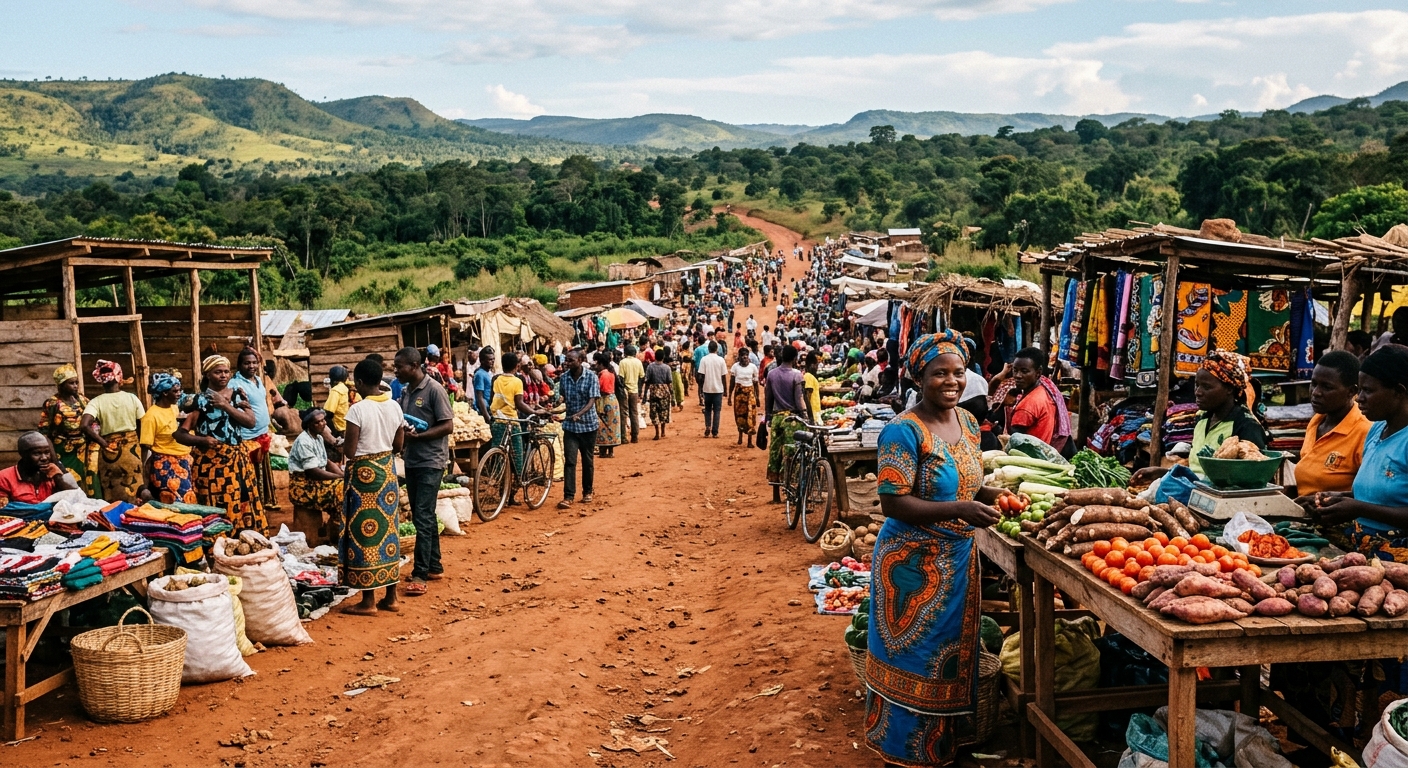
A pineapple can tell you more about Mwinilunga than a sightseeing checklist. Ask where it was grown, how it reached the stall, and where the next load is going. Those questions lead into the life of this northwestern Zambian town: farming, trading, and the difficult business of moving people and produce over long distances. For independent travelers, Mwinilunga rewards attention to these ordinary connections. It also demands patience with logistics that remain poorly documented online.
Build your visit around the market, with room for transport changes.
- Use Mwinilunga as a destination in its own right, rather than assuming it provides an easy international crossing.
- Confirm departures, fares, and rooms directly. Current operator schedules and dated local prices could not be verified for this guide.
- Keep border excursions conditional on official access checks, road information, and a workable return journey.
A Farming Town With Connections Beyond Its Stalls
Mwinilunga sits in Zambia’s North-Western Province. Its agricultural identity gives a visit a clear focus. Pineapples receive much of the attention, but cassava, maize, beans, and other crops belong in the wider story. The useful question is how those products connect surrounding farming communities with buyers in town and farther away.
The town council’s integrated development plan records cassava and groundnuts among crops serving local markets. It also identifies destinations including Lusaka, Ndola, Kitwe, and Kasumbalesa for some produce, including pineapples. These agricultural trading links draw on district agriculture figures from 2021. They establish the town’s economic context, rather than guaranteeing what a visitor will find on a particular morning.
That distinction matters. A crop listed in a district report may be out of season, already sold, or moving through another buying point. Approach the market with questions rather than a shopping inventory. Ask which products come from nearby farms and which arrive from elsewhere. A seller’s explanation of transport costs can make the road into town feel very different on your return journey.
Give the Market Your First Full Morning
Ask your accommodation host where produce trading is currently concentrated. Request a specific location and directions you can follow on foot. This guide does not establish a named weekly market day or verified opening hours. Avoid shaping your entire visit around an assumed market calendar.
A morning visit leaves time to understand the layout, make purchases, and follow up on transport arrangements during daylight. Start with a greeting. Ask the price and selling unit before handling produce. A quoted amount might apply to one fruit, a heap, a container, or a larger quantity. Comparing prices without comparing units tells you very little.
Buy something you can use. A modest purchase creates a more natural conversation than approaching each stall with a camera. Ask permission before photographing people, their goods, or their working space. Accept a refusal without pressing for an explanation. Keep passages clear, especially where traders are loading or carrying stock.
Researchers should explain their purpose before taking detailed notes or recording interviews. Agree separately on photographs, names, and publication. A friendly conversation does not automatically grant permission to publish someone’s personal circumstances or business information.
Plan the Approach Through Solwezi Carefully
For an overland itinerary, investigate the road approach through Solwezi. Treat Solwezi as a place to resolve onward arrangements, replenish supplies, and pause if necessary. Do not assume that arriving there guarantees a same-day connection to Mwinilunga.
As of 30 October 2026, this guide could not verify a current primary-source passenger timetable or fare for the onward journey. It therefore gives no promised departure time, journey duration, or ticket price. Route listings on booking directories do not establish that a particular vehicle will operate on your date.
Contact the actual operator or departure office. Ask whether the service is direct, where boarding takes place, and whether the stated time means reporting time or departure. Confirm luggage charges separately. If someone offers to arrange a ticket, establish which company operates the vehicle and obtain a receipt.
- Confirm your intended travel date, departure point, destination, and passenger fare with the operator.
- Ask about luggage limits, additional charges, transfers, and the expected arrival window.
- Send the arrival estimate to your accommodation and arrange how you will reach it.
- Reconfirm before departure and retain enough money for an unplanned overnight stop.
For drivers, ask about the road section you will actually use. A general assurance about “the road” may omit a damaged approach, bridge problem, or difficult final turn. Request recent information from someone who has completed the journey. Make daylight arrival a planning priority.
Keep Connectivity Useful Before and After Arrival
Transport and accommodation arrangements are easier when you can contact people before leaving a larger town. If you plan to get eSIM before departure, verify that the specific product covers Zambia and that your exact handset supports it. Check whether the phone is carrier unlocked and read the activation instructions before paying.
Coverage needs a local check too. Country inclusion does not establish reliable service in Mwinilunga, along the approach road, or near an international boundary. Ask the provider about supported local networks and available coverage information. This guide has not verified destination coverage, network partners, prices, or plan terms for that service, so it makes no product recommendation.
Ask your accommodation which mobile service currently works at the property. Check whether your chosen arrangement supports ordinary calls or only data. A transport contact may need a telephone call rather than an internet message.
Save maps, room details, ticket information, and contact numbers offline. Carry charging equipment and a charged power bank. Agree on what your host should do if you arrive late without being able to send an update. A workable arrival plan should survive a flat battery or a stretch without signal.
Check Accommodation Beyond the Listing
Lunga View Lodge is a concrete accommodation lead. The official tourism licensing register reviewed for this guide contains entries for Lunga View Lodge and Lunga View Lodge Limited in Mwinilunga. Both show an issue date of 23 February 2023 and an expiry date of 22 February 2026.
Those entries provide a historical record. Their stated expiry dates precede this guide’s research date, and they do not establish current licensing, operation, room availability, or quality. Seek current confirmation before treating the property as a booking option. No direct room tariff was verified.
When contacting any property, ask for the full price for your dates and the room type it covers. Clarify whether meals are included, how payment works, and whether there is a cancellation charge. Obtain directions and an arrival contact. Overlanders should ask explicitly about vehicle parking and any height or access constraints.
Water, electricity, and charging arrangements deserve direct questions. Ask what happens during an interruption and whether food is available if transport arrives late. A brief, specific exchange with someone at the property is more useful than an old description copied across several directories.
Budget With Dated Quotes From Local Providers
No verified current local fare, room rate, or market price is available from the primary sources reviewed here. Publishing a daily budget would create false precision. Prices from Lusaka markets would also be a poor substitute for a Mwinilunga quotation.
Build your budget from direct answers and record when you received them. Keep the currency, quantity, and inclusions beside every figure. For a vehicle hire, establish whether fuel, waiting time, the driver’s expenses, and the return journey are included. For accommodation, distinguish a room price from a per-person charge.
- Carry manageable denominations of Zambian kwacha for purchases and agreed local payments.
- Confirm card, cash, or transfer arrangements before committing to a room or vehicle.
- Keep a separate reserve for delayed transport, an extra night, and revised onward travel.
- Record the date and provider beside each quote, then reconfirm before payment.
At the market, ask about price differences without treating every variation as a dispute. Size, quality, quantity, and transport can affect what a seller asks. Agree on the purchase before handing over money.
Border Proximity Does Not Guarantee Border Access
Mwinilunga’s regional setting can tempt travelers to draw an onward route toward Angola or the Democratic Republic of the Congo. A road on a map does not establish an open international passenger crossing. Nor does local movement establish that a foreign visitor or foreign-registered vehicle may follow the same route.
Canadian government advice, updated on 13 October 2026, calls for a high degree of caution within 20 kilometres of Zambia’s borders with Angola and the DRC. Its border safety guidance cites landmine risks and crime near the DRC. It advises staying on main roads and paved surfaces, avoiding unmarked trails and roadside ditches, and crossing only at official posts.
This guide has not verified a currently open nearby crossing suitable for an independent international passenger. Before planning one, obtain confirmation from immigration authorities on both sides. Ask about the exact post, opening hours, eligibility for your nationality, visa arrangements, and any current health measures.
Drivers also need confirmation about temporary vehicle import procedures, insurance, and the ability to complete formalities at that specific post. Keep an alternative route that does not depend on crossing. A conversation with a driver can help establish road conditions, but immigration permission needs an official answer.
Leave Space Between Arrival and Departure
A sensible short visit allows an arrival day, a full market day, and flexibility around departure. That is a planning suggestion, not a transport schedule. Use the first afternoon to settle in, locate trading areas, and confirm the return journey.
Spend the full day at a pace that permits conversation. You might return to a seller who was busy earlier or ask a host to explain an unfamiliar crop. Arrange any visit outside town separately, with the destination, permission, transport, and return time agreed in advance.
Departure deserves attention before your final morning. Reconfirm where you must report and how you will get there with luggage. Avoid placing a tightly timed international connection immediately after an uncertain road journey.
Let the Return Road Complete the Visit
Mwinilunga becomes more legible when you connect the market stall with the journey behind it. The fruit has an origin. The seller has transport to arrange. Your own delayed departure may reveal something about the same distances and constraints.
Come with time, careful questions, and arrangements you have checked yourself. Let conversations shape the day while keeping border plans conditional on official confirmation. The town offers a grounded encounter with Zambia’s northwestern trading life, provided you give that life room to proceed on its own terms.
Read next
-
 Getting to Nauru, the Pacific State Where Air Schedules Define Your Stay
A logistics briefing on reaching Nauru by air — covering weekly flights from Brisbane and Honiara, visa-on-arrival requirements, and planning around fixed departure dates.
-
 Nauru, the Pacific Republic That Phosphate Built and Nearly Erased
Nauru is one of the Pacific's most overlooked republics. A candid guide to topside, Buada Lagoon, colonial history, and how to actually get there.
-
 Planning Independent Travel in the Wakhan Corridor, Tajikistan
Independent travel in Tajikistan's Wakhan Corridor: GBAO permits, road conditions from Ishkashim, realistic travel windows, and honest logistics for serious overlanders.