Almaty and Out: Kazakhstan's Mountain City and the Open Steppe
Almaty is the launchpad for Kazakhstan’s extremes, placing you between high-altitude lakes in the Tian Shan and the infinite Kazakh steppe.
- Flag
-
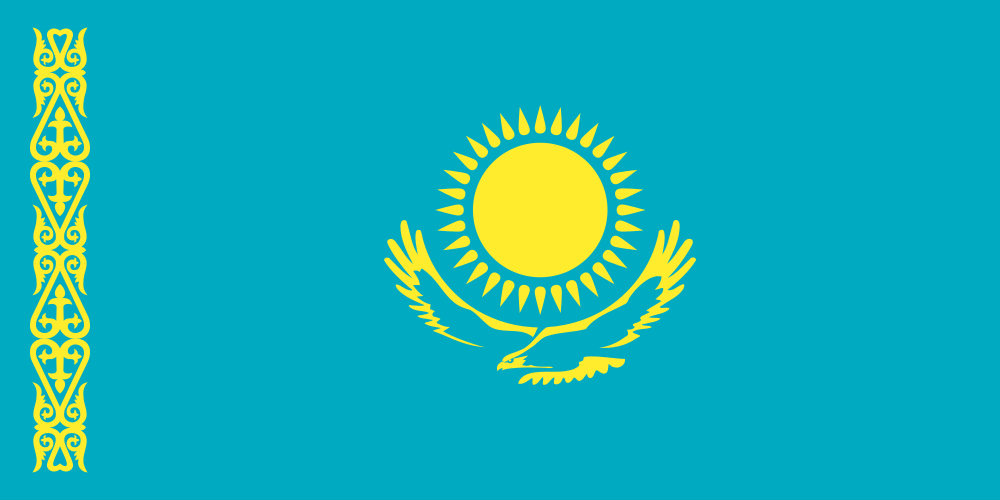
- ISO code
- KZ
- Population
- 18,276,499
- Currency
- KZT
- Dial code
- +7
Almaty and Out: Kazakhstan’s Mountain City and the Open Steppe
A breeze carrying pine and cold snowmelt slides off the Zailiysky Alatau ridge and finds you before your first coffee does. Almaty lives under a wall of rock and ice, and that changes how you move through it. You walk everywhere. The grid of leafy boulevards, the Soviet-era courtyards, the canals lined with poplars, the sudden view of the Tian Shan crest at the end of a street: this is a capital that gave up its political status in 1997 and kept its soul. Combine a city stay with a journey into the steppe or the mountains by choosing a direction. Up or out. Each requires different preparation and rewards a different appetite.
- Best Season For Almaty and Tian Shan Foothills: Late spring (May early June) and early autumn (September early October). Summer is hot and hazy, winter cold with snow cover.
- Best Season For Steppe Travel: Spring (April May) and autumn (September October). Summer exceeds 35°C, winter drops below -25°C.
- Shymbulak Base Elevation: 2,260 m above sea level. Highest lift-served point is 3,200 m.
- Medeu Rink Elevation: 1,691 m above sea level. Ice surface area 10,500 m².
- Distance From Almaty Centre To Medeu: Approximately 15 km. Another 5 km by road or cable car to Shymbulak.
- Rail Reach: National operator Kazakhstan Temir Zholy connects all major cities. Almaty to Astana is the longest route, 1,200 km, 13 18 hours depending on train type.
Head Up: Into the Tian Shan Foothills
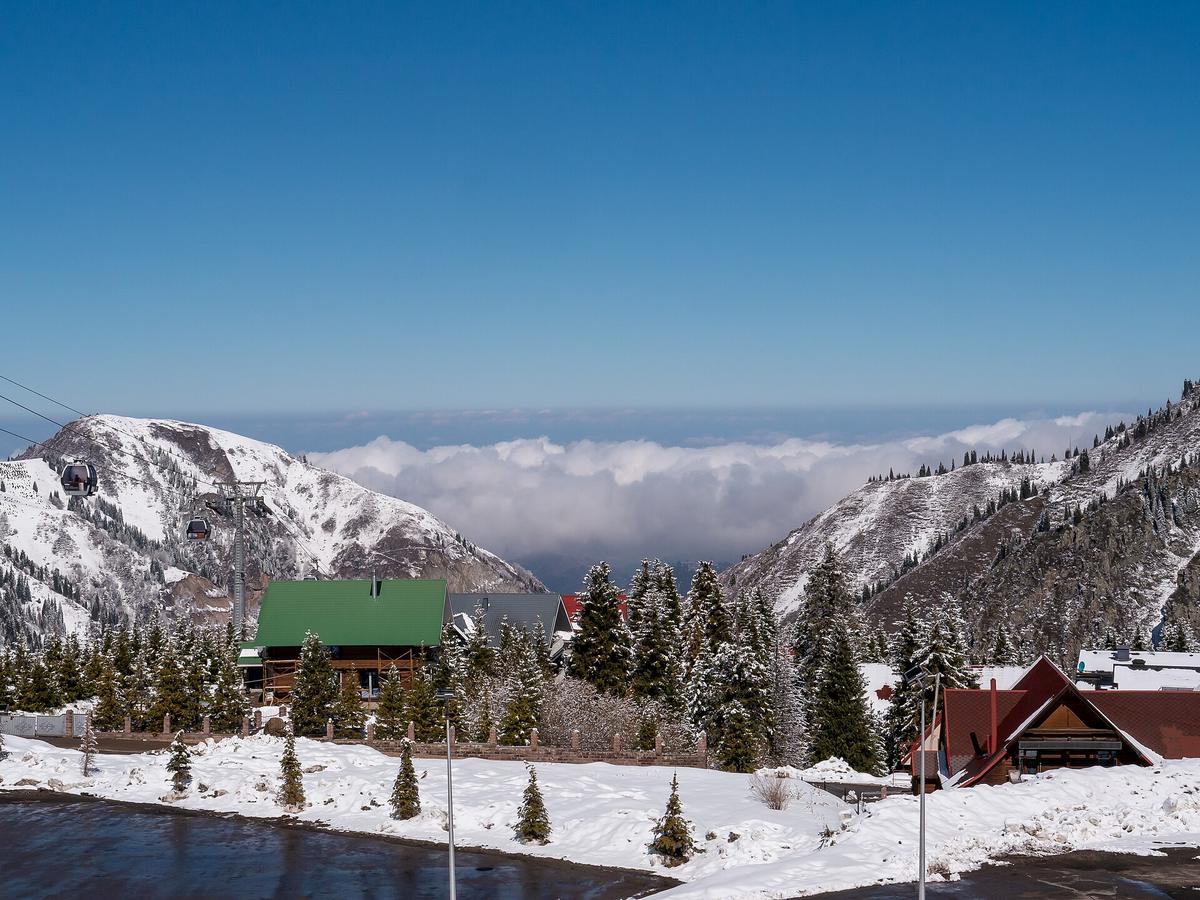
The mountain side of this trip starts 15 km south of Panfilov Park. Drive or take a bus to Medeu, the outdoor ice rink at 1,691 m, and you are already above the city smog. The rink itself is a winter draw, but the real access point is higher. From Medeu, a cable car or road takes you 5 km further to Shymbulak ski resort at 2,260 m. Ride the gondola to the top at 3,200 m, even in summer. The trail network from the top station goes into the Ile Alatau National Park. Spend your daylight hours there.
Walk, Don't Ski
Arrive between May and early June or September and early October, skip the ski lifts and use the Medeu entrance to the park. Pay the small national park fee. Follow the Furmanov Peak trail or the path toward Bolshoye Almatinskoye Lake. These are day hikes, not expeditions. You need sturdy shoes, a wind layer, water, and sun protection. The altitude hits faster than you expect, even at 3,000 m. Walk slowly. Drink water. Turn around when the daylight drops behind the ridge, not when you feel tired. The last bus from Medeu back to Almaty leaves before dark.
Shymbulak in Winter
Ski season runs December to April, snow dependent. Book accommodation in advance. The slopes are not crowded by European standards but the lodges fill on weekends. Renting gear at the base is straightforward. Pay for a multi-day pass only if you plan to ski three or more days. A single day gives you access to the Talgar Pass area, which has the best intermediate terrain above treeline.
.jpg)
Head Out: the Steppe Beyond
The opposite direction is flat, vast, and silent. The Kazakh steppe begins where the city ends and runs unbroken for hundreds of kilometres. You do not just drive into it. You commit to it. Intercity bus and shared taxi networks exist between oblast capitals, but scheduled public transport becomes sparse or absent in rural steppe areas. You need your own vehicle or a hired driver with a 4x4. This is not an exaggeration. The road from Almaty to the northern steppe routes passes through stretches where the next fuel stop is a long way off and the wind rearranges the road surface.
When to Go and What to Take
Spring (April to May) and autumn (September to October) are the only windows. Summer temperatures exceed 35°C with no shade. Winter drops below -25°C with wind that makes walking impossible. In the good windows, days are dry, skies are clear, and the laterite tracks hold firm. Pack a paper map, a power bank, offline maps on your phone, and cash in small denominations. ATMs are limited to non-existent in villages. Fill your tank in Almaty. Carry five litres of water per person per day. A tent is optional for a day trip, essential if you plan to sleep out.
What You Actually Do Out There
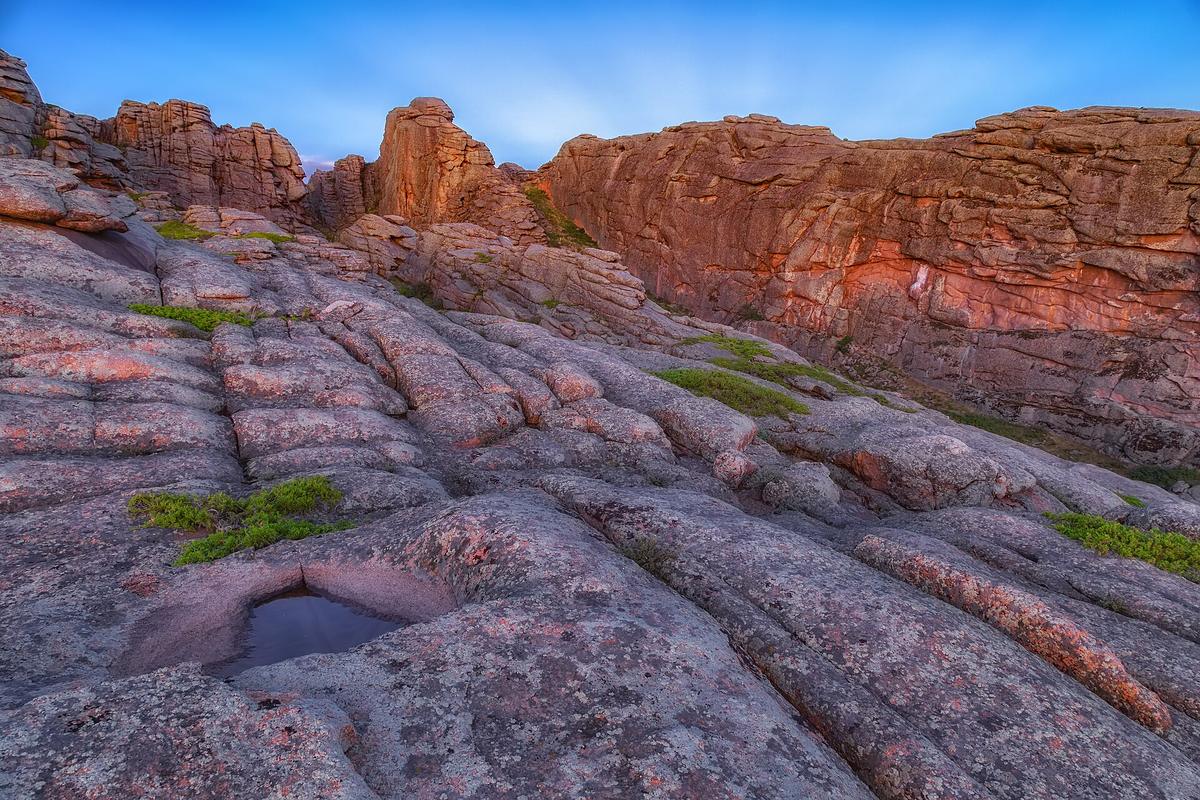
The steppe does not offer landmarks the way mountains do. You go for the scale. The silence. The feeling of being a single point on a curved surface. Some travellers head northwest toward Altyn Emel National Park to see the singing dune and the petroglyphs at Tamgaly Tas. Others push further north toward the Karkaraly mountains, where pockets of pine break the grass. Do not try to cover both in one trip. Choose one destination, budget three days round trip from Almaty, and treat the travel itself as the activity. The road is the attraction. For a contrast in scale and terrain, consider Indonesia, where volcanic highlands and dense rainforest replace the open steppe.
The City Between Them: Almaty as Your Base
You sleep in Almaty between these trips, and the city does most of its work as a recovery zone. The Green Bazaar on Zhibek Zholy Avenue opens at 08:00 and closes at 19:00, closed Mondays. Verify the day before you go. Buy dried fruit, nuts, fresh bread, and a bag of kurt (salted dried curds) for the road. Eat lunch at a laghman shop near the bazaar, then walk through Panfilov Park to the Almaty Central Mosque, capacity approximately 7,000 worshippers. The Zenkov Cathedral stands nearby, a wooden structure built without nails. These are 90-minute stops, not half-day excursions. The point of the city is to rest and resupply.
Coffee and the Local Rhythm
For coffee and a sense of the local rhythm, walk along Zhibek Zholy or the streets around Abay Avenue. Cafes filled with students and remote workers serve pour overs and flat whites that would satisfy in Melbourne or Berlin. This is the juxtaposition that makes the trip work. You can drink a cortado in the morning and stand in absolute silence on the steppe by evening. Do not try to do both in the same day. The drive from Almaty to the edge of the steppe takes at least two hours, and the mountain road up to Shymbulak needs a full morning. Treat each direction as its own day.

The Next Step
Decide tonight which direction you take first. If you book a driver for the steppe, confirm the vehicle is a 4x4 and set a departure time of 06:00. If you choose the mountains, buy your park entry and gondola tickets online the evening before to skip the queue at Medeu. Do not plan a third option. Two directions. One week. That is the trip.
Common Questions
Can I visit the steppe and the mountains in the same week?
Yes, but not in the same day. Budget two days for the mountains, three for the steppe round trip. Use Almaty as your hub and alternate city rest days between outings.
Do I need a guide for the steppe?
Strongly recommended unless you have off road driving experience, speak Russian or Kazakh, and carry a paper map. The roads are unmarked in many sections and mobile signal drops after 50 km.
Is Shymbulak worth it for non skiers?
Yes. The gondola ride up to 3,200 m gives you views across the Tian Shan range. Hike the trails from the top station. Avoid the overpriced cafe at the summit and pack your own food.
What should I skip in Almaty?
The Kok Tobe hill cable car. It is crowded, offers mediocre views, and the small amusement park at the top is not worth the queue. Walk through Panfilov Park instead.
Read next
-
 Getting to Nauru, the Pacific State Where Air Schedules Define Your Stay
A logistics briefing on reaching Nauru by air — covering weekly flights from Brisbane and Honiara, visa-on-arrival requirements, and planning around fixed departure dates.
Getting to Nauru, the Pacific State Where Air Schedules Define Your Stay
A logistics briefing on reaching Nauru by air — covering weekly flights from Brisbane and Honiara, visa-on-arrival requirements, and planning around fixed departure dates.
-
 Nauru, the Pacific Republic That Phosphate Built and Nearly Erased
Nauru is one of the Pacific's most overlooked republics. A candid guide to topside, Buada Lagoon, colonial history, and how to actually get there.
Nauru, the Pacific Republic That Phosphate Built and Nearly Erased
Nauru is one of the Pacific's most overlooked republics. A candid guide to topside, Buada Lagoon, colonial history, and how to actually get there.
-
 Planning Independent Travel in the Wakhan Corridor, Tajikistan
Independent travel in Tajikistan's Wakhan Corridor: GBAO permits, road conditions from Ishkashim, realistic travel windows, and honest logistics for serious overlanders.
Planning Independent Travel in the Wakhan Corridor, Tajikistan
Independent travel in Tajikistan's Wakhan Corridor: GBAO permits, road conditions from Ishkashim, realistic travel windows, and honest logistics for serious overlanders.