Syria Today: Memory, Ruin, and the Meaning of Travel
A sober reflection on Syria as a destination now: the cultural heritage that survived, the places lost, and the complex meaning of travel there today.
- Flag
-
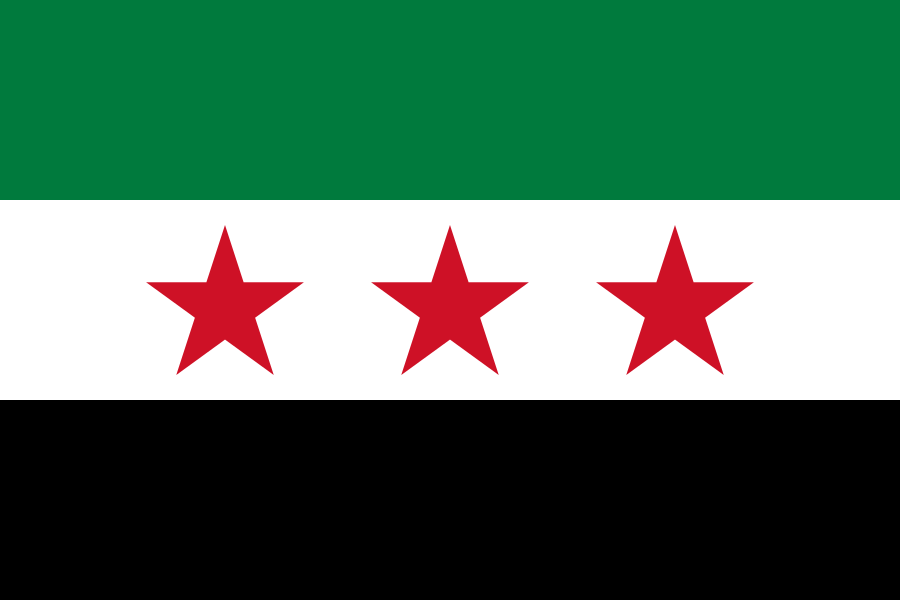
- ISO code
- SY
- Population
- 16,906,283
- Currency
- SYP
- Dial code
- +963
Syria Today: Memory, Ruin, and the Meaning of Travel
You want to know if you can visit Syria in 2026. The honest answer is yes, but you should not assume you should. Every government advising against all travel is not hedging. Active conflict continues in multiple governorates. Terrorism, kidnapping, and unexploded ordnance remain real risks. And the ethical weight of arriving as a tourist in a country where fifteen years of war have displaced millions and destroyed centuries of heritage is something no airline safety video prepares you for. Syria is not pitched as a destination. What is left, what is gone, what travel there now means, and who should stay away—that is the reality on the ground.
- Country Name: Syrian Arab Republic
- Capital: Damascus
- Safety Status: Most governments advise against all travel. Active conflict, terrorism, kidnapping, and unexploded ordnance risks remain in multiple governorates.
- Sanctions Regime: Comprehensive US, EU, UK, and other sanctions in place covering finance, oil, technology, and designated individuals and entities. Frameworks under active review following the December 2024 regime change; no general lifting as of August 2026. Verify current status before planning.
- Currency: Syrian Pound (SYP). Official and parallel market rates diverge significantly. Verify rates for the year of travel.
- Entry Visa Requirement: Visa required for almost all nationalities. Obtainable at Syrian embassies abroad. Visa-on-arrival suspended for most passport holders since 2011.
- Entry Guide Requirement: Mandatory for most foreign visitors. Must be arranged through a government-registered tour operator. Clearance required for independent movement outside designated areas. Verify current rules.
- Lebanese Border Crossing: Masnaa-Jdeidet Yabous crossing operational but subject to intermittent closure. Travelers with evidence of prior entry to Israel may be denied entry to Syria.
- Language: Arabic (official). Kurdish, Armenian, Aramaic, Circassian spoken in minority areas.
- Time Zone: UTC+3 (year-round since October 2022).
What Was Lost: Three UNESCO Sites and a City
Before the war, Syria held six UNESCO World Heritage Sites. The Ancient Villages of Northern Syria and the Crac des Chevaliers survived with damage. The other three were deliberately, systematically destroyed or degraded.
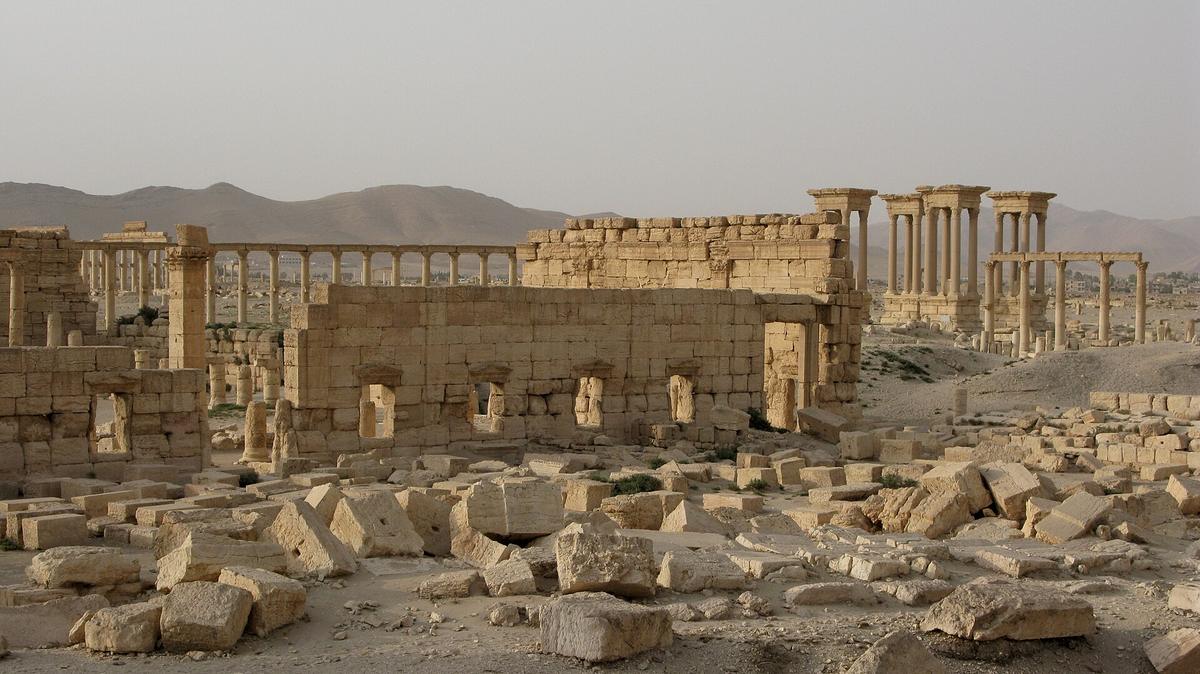
Palmyra
What remains of Palmyra is a crime scene. The Temple of Bel was detonated in August 2015. Only the entrance arch and foundations stand. The Temple of Baalshamin was completely destroyed the same month. The Monumental Arch was blown up in October 2015. A replica was erected in London in 2016, but on-site restoration planning has not yet produced physical reconstruction as of 2024. Multiple tower tombs in the Valley of the Tombs, including the Tomb of Elahbel, were destroyed. The museum was looted. Its collection was partially evacuated to Damascus before IS capture. The building is structurally intact but remains closed. Do not plan a visit to Palmyra expecting to see the site you remember from guidebooks. What is there is absence.
Aleppo
Aleppo Old City, a UNESCO site inscribed in 1986 and placed on the Danger List in 2013, suffered differently. The 11th-century minaret of the Great Mosque was destroyed in April 2013. Reconstruction began in 2017, with structural completion reported in 2022. Builders used recovered original stones. The Souk al-Madina, the largest covered historic market in the world, saw roughly 70% of its fabric destroyed by fire in 2012. Phased reconstruction from 2014 to 2019 brought around 80% of shops back into operation by 2023. The Citadel's gate and entrance complex were damaged between 2012 and 2016. Partial visitor access resumed in 2020. Repairs to the outer walls and Ayyubid palace interior continue as of 2024. You can walk through parts of Aleppo. The gaps in the city's fabric are not hidden. They are the story.
Damascus
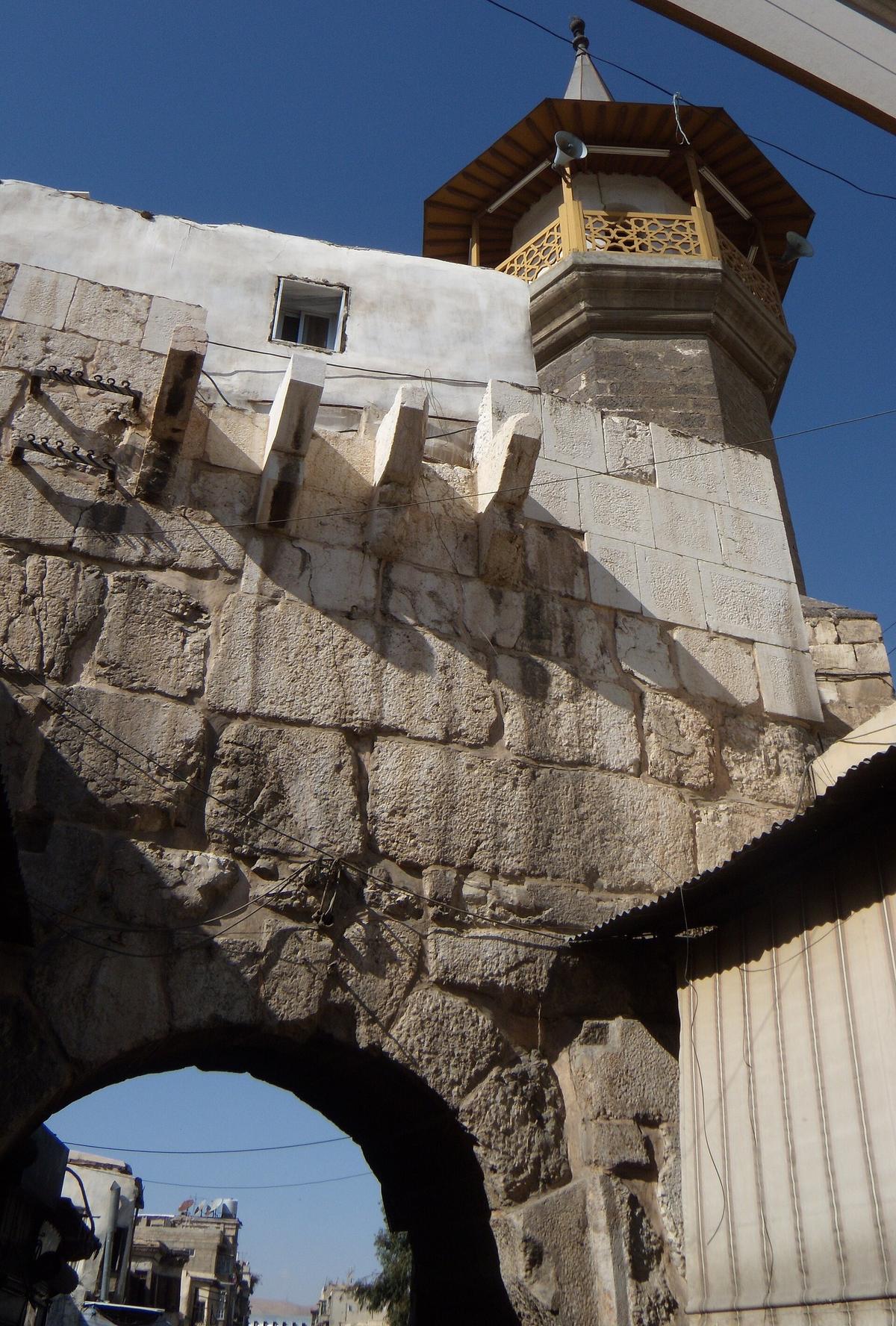
The Old City of Damascus, the oldest continuously inhabited capital in the world, fared better than Aleppo or Palmyra, but not well. The Souk al-Madina burned in 2013. Sections rebuilt between 2017 and 2019 are open. The Al-Adiliyah Madrasa and parts of the city wall were damaged, with restoration ongoing as of 2024. The Umayyad Mosque survived. The Minaret of the Bride, dating to the 9th century, is intact. The Minaret of Jesus was destroyed in April 2013 but reconstruction finished in 2017. The main prayer hall and its mosaics survived. Enter the mosque. It still holds prayer. That is not normal. It is a statement of refusal.

The Safety Patchwork and What it Means on the Ground
Syria is not one situation. It is a patchwork of zones where different authorities hold control, different levels of risk apply, and different rules govern your movement. The mandatory guide requirement exists because the state wants to control where you go and what you see. Clearance is required for independent movement outside designated areas. Do not interpret that as a formality. It is a restriction with real consequences if violated.
The Latakia coast has seen minimal direct conflict damage. Beach infrastructure is operational but underinvested. The city functions. The same cannot be said for the northern and eastern governorates where active conflict and terrorism risks remain high. Kidnapping is a documented threat for foreigners. Unexploded ordnance contaminates large areas. The Lebanese border crossing at Masnaa-Jdeidet Yabous is operational but subject to intermittent closure based on conditions on the ground. Your guide will know the current status. Your travel insurance, if it covers Syria at all, will have its own list of excluded zones.
The Dead Cities
The Dead Cities, the Ancient Villages of Northern Syria inscribed as a UNESCO site in 2011, sit in a different reality. Their remote location kept stone structures largely intact despite looting and illegal excavation reported between 2013 and 2018. No systematic restoration program existed as of 2024. These sites are physically accessible. Whether they are safe to reach depends on which roads the conflict has cut and which it has not. Your guide decides. Not you.
| Site | UNESCO Status | Key Damage | Restoration Status | Current Access |
|---|---|---|---|---|
| Palmyra | World Heritage in Danger since 2013 | Temple of Bel, Temple of Baalshamin, Monumental Arch destroyed 2015; Tower Tombs destroyed; Museum looted | Digital reconstruction and planning underway; no physical reconstruction completed as of 2024 | Museum closed; site accessible only with guide and clearance |
| Aleppo Old City | World Heritage in Danger since 2013 | Great Mosque minaret destroyed 2013; Souk 70% burned 2012; Citadel gate damaged | Minaret reconstruction completed 2022; Souk 80% reopened by 2023; Citadel partially open 2020; palace interior repairs ongoing as of 2024 | Partial visitor access with guide |
| Damascus Old City | World Heritage in Danger since 2013 | Souk al-Madina partially burned 2013; Al-Adiliyah Madrasa and city wall damaged | Souk rebuilt 2017-2019; restoration of madrasa and wall ongoing as of 2024 | Open. Umayyad Mosque operational |
| Crac des Chevaliers | World Heritage in Danger since 2013 | Knights' Hall roof collapsed from shelling 2013; chapel and south-west tower damaged | Structural stabilization and roof reconstruction completed 2018 | Open to visitors |
| Dead Cities (Ancient Villages of Northern Syria) | World Heritage in Danger since 2013 | Looting and illegal excavation 2013-2018 at Sergilla, Al-Bara; stone structures largely intact | No systematic restoration program as of 2024 | Access varies with conditions; guide required |

What it Means to Travel to Syria Now
To visit Syria in 2026 is to enter a country under comprehensive US, EU, and UK sanctions. Those sanctions cover finance, oil, technology, and designated individuals and entities. Every transaction you make is subject to legal review in your home jurisdiction. Your credit cards will not work. Bring cash. The parallel exchange rate means the Syrian Pound is worth very little, but using it to buy goods involves navigating sanctions that are under active review following the December 2024 regime change. No general lifting had occurred as of August 2026. Verify the current legal framework before you book anything.
To visit is also to confront what 15 years of war did to a population. The poverty is visible. The infrastructure is broken. The people you meet have stories you cannot ask them to tell. Photography at a site like the Royal Palaces of Abomey in Benin carries a different ethical weight. There, the question is permission. Here, the question is whether your presence constitutes voyeurism or solidarity. There is no universal answer. But if you arrive without having asked yourself the question, you have already failed.
The requirement to hire a local guide is not just a bureaucratic hurdle. It places you in a relationship with a local operator who depends on tourism for income in a sanctions-crippled economy. That same guide may also be required to report your movements. The security clearance requirement means the state knows where you are. Independent travel, in the sense of showing up and wandering, does not exist in Syria. Decide whether you accept those constraints as the price of access, or whether they make the trip untenable.
Who Should Go And Who Should Not
Syria suits researchers specializing in heritage loss and post-conflict reconstruction, war correspondents with institutional backing, and very experienced travellers with a specific reason to be there. Government-registered tour operators exist. Use them. Do not attempt to freeload.
Syria is not for first-time Middle East visitors, anyone with a low tolerance for uncertainty, people who need reliable internet, families, or anyone who wants a holiday. The word holiday does not belong in the same sentence as Syria in 2026. If you are reading this to decide whether to book a flight, stop at the safety status line: most governments advise against all travel. That is not a suggestion. It is the sum of the information you need.
Common Questions
Is it safe to travel to Syria in 2026?
No. Most governments advise against all travel. Active conflict, terrorism, kidnapping, and unexploded ordnance risks remain in multiple governorates. The situation is a patchwork, and no traveller can eliminate the risk.
Can I visit Palmyra?
The site is physically accessible with a guide and clearance. But the Temple of Bel, Temple of Baalshamin, and Monumental Arch were destroyed in 2015. What remains is foundations and absence. The museum is closed. Manage your expectations.
Is the Aleppo Souk open?
Around 80% of shops in the Souk al-Madina had reopened by 2023 after phased reconstruction from 2014 to 2019. The Great Mosque minaret was rebuilt. The Citadel offers partial visitor access. Large gaps in the city remain.
Do I need a guide?
Yes. A government-registered tour operator is mandatory for most foreign visitors. Clearance is required for independent movement outside designated areas. Independent travel is not an option.
Will my credit cards work?
No. Comprehensive US, EU, and UK sanctions apply. Your cards will not work. The Syrian Pound has official and parallel rates that diverge significantly. Bring cash. Verify the legal framework for transactions.
What are the sanctions rules?
Comprehensive US, EU, UK and other sanctions cover finance, oil, technology, and designated individuals and entities. Frameworks were under active review after the December 2024 regime change, but no general lifting had occurred as of August 2026. You must verify current restrictions before planning.
Can I enter from Lebanon?
The Masnaa-Jdeidet Yabous crossing is operational but subject to intermittent closure based on conditions. Travelers with evidence of prior entry to Israel may be denied entry to Syria.
Read next
-
 Getting to Nauru, the Pacific State Where Air Schedules Define Your Stay
A logistics briefing on reaching Nauru by air — covering weekly flights from Brisbane and Honiara, visa-on-arrival requirements, and planning around fixed departure dates.
Getting to Nauru, the Pacific State Where Air Schedules Define Your Stay
A logistics briefing on reaching Nauru by air — covering weekly flights from Brisbane and Honiara, visa-on-arrival requirements, and planning around fixed departure dates.
-
 Nauru, the Pacific Republic That Phosphate Built and Nearly Erased
Nauru is one of the Pacific's most overlooked republics. A candid guide to topside, Buada Lagoon, colonial history, and how to actually get there.
Nauru, the Pacific Republic That Phosphate Built and Nearly Erased
Nauru is one of the Pacific's most overlooked republics. A candid guide to topside, Buada Lagoon, colonial history, and how to actually get there.
-
 Planning Independent Travel in the Wakhan Corridor, Tajikistan
Independent travel in Tajikistan's Wakhan Corridor: GBAO permits, road conditions from Ishkashim, realistic travel windows, and honest logistics for serious overlanders.
Planning Independent Travel in the Wakhan Corridor, Tajikistan
Independent travel in Tajikistan's Wakhan Corridor: GBAO permits, road conditions from Ishkashim, realistic travel windows, and honest logistics for serious overlanders.