China’s Provincial Cities: Travel in the Deep Hanzi Hinterland
China’s provincial cities like Lanzhou, Guiyang, and Nanning offer regional food, overnight trains, and almost no English—a raw travel experience far from the usual tourist circuit.
- Flag
-

- ISO code
- CN
- Population
- 1,410,000,000
- Currency
- CNY
- Timezone
- Asia/Shanghai
- Dial code
- +86
Lanzhou, Guiyang, Nanning, and Xining Without an English Crutch
The wrong assumption about China travel is that you need English to get by. That assumption stops most travellers in Shanghai, Beijing, and Xi'an. The truth is that a dozen provincial cities operate almost entirely in Chinese, and they reward the traveller willing to operate without an English crutch. These are places where the menu has no pictures, the train station has no Romanised platform numbers, and the old man pouring baijiu at a street stall has no intention of speaking anything but the local dialect. That lack of accommodation is not a problem to solve. It is the point.
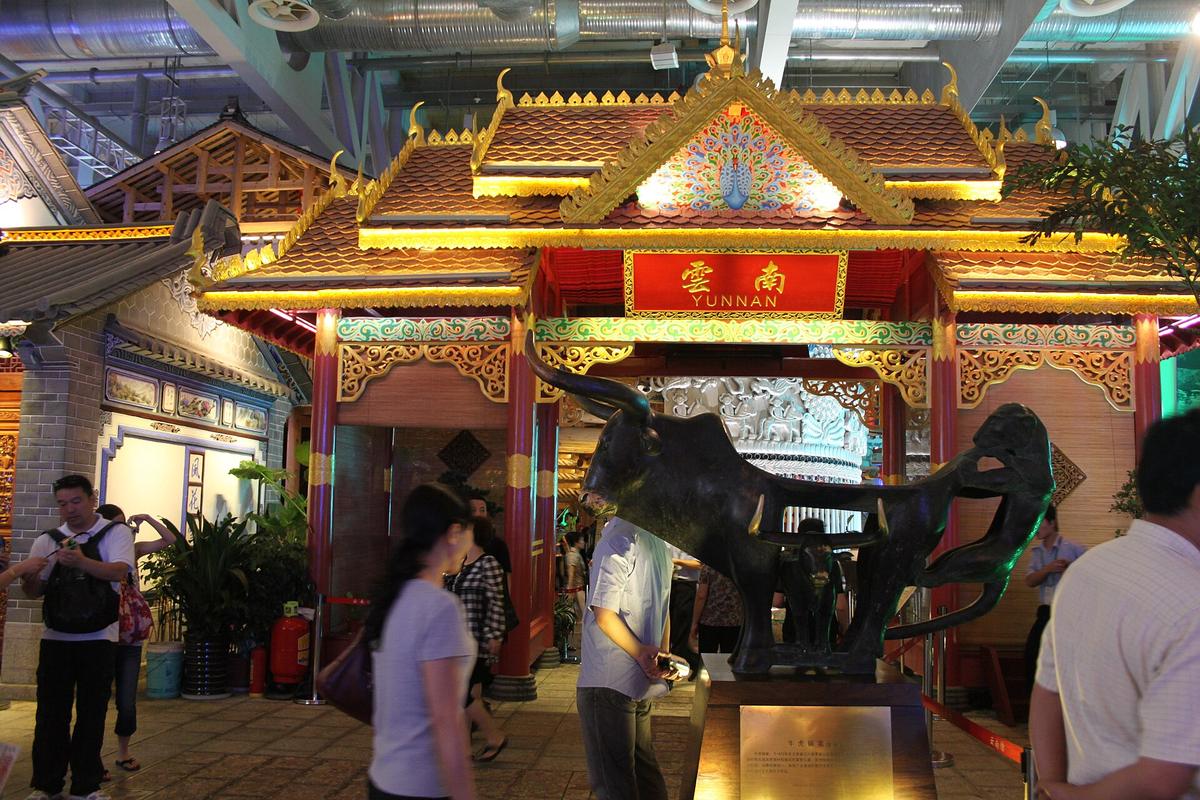
Four cities anchor this kind of travel: Lanzhou, Guiyang, Nanning, and Xining. Each sits in a distinct geographic zone. Each has a fiercely regional food culture that barely overlaps with Cantonese or Shanghainese cooking. Each demands that you arrive on an overnight train, navigate by landmarks, and accept that miscommunication is part of the experience. The traveller this suits has already done the polished China circuit and wants the raw version. The one who carries a phrasebook, downloads offline maps, and understands that a wrong bus is a story, not a crisis.
.jpg)
- Minimum Days Required: 7 days minimum. Distances between these cities are long (Lanzhou to Xining alone is 3 hours by fast train), and each city needs 2 full days to eat, wander, and absorb the rhythm.
- Peak Season: April to June and September to November. Summer (July, August) brings heavy rain and heat in Guiyang and Nanning; winter (December, February) is bitterly cold in Lanzhou and Xining.
- Avoid Window: July through August for Guiyang and Nanning (torrential rain and flash floods). January through February for Lanzhou and Xining (temperatures drop to minus 10 Celsius, and smog thickens).
- Arrival: Fly into Lanzhou Zhongchuan Airport (LHW) or Xining Caojiabao Airport (XNN) for the northwest pair. Fly into Guiyang Longdongbao Airport (KWE) or Nanning Wuxu Airport (NNG) for the southern pair. No direct flights from most Western cities; route via Beijing (PEK), Shanghai (PVG), or Guangzhou (CAN).
- Getting Around: High-speed rail links Lanzhou, Xining, and Guiyang efficiently. Nanning connects via conventional rail and overnight sleeper trains. Within each city, use the metro (Lanzhou, Guiyang, Nanning) or ride-hailing apps (Didi works everywhere, but set the language to Chinese). Buses operate with Chinese-only signage.
- Connectivity Note: Buy a China Unicom or China Mobile SIM at the airport. A VPN installed before you leave home is mandatory. Google Maps is blocked; use Apple Maps or Amap (Gaode) in Chinese. Download the Baidu Translate app and the Pleco dictionary. Offline maps for each city are essential.
Lanzhou: the Yellow River Corridor
Eating the Noodles
Lanzhou is a city stretched along the Yellow River, squeezed between mountains. It is the capital of Gansu province and the launch point for the Hexi Corridor and the Gobi Desert. Almost no English signage exists outside the airport and a handful of chain hotels. The primary reason to come is food. Lanzhou pulled noodles (lamian) are the most famous noodle dish in China, and the correct place to eat them is not a restaurant but a halal noodle shop where you watch the dough stretched into strands through a window. Arrive before 09:00 for the freshest broth, which is beef based and clarified until it runs clear. Order by saying the number of bowls you want and the level of chili oil: bu lao means no chili, wei la means a little, te la means very spicy.
The Sights and the Night
Beyond noodles, spend an afternoon at the Gansu Provincial Museum to see the Flying Horse of Gansu, a bronze galloping horse with one hoof on a swallow, from the Han dynasty. The museum labels are in Chinese only. Rent an audio guide or download a Chinese museum guide app beforehand. The White Pagoda Mountain (Baita Shan) gives you a view over the river and the city's industrial sprawl. Climb the steps before sunset. For dinner, find a restaurant that serves niangpizi, a cold bean jelly noodle dish, and hui shao yangrou (lamb hotpot). Drink the local yellow river beer or, for the adventurous, a glass of hetao jiu (walnut liquor) from the nearby Longnan region.
The Train to Xining
The overnight train from Lanzhou to Xining takes 3 hours by high-speed rail, but the old green sleeper train takes 5 hours and costs a fraction. Take the slower option. You arrive at dawn in a city that sits at high elevation, and the thin air hits you immediately.
Guiyang: the Mountain Capital That Smells Like Chillies
The Food Comes First
Guiyang sits in the middle of Guizhou province on a karst plateau. It is humid, green, and perpetually damp. The city is not a beauty. Its skyline is a jumble of 1990s concrete towers and new glass blocks, but the food culture is one of China's most underrated. Guizhou cuisine relies on sour and spicy flavours, fermented chillies, and a herb called zhe'ergen (fish mint root) that smells like a wet garden. The signature dish is suan yu (sour fish hotpot), a fermented fish stew cooked at the table in a clay pot. Eat it at a restaurant in the Nanming district. Order a plate of hong su niang (deep fried sticky rice cakes) and a bottle of huangjiu (rice wine) from the local Moutai town, which is two hours west.
What to Do and What to Skip
The Jiaxiu Tower on the Nanming River is the city's emblem, but it is small and crowded. Skip it if you have one day. Instead, ride the mountain cable car at Qianling Park to the top of the hill and walk through the forested trails. The park has a zoo with a panda enclosure and a temple complex where locals burn incense. Buy entry at the gate with cash. For a longer trip, take a day bus to the Huangguoshu Waterfall, China's largest, three hours south. The bus station in this city has ticket windows with no English. Write the characters for Huangguoshu (黄果树) on your phone screen and show it to the ticket seller. The return bus leaves the waterfall at 17:00; do not miss it.
The Night Market
Guiyang's night market on Hebin Road opens after 20:00. Vendors grill tofu, lamb skewers, and whole fish on charcoal braziers. Point at what looks good, hold up fingers for quantity, and pay in cash. No one speaks English. No prices are written. You negotiate by smiling and holding out a note until the vendor nods.
Nanning: Tropical China Where Nobody Holds the Door
What to Eat
Nanning is the capital of Guangxi Zhuang Autonomous Region, a subtropical city close to the Vietnam border. It is hot, flat, and sprawling. The city's food is dominated by the Zhuang minority culture: sticky rice cooked in bamboo tubes, pickled bamboo shoots, and grilled fish wrapped in banana leaves. The dish you must eat is laoyou fen (old friend noodles), a rice noodle soup with pickled cowpeas, ground pork, and a broth that tastes of fermented black beans. The best version is found at a breakfast shop in the Qingxiu district, open from 06:30 to 11:00 only.
Getting Around and Day Trips
Nanning has the most English of the four cities, but that is relative. The metro stations have pinyin above the Chinese characters, which helps. The Guangxi Museum has a few English labels. Beyond that, you navigate by local apps: use the Didi ride service (set your pickup pin by dropping it on the map in Chinese), and use the Ele.me food delivery app if you want to order groceries or hotpot supplies to your hotel room. For a day trip, take a bus to Detian Waterfall, a cross-border cascade shared with Vietnam, three hours southwest. The border crossing is strict; carry your passport.
When to Go
The most important instruction for this city is this: do not try to visit during late August or September. The weather is oppressively hot and humid, and the rain comes in brief but violent downpours that flood streets in 20 minutes. Travel between November and February, when the temperature drops to a comfortable 18 to 24 Celsius.
Xining: the Gateway to the Tibetan Plateau
The Food and the Faith
Xining, the capital of Qinghai province, sits at high elevation on the edge of the Tibetan Plateau. The air is dry, the sun is fierce, and the temperature drops sharply after sunset. This is a city where the Muslim Hui and Tibetan Buddhist populations overlap, which gives the food a dual character. The dish to hunt down is qingzhen niu yang rou (halal beef and lamb), served in a cauldron with potatoes and green peppers. Drink suan nai (yogurt) from a clay bowl, sold by women on street corners, and buy a piece of hua juan (steamed bread roll) to dip into it.
The Dongguan Mosque is the largest in Qinghai and holds a Friday congregation that draws thousands. Non Muslims are welcome to visit the courtyard and the prayer hall's entrance but not the interior. Dress conservatively; cover shoulders and knees. The Qinghai Provincial Museum has a strong collection of Tibetan thangka paintings and Tang dynasty artefacts, with labels in Chinese only. Spend the afternoon at the museum, then walk to the nearby Nanchan Temple, a small Buddhist temple with a pagoda that predates the city's modern expansion.
Day Trips and the Early Night
Xining is also the launch point for trips to Qinghai Lake (Qinghai Hu), a saltwater lake the colour of turquoise that sits three hours west by bus. The lake is best visited in July when the surrounding rape fields bloom yellow. Book a bus from the long distance bus station one day ahead. The last bus back leaves the lake at 17:00. Do not attempt to hitchhike; highways are sparse and the altitude affects drivers and vehicles unpredictably.
The one thing that surprises first time visitors here is how early everything closes. Restaurants stop serving dinner by 20:00. Shops shut by 21:00. The city goes to bed early because the altitude makes people tired. Eat dinner by 18:30 and accept that your evening will be spent in your hotel room with a book and a cup of Tibetan butter tea.
.JPG)
Comparison at a Glance
Lanzhou gives you the noodle culture and the Yellow River, but the smog can be thick and the city is industrial. Guiyang gives you the sour and spicy cuisine and the karst scenery, but the rain is relentless for four months of the year. Nanning gives you the tropical fruit and the Zhuang minority culture, but the heat and humidity test your stamina. Xining gives you the Tibetan Plateau access and the Muslim Tibetan fusion food, but the altitude demands caution and the early closing times frustrate night owls.
If you can only pick one, base the choice on season. In spring, choose Lanzhou or Xining for dry weather. In autumn, choose Guiyang or Nanning for cooler temperatures. In winter, choose Nanning for warmth. In summer, choose Xining for cool air.
Who This Suits and Who it Does Not
This kind of China travel suits the experienced China traveller who has already visited Beijing, Shanghai, and Xi'an and wants to see the country's regional diversity without a tour guide. It suits the photographer who is willing to wander and wait. It suits the food traveller who wants to eat the same dish that a local grandmother eats. It suits the budget traveller who is comfortable on overnight trains and in cheap hostels where the hot water runs out at 21:00.
It does not suit the first time China visitor. Do not start here. You will find the lack of English overwhelming and the logistics frustrating. It does not suit the traveller who needs a predictable schedule, reliable Wi Fi, or western food options. It does not suit anyone travelling with young children. It does not suit the person who wants a beach or a resort. It does not suit the person who wants to visit China without a VPN. These cities are the deep end of China travel, and they are only rewarding if you are ready to swim.
Common Questions
Do I need a visa for these cities?
Yes, the standard Chinese L visa covers these cities. Apply at a Chinese embassy or visa centre before departure. The visa policy for China is the same regardless of which city you visit; the provincial cities do not have special rules.
Can I use a credit card in these cities?
Limited. Cash (RMB, the Chinese yuan) is accepted everywhere. Credit cards work at major hotels and a few high end restaurants. Digital payment via WeChat Pay or Alipay is ubiquitous, but these systems require a Chinese bank account or a linked international card. Set up Alipay with a foreign card before you leave. Carry 500 RMB in small notes for street food and taxis.
How do I get a SIM card at the airport?
Arrive at the terminal and look for the China Mobile or China Unicom counter. Bring your passport. A 30 day data plan costs approximately 200 RMB. The staff will not speak English. Show them the words for data plan: liuliang taocan. Install a VPN before you leave home, because many international sites (Google, WhatsApp, Instagram) are blocked in China.
How do I get around within each city?
Lanzhou, Guiyang, and Nanning have metro systems. Xining does not. Use the metro where available; buy a single ride token at the ticket machine (Chinese language only, but the machine accepts 5, 10, and 20 RMB notes). For buses, use the Amap (Gaode) app to search routes. For rides, use Didi Chuxing with Chinese language interface. Taxis are available but drivers rarely speak English; have your destination written in Chinese characters on your phone.
What should I do if I get lost?
Open your phone and show your hotel's name in Chinese characters to a taxi driver or a young person. Young people in these cities may not speak fluent English, but they can type into their phone and direct you. Alternatively, walk to the nearest metro station. Metro staff can read your destination if you show it on a map.
Is it safe to eat street food in these cities?
Yes, if you choose busy stalls with high turnover. Look for vendors who have a queue of locals. Avoid stalls where food sits out uncovered for long periods. Drink only bottled water. Avoid ice unless you see it being made from bottled water. The street food in Lanzhou and Guiyang is particularly safe because it is cooked at high heat in front of you.
When is the best time to visit all four cities in one trip?
That is not a good plan. The distances are too far. A better approach is to pick the northwest pair (Lanzhou and Xining) or the southern pair (Guiyang and Nanning) and spend 7 days on that pair. A single trip covering all four requires at least 14 days and two flights. Travel between Lanzhou and Guiyang by train takes 12 hours.
Read next
-
 Getting to Nauru, the Pacific State Where Air Schedules Define Your Stay
A logistics briefing on reaching Nauru by air — covering weekly flights from Brisbane and Honiara, visa-on-arrival requirements, and planning around fixed departure dates.
Getting to Nauru, the Pacific State Where Air Schedules Define Your Stay
A logistics briefing on reaching Nauru by air — covering weekly flights from Brisbane and Honiara, visa-on-arrival requirements, and planning around fixed departure dates.
-
 Nauru, the Pacific Republic That Phosphate Built and Nearly Erased
Nauru is one of the Pacific's most overlooked republics. A candid guide to topside, Buada Lagoon, colonial history, and how to actually get there.
Nauru, the Pacific Republic That Phosphate Built and Nearly Erased
Nauru is one of the Pacific's most overlooked republics. A candid guide to topside, Buada Lagoon, colonial history, and how to actually get there.
-
 Planning Independent Travel in the Wakhan Corridor, Tajikistan
Independent travel in Tajikistan's Wakhan Corridor: GBAO permits, road conditions from Ishkashim, realistic travel windows, and honest logistics for serious overlanders.
Planning Independent Travel in the Wakhan Corridor, Tajikistan
Independent travel in Tajikistan's Wakhan Corridor: GBAO permits, road conditions from Ishkashim, realistic travel windows, and honest logistics for serious overlanders.