Benin's Working City: Navigating Cotonou's Chaos and Commerce
A practical Cotonou travel guide for first-time arrivals: navigating the airport, Dantokpa Market, and the zemidjan taxi system in Benin's chaotic economic hub.
- Flag
-
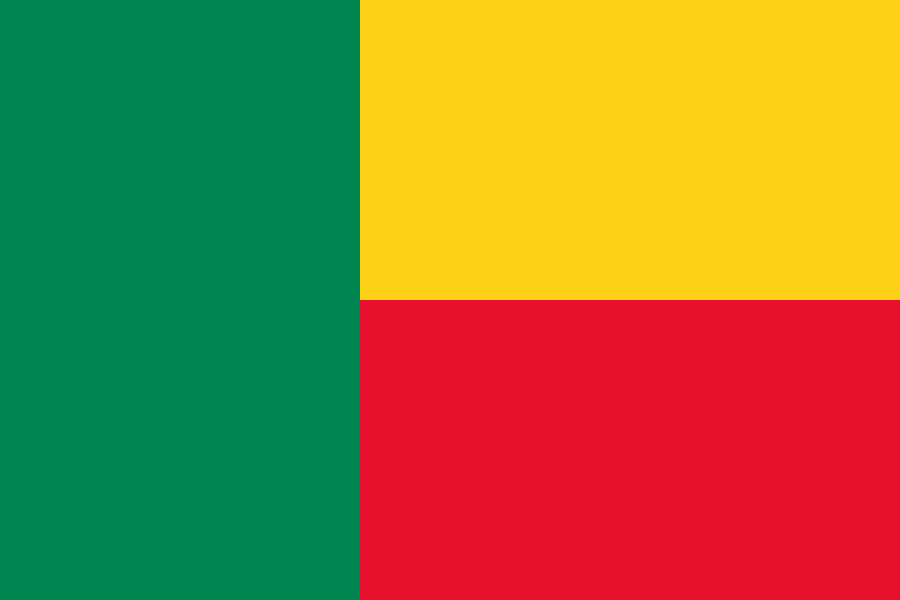
- ISO code
- BJ
- Population
- 679,012
- Currency
- XOF
- Timezone
- Africa/Porto-Novo
Arrival Shock at Cadjehoun Airport
The taxi driver quotes XOF 15,000 for a 15 minute ride. The real price is XOF 3,000 to 5,000. This is your first test in Cotonou. How you handle it sets the tone for the whole trip.
Cadjehoun Airport processed 503,633 passengers in 2019. The arrivals hall is small and the negotiation starts before you reach the curb. No ride hailing apps operate reliably here. The Société des Aéroports du Bénin runs the airport. The taxi touts run the parking lot. Walk past the men in vests who grab your bag. Go straight to the line of parked taxis and speak directly to a driver in French. Agree on a price for central Cotonou before anyone puts a suitcase in the boot. Have the exact amount in small notes. Drivers will claim they have no change. They do.
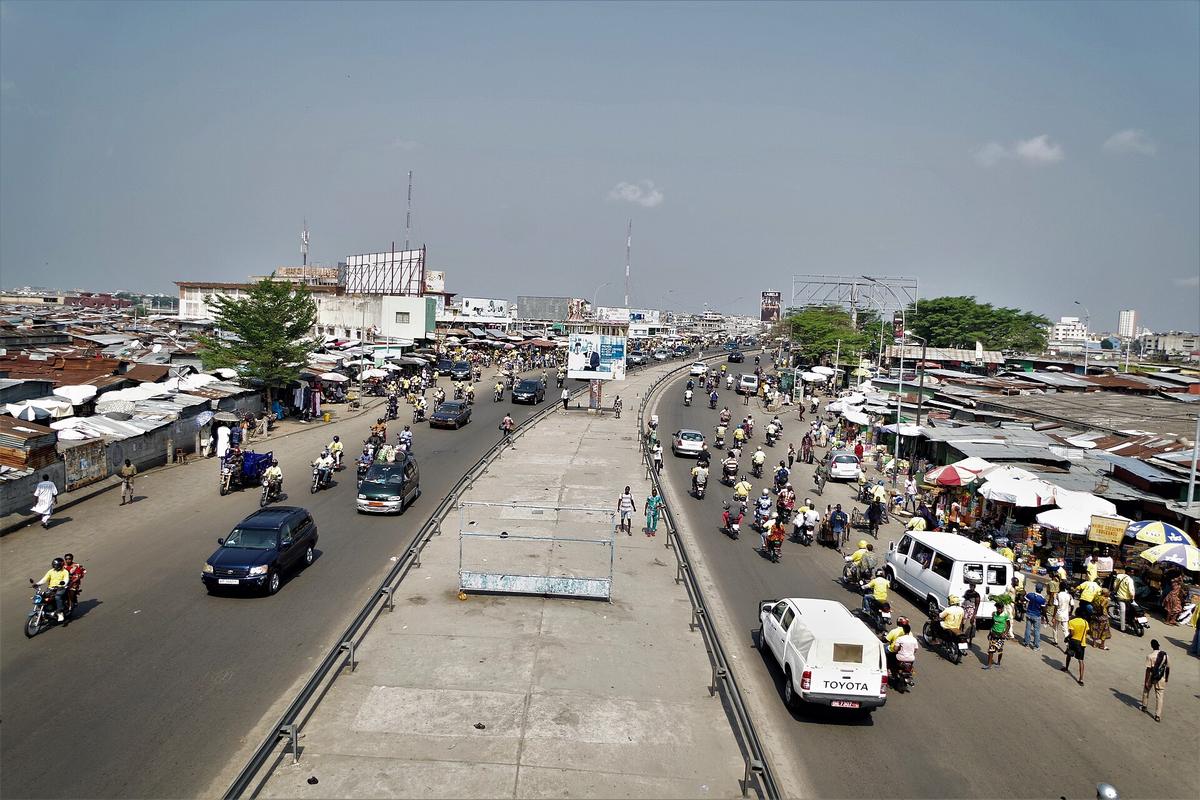
Your first view of the city is a four lane highway clogged with zemidjans, the moto taxis that are the real transport backbone. Cotonou's 2013 census counted 679,012 residents; by 2025 estimates push past 1,000,000. The city feels larger than any number suggests because everyone moves at once. You arrive in humidity of 70% to 90% with temperatures between 24°C and 31°C year round. The air hits you before the geography does.
Stay two nights. The recommended minimum is one to two nights, and a typical stay before moving on to Ouidah, Ganvié or Porto Novo is two to three nights. This is enough time to get your bearings, buy a local SIM, change money, and visit the two places in Cotonou that justify the stopover. Do not try to extend it. Cotonou is a working city, not a sightseeing destination.

Surviving the Zemidjan: Navigate by Landmarks, Not Street Names
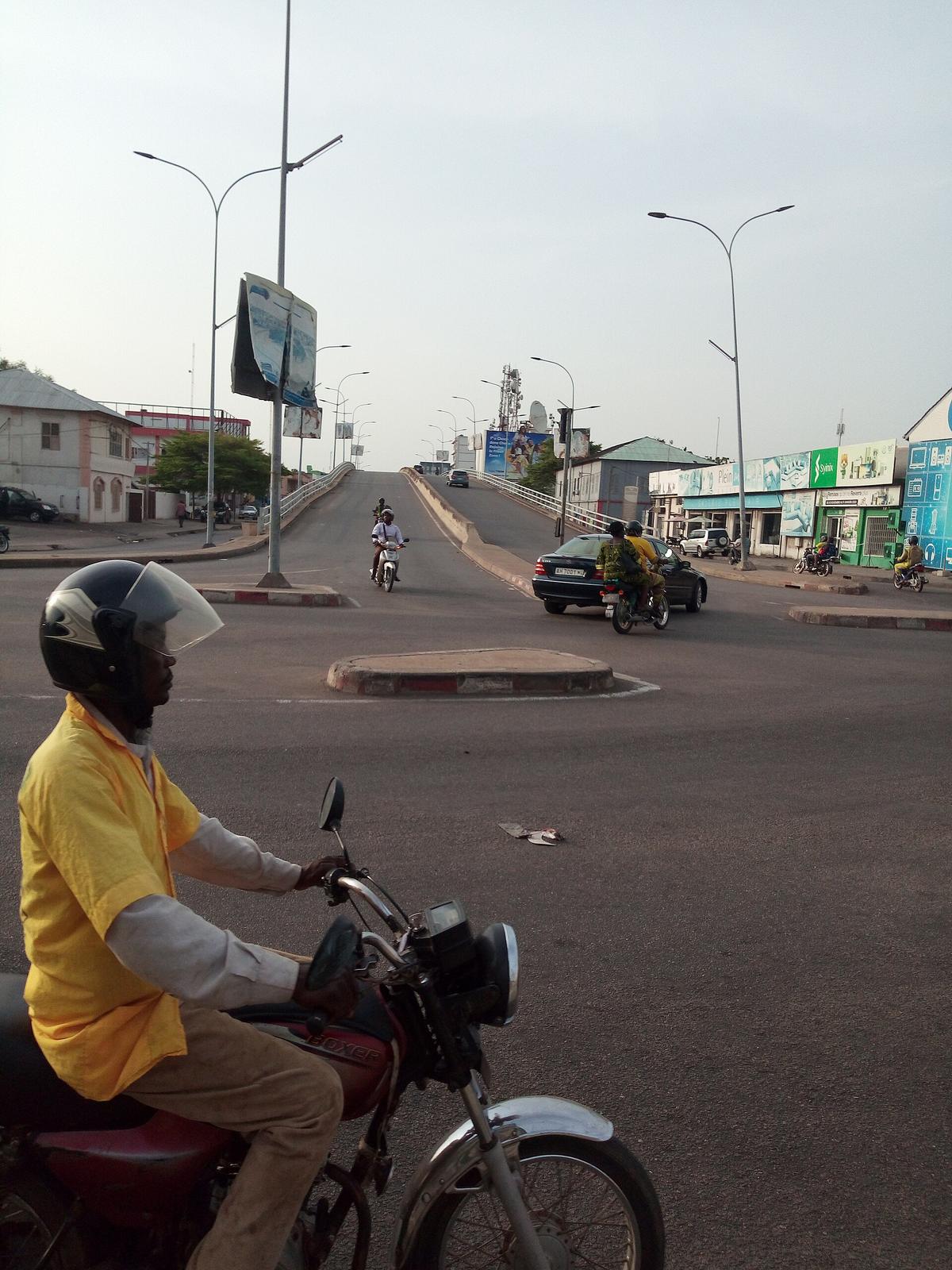
You will use zemidjans every day. The 2026 base fare for a short trip is XOF 150 to 300, and the per kilometre rate is XOF 100 to 200. Negotiate before you mount the bike, always. Drivers rarely know street names. They navigate by roundabouts, pharmacies, hotels, and markets. Know your landmark before you flag one down.
Helmets are not guaranteed. The driver provides one helmet for himself. Passenger helmets exist but are scarce. If you plan to use motos daily, bring a lightweight helmet from home. The official passenger limit is one. In practice, drivers carry two or three passengers. Refuse a ride if the bike looks overloaded. The accident rate is not published, but the risk is real.
Where to Stay
Cotonou's accommodation zones are Haie Vive, Zone des Ambassades, Fidjrossè, and Ganhi. Haie Vive is the most practical for a short stay. It sits behind the airport, close to the Fondation Zinsou, and has the highest concentration of mid range hotels. A mid range room in 2026 costs XOF 25,000 to 60,000 per night. Budget options run XOF 8,000 to 20,000. High end properties go for XOF 80,000 to 150,000 or more. Book Haie Vive for convenience, not atmosphere.
Buying a SIM and Handling Cash
Buy an MTN or Moov Africa SIM at the airport or at a downtown agency. Bring a passport photo. 4G is decent in Cotonou and Porto Novo but patchy in the north and inside Pendjari National Park. Download offline maps and a French translation app before leaving the capital.
ATMs frequently reject foreign Visa cards. Carry euros or dollars in cash as backup and change them at banks in Cotonou. The currency is the West African CFA franc, fixed at EUR 1 equals XOF 655.957. Police roadblocks on the main highways are frequent. Carry passport photocopies. Officers often ask for small bribes. Stay polite, show the copy, and you will usually pass without payment.
Dantokpa Market: What to Do and What to Skip
Dantokpa Market covers roughly 20 hectares and receives up to 1,000,000 visitors daily on its busiest days. Wednesday and Saturday are the peak. Arrive at 08:00 if you want to see the market without being swept by the crowd.
The market is divided into six main sections: foodstuffs, textiles, traditional medicine known as the fetish market, household goods, livestock, and electronics. The fetish section is the reason anthropologists and photographers come. You will see dried animal parts, roots, powders, and talismans used in Vodun practices. This is not a show for tourists. Vodun is a living religion in Benin, and the vendors are practitioners selling to practitioners. Do not photograph without asking permission. Do not touch items you do not intend to buy.
Pickpockets work the textile and electronics sections hardest. Keep your phone in a front pocket or a money belt. Leave your camera in your accommodation and use your phone for photos. Carry small denominations only. Vendors will not break a XOF 5,000 note for a XOF 200 purchase and will assume you are paying for a larger item instead.
The one food item to eat at Dantokpa is wagasi cheese, fried and sold by Fulani herders. It is cheap, fried fresh, and safe for most stomachs. Skip the raw meat sections unless you are buying to cook yourself.
Beach Road and the Few Respites
Swimming at Cotonou's beach is prohibited. Rip currents and sandbars make it fatal. Drownings are frequent, though exact numbers are not officially published. The beach is for walking, football, and eating at the maquis that line the road. Go for sunset, not for a swim.
The Fondation Zinsou is the one cultural attraction in Cotonou that earns a visit. Find it in Quartier Haie Vive, behind the airport. Entry is free. It is open Tuesday through Sunday, closed Monday. Founded in 2005, its collection focuses on contemporary African art. The gallery is small. You can see everything in 45 minutes. It is a cool, quiet space after the noise of the market and the motos. Use it as a reset.
Using Cotonou as Your Base: Day Trips That Deliver
Ouidah is 40 km from Cotonou, a 45 to 60 minute drive by car. A taxi costs XOF 10,000 to 15,000. Ouidah holds the Route des Esclaves, the Door of No Return memorial, the Temple of Pythons with live snakes, and the Basilique de l'Immaculée Conception. It is also the epicentre of Vodun festivals, especially January 10 for Fête du Vodoun. The dry harmattan months from December to February are peak season for this reason. Go as a day trip. Ouidah does not require an overnight stay unless you want to attend a festival ceremony.
Ganvié stilt village sits on Lake Nokoué. Hire a pirogue from Abomey Calavi for XOF 15,000 to 25,000 per boat. The boat ride takes 30 minutes. Ganvié is a functioning town on water, not a tourist set. Floating markets sell fresh lagoon shrimp grilled on the pirogues. This is a half day trip. Leave Cotonou by 07:00 to avoid the heat and crowds.
Porto Novo is the official capital, 45 minutes from Cotonou by taxi for XOF 8,000 to 12,000. See the Musée Honmé, King Toffa's palace, and the Musée da Silva for Afro Brazilian heritage. The city is sleepier than Cotonou. Use it as a morning or afternoon escape.
Do not try to cover the whole country in under a week. The north south journey from Cotonou to Pendjari National Park alone eats two full days return. Rushing means missing the ceremonies and conversations. Stick to the south: Cotonou, Ouidah, Ganvié, Porto Novo, and Grand Popo if you have time. That is a solid week.

| Destination | Distance | Drive Time | Taxi Cost (XOF) |
|---|---|---|---|
| Ouidah | 40 km | 45-60 min | 10,000-15,000 |
| Porto-Novo | Not specified | 45 min | 8,000-12,000 |
| Grand-Popo | Not specified | 1.5 hours (bush taxi) | 5,000-7,000 |
| Abomey-Calavi (for Ganvié) | Not specified | 30 min pirogue from Abomey-Calavi | 15,000-25,000 per boat |
The One Rule That Saves You
After two nights in Cotonou, leave for Ouidah or Ganvié. The city is not a destination to savour. It is the arrival shock, the place where you learn how Benin works: the negotiation, the heat, the patience required. Stay long enough to get your SIM, your cash, your bearings, and one quiet hour at the Fondation Zinsou. Then move on. The country south of Cotonou is where the trip becomes worth the hassle.
Arrive at Dantokpa Market before 09:00 on a Saturday with small notes, a full phone battery, and no camera around your neck. That single decision filters out the worst of the crowd and the best of the pickpockets. The market opens itself to you when you show up early and light.
Common Questions
How do I get from Cotonou Airport to my hotel without getting overcharged?
Walk past the touts inside the terminal. Go directly to the parked taxis outside. Negotiate the fare before getting in. Have the exact amount in small notes. The ride takes 15 to 30 minutes. No ride-hailing apps work reliably.
Is Dantokpa Market safe for a solo traveller?
Safe if you follow rules. Visit before 09:00 on a Wednesday or Saturday for the best experience. Keep your phone in a front pocket. Do not carry a camera around your neck. The market is a pickpocket hotspot in the textile and electronics sections.
What should I do if my Visa card is rejected at an ATM?
Go to a bank branch inside Cotonou, not a standalone ATM. If that fails, use euros or dollars exchanged at a bank. Bring EUR 200 in cash as a minimum backup. ATMs reject foreign Visa cards frequently; Mastercard works slightly more often.
Can I swim at the beach in Cotonou?
No. Swimming is prohibited due to strong rip currents and shifting sandbars. Drownings are common. Use the beach for walking, football, and eating at the maquis restaurants. Head to Grand-Popo for safer swimming conditions.
Read next
-
 Benin End to End: Cotonou, the Vodun Coast and the Atakora Hills
Benin end to end: a travel guide for adventurous travellers covering Cotonou, the Vodun coast, the Dahomey palaces, and the remote Atakora hills.
Benin End to End: Cotonou, the Vodun Coast and the Atakora Hills
Benin end to end: a travel guide for adventurous travellers covering Cotonou, the Vodun coast, the Dahomey palaces, and the remote Atakora hills.
-
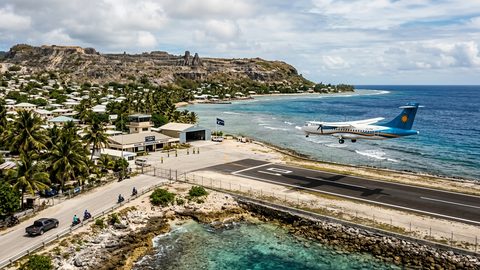 Getting to Nauru, the Pacific State Where Air Schedules Define Your Stay
A logistics briefing on reaching Nauru by air — covering weekly flights from Brisbane and Honiara, visa-on-arrival requirements, and planning around fixed departure dates.
Getting to Nauru, the Pacific State Where Air Schedules Define Your Stay
A logistics briefing on reaching Nauru by air — covering weekly flights from Brisbane and Honiara, visa-on-arrival requirements, and planning around fixed departure dates.
-
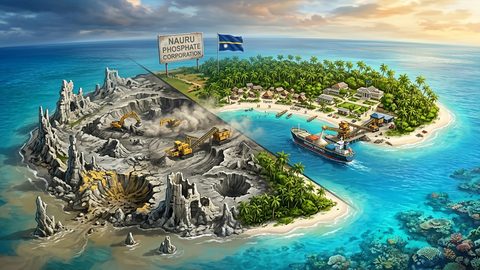 Nauru, the Pacific Republic That Phosphate Built and Nearly Erased
Nauru is one of the Pacific's most overlooked republics. A candid guide to topside, Buada Lagoon, colonial history, and how to actually get there.
Nauru, the Pacific Republic That Phosphate Built and Nearly Erased
Nauru is one of the Pacific's most overlooked republics. A candid guide to topside, Buada Lagoon, colonial history, and how to actually get there.
-
 Planning Independent Travel in the Wakhan Corridor, Tajikistan
Independent travel in Tajikistan's Wakhan Corridor: GBAO permits, road conditions from Ishkashim, realistic travel windows, and honest logistics for serious overlanders.
Planning Independent Travel in the Wakhan Corridor, Tajikistan
Independent travel in Tajikistan's Wakhan Corridor: GBAO permits, road conditions from Ishkashim, realistic travel windows, and honest logistics for serious overlanders.