Tadjoura: The Whitewashed Port on the Gulf Where Djibouti's History Began
Tadjoura, the whitewashed town across the Gulf of Tadjoura, is Djibouti's oldest port and a quiet window into the Afar sultanate's past.
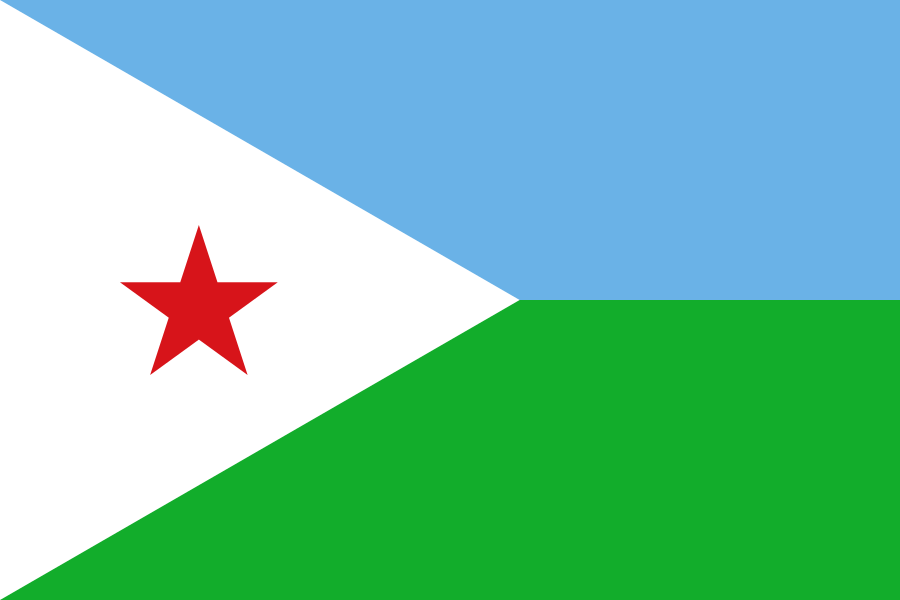
- Flag
-
- ISO code
- DJ
- Population
- 19,533
- Currency
- DJF
- Timezone
- Africa/Djibouti
Tadjoura: the Whitewashed Port on the Gulf Where Djibouti’s History Began
The ferry engine cuts as the hull bumps the concrete quay. White walls glare in the midday sun, and the call to prayer from a minaret older than the nation itself washes over the deck. You have arrived in Tadjoura, a place that makes Djibouti City feel like a recent invention.
Tadjoura, called La Ville Blanche for its whitewashed coral stone buildings, predates the capital by centuries. Founded in the 12th century, it is one of the oldest continuously inhabited towns on the East African coast. Its name in the Afar language means "spring" or "water source," and that spring of history runs deep. For generations, this was the seat of the Afar sultanate, a slave port, a French colonial outpost, and the original port serving the gulf trade. Djibouti City, by contrast, was a coaling station built in the 1880s. Tadjoura was already middle-aged.
That layered history is not a museum piece. It is the texture of the town today. The whitewashed old town, the 30 total rooms scattered across its three lodgings, and the ferry rhythm that ties it to the capital all conspire to give Tadjoura a sense of remote arrival that the rest of the country lacks. Knowing what to see, how to get there, and why the crossing matters transforms a simple visit into an arrival in another century.


The Crossing: Why You Take the Ferry and Not the Road
You have two options to reach Tadjoura from Djibouti City. Choose the ferry.
The straight line across the Gulf of Tadjoura is 35 kilometres. The Port Autonome International de Djibouti runs one to two departures per day, and the crossing takes 45 to 60 minutes. The 2025 ticket price was DJF 1,000 to 1,500 one way. That fare buys you a ride that delivers you straight into the old port, steps from the whitewashed alleys. The road alternative, the RN1 and RN9, is 200 kilometres and takes three to four hours on paved but partly degraded asphalt. It saves no time and costs more in fuel and wear. The ferry is the right call.
Book the morning crossing. Arriving by sea frames the town correctly: the white strip of Tadjoura appears against the dark Goda Mountains behind it. You see the mosque minarets before you smell the port. The afternoon return ferry leaves you time for a full day: morning arrival, a walk of the old town, lunch, and an afternoon at Sables Blancs beach 7 kilometres east, then back to the capital by late afternoon.
What to Do in Tadjoura: Mosques, Market, and the White Sands
The Old Town and Central Mosque
Your day in Tadjoura follows a tight geography. The old town is walkable in two hours. Start at the central mosque, one of the oldest in the Horn of Africa. Its minaret, like the buildings around it, is whitewashed coral stone. Non Muslims cannot enter, but the exterior and the courtyard are visible from the street. Photograph it early, before the light flattens.
The Friday Market
If your visit falls on a Friday, the weekly morning market fills the square near the port. Afar traders bring livestock, spices, and khat. The market is not staged for visitors; it supplies the town. Move slowly, nod, and do not photograph faces without permission.
The rest of the old town is a network of narrow lanes between white and blue painted coral stone walls. The colour is not cosmetic. Coral stone, quarried from the reef, is soft when cut and hardens in air. It keeps interiors cool. The whitewash reflects the gulf sun. Tadjoura has no grand monuments. Its architecture is the monument.
Sables Blancs Beach
Seven kilometres east of town on a paved road, Sables Blancs lives up to its name. White sand, turquoise water, and near zero development. A 10 to 15 minute drive gets you there. Bring water, sun protection, and food; there is no reliable vendor on the beach. The snorkelling is mediocre by Red Sea standards, but the swimming is excellent. The beach is empty on weekdays and has a handful of locals on weekends. That is the appeal.
Whale Shark Trips
From November to February, whale sharks aggregate in the Gulf of Tadjoura. Dolphin Excursions Djibouti operated trips in 2025 from Tadjoura port, lasting four to six hours for a half day. Book in advance through your hotel; the town has under 30 rooms total, and the operators are used to coordinating with the lodges. The whale shark season is the single best reason to visit between November and February specifically.
Day Forest National Park
Thirty kilometres east of Tadjoura, Day Forest National Park protects 3.5 square kilometres of ancient juniper and olive woodland at 1,200 to 1,750 metres elevation. Designated in 1939, it is the last remnant of a forest that once covered the Goda Mountains. The road requires a 4WD and takes one to 1.5 hours from Tadjoura. The park holds Juniperus procera and Olea africana specimens several centuries old. You need a guide from the park office at the entrance. Combine it with a day that starts early, returns by late afternoon, and skips the beach.
.jpg)
Where to Stay and the Limits of Tadjoura Infrastructure
Tadjoura has exactly three accommodation options as of 2025: Hôtel Le Golfe at the port, Auberge Sables Blancs on the beach road, and Campement Touristique de Tadjoura set back from the coast. Combined, they hold under 30 rooms. Book ahead even in low season. Hôtel Le Golfe is the most central and the loudest; the ferry wake and the call to prayer both reach your window. Auberge Sables Blancs is the better choice for a quiet night, with direct beach access but no restaurant for dinner. The Campement is basic and preferred by overland tour groups.
This scarcity sets the tone. Tadjoura is not a resort. It is a functioning small port with a history that happens to be extraordinary. The Wi Fi is unreliable, power cuts happen, and no one expects English to work. French is the operating language; the Afar language is what you hear in the market. Carry cash in DJF, as the one ATM in town often runs dry. Do not plan a dinner out; your hotel will provide a set meal of grilled fish, rice, and vegetables, and that is the best option.
The single most practical thing you should do next: book the morning ferry from Djibouti City at least one day in advance, confirm your return crossing with the captain before you disembark, and pack for a day with no services between your arrival and lunch.
What to See in Tadjoura
Common Questions
Is Tadjoura safe for solo travellers?
Yes. Tadjoura has very low crime. The main risk is the ferry schedule changing unexpectedly. Confirm departures with the port office the evening before. Solo travellers should avoid walking the old town after midnight, but that is routine caution anywhere.
Can I visit Tadjoura as a day trip from Djibouti City?
Yes, and most travellers do. Take the morning ferry, walk the old town, visit the central mosque exterior, eat lunch, spend two hours at Sables Blancs, then return on the afternoon ferry. You need six to eight hours total.
Do I need a guide to explore Tadjoura?
No. The old town is small and walkable without a guide. You need a guide only for Day Forest National Park and for whale shark trips. Those guides are arranged through your hotel or the operator Dolphin Excursions Djibouti.
What should I pack for a day in Tadjoura?
Sun protection, a hat, water, snacks, swimwear for Sables Blancs, a towel, cash in small DJF denominations, and a power bank. Do not expect to buy food or water anywhere except your hotel. No pharmacy or shop reliably stocks supplies.
Read next
-
 The Mosques of Tadjoura
What to see at Tadjoura's historic mosques and how to visit respectfully: dress codes, photography rules, and prayer-time etiquette.
The Mosques of Tadjoura
What to see at Tadjoura's historic mosques and how to visit respectfully: dress codes, photography rules, and prayer-time etiquette.
-
 Djibouti Salt Lakes Whale Sharks and the Rift: A Small Country Mostly Landscape
Djibouti is a small country that is mostly landscape: Lac Assal's salt crust, whale sharks in the Gulf of Tadjoura, and the Goda Mountains rising from the rift.
Djibouti Salt Lakes Whale Sharks and the Rift: A Small Country Mostly Landscape
Djibouti is a small country that is mostly landscape: Lac Assal's salt crust, whale sharks in the Gulf of Tadjoura, and the Goda Mountains rising from the rift.
-
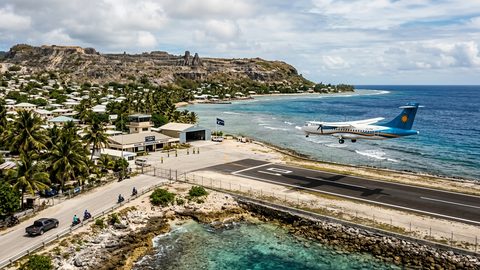 Getting to Nauru, the Pacific State Where Air Schedules Define Your Stay
A logistics briefing on reaching Nauru by air — covering weekly flights from Brisbane and Honiara, visa-on-arrival requirements, and planning around fixed departure dates.
Getting to Nauru, the Pacific State Where Air Schedules Define Your Stay
A logistics briefing on reaching Nauru by air — covering weekly flights from Brisbane and Honiara, visa-on-arrival requirements, and planning around fixed departure dates.
-
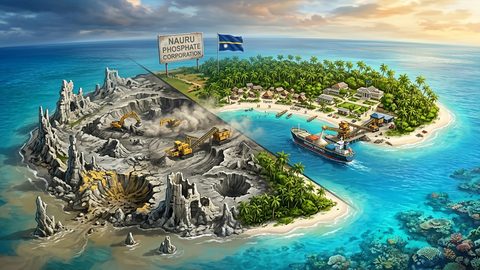 Nauru, the Pacific Republic That Phosphate Built and Nearly Erased
Nauru is one of the Pacific's most overlooked republics. A candid guide to topside, Buada Lagoon, colonial history, and how to actually get there.
Nauru, the Pacific Republic That Phosphate Built and Nearly Erased
Nauru is one of the Pacific's most overlooked republics. A candid guide to topside, Buada Lagoon, colonial history, and how to actually get there.
-
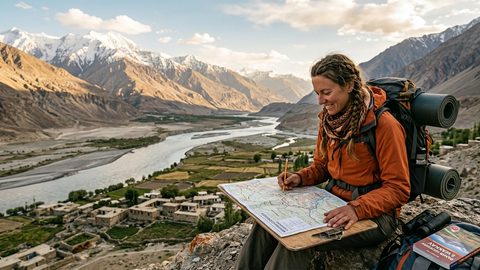 Planning Independent Travel in the Wakhan Corridor, Tajikistan
Independent travel in Tajikistan's Wakhan Corridor: GBAO permits, road conditions from Ishkashim, realistic travel windows, and honest logistics for serious overlanders.
Planning Independent Travel in the Wakhan Corridor, Tajikistan
Independent travel in Tajikistan's Wakhan Corridor: GBAO permits, road conditions from Ishkashim, realistic travel windows, and honest logistics for serious overlanders.