Nigeria Beyond Lagos: Kano, Zaria, Jos, Abeokuta, and Aba
Nigeria’s ancient cities—Kano, Zaria, Jos, Abeokuta, and Aba—each hold a distinct history and rhythm that independent travellers can reach with patience and local guidance.
- Flag
-

- ISO code
- NG
- Population
- 195,874,740
- Currency
- NGN
- Dial code
- +234
Nigeria Beyond Lagos: Kano, Zaria, Jos, Abeokuta, and Aba
You want Nigeria beyond the Lagos traffic and the Abuja diplomatic bubble, but you are not sure how the old northern emirates, the Jos Plateau, and the southwestern Yoruba towns fit into a single itinerary. They work as a loop that arcs from the medieval trans-Saharan trade routes through the tin-mining highlands to the industrial markets of the east. Each city offers something the others cannot. The catch: none of these places works as a spontaneous stop. You need a local contact, a driver you trust, and the patience to negotiate security constraints that shift with each state.
- Visa Type: e-Visa on arrival or visa in advance
- E-Visa Cost: USD 80, 110 depending on nationality and processing speed
- E-Visa Issuing Body: Nigeria Immigration Service
- Airports With Scheduled International Service: Murtala Muhammed International Airport (Lagos, LOS), Nnamdi Azikiwe International Airport (Abuja, ABV), Mallam Aminu Kano International Airport (Kano, KAN), Port Harcourt International Airport (PHC)
- Public Transport Backbone: Intercity buses and shared taxis (danfo/minibus)
- Public Transport Gap: No scheduled public transport in rural areas north of Jos or east of Maiduguri; shared taxis only
- Rail Service: Lagos, Ibadan standard-gauge line; Abuja, Kaduna standard-gauge line; no passenger rail north of Kaduna or east of Kano
- Currency: Nigerian naira (NGN)
- Card Acceptance: Cards work at major hotels and supermarkets in Lagos and Abuja; cash required elsewhere
- ATM Reliability: Unreliable outside state capitals; often empty on weekends
- Dry Season: November, March
- Harmattan Haze: December, February, worst in the north
- Wet Season: April, October
- Peak Wet Months: June, September
- Safety Advisory Source: UK FCDO, US State Department travel advisories (annual)
- Current Advisory Status: Advise against all travel to Maiduguri and much of Borno State; advise against all but essential travel to parts of Kaduna, Zamfara, Katsina, and Niger States (annual, verify before travel)
Kano: the Dye Pits That Outlasted Empires
The Kofar Mata Dye Pits
Kano has been a commercial nerve centre since the 11th century, and the Kofar Mata dye pits have been in continuous use since 1498. Half a millennium of indigo staining the same stone pits. Arrive by 08:00, before the heat turns the courtyard into a furnace. The dyers will show you how they beat the cloth to a metallic sheen. Pay a small fee directly to the guild; there is no official ticket booth.
The Old City Walls And The Palace
Afterward, walk the circuit of the old city walls, built between the 11th and 14th centuries. The most intact gate is Kofar Mata, right next to the pits. Skip the guided tour of the entire wall, only sections remain, and instead hire a local taxi to drive you to Kofar Doka for the best-preserved stretch.
The Emir's Palace in Kano is not open to casual visitors. Do not try to enter. Stand at the palace gates at sunset and watch the mounted guards in their ceremonial regalia. It takes ten minutes. Then go to the Gidan Makama Museum for a sharp overview of the Hausa-Fulani statecraft that built this city. Budget 90 minutes inside.
Security And Movement
Security in Kano is manageable during daylight hours if you stay in the old city and the commercial centre, but the 2024 advisory from the UK FCDO warned against all but essential travel to parts of Kaduna State directly south. Do not drive between Kano and Kaduna after dark. Verify the current advisory with the US State Department before you book.


Zaria: University Town Behind Medieval Walls
The Two Faces Of Zaria
Zaria sits 80 kilometres north of Kaduna, and the contrast between its two identities is sharp. On one side, Ahmadu Bello University, the largest university in Nigeria, with a campus that feels like a small city of its own. On the other, the remains of a 16th-century city wall, with its most intact section near Kofar Doka. Visit the wall in the early morning, when the light angles across the rammed earth and you can see the scale of the fortification. The 2024 advisory for Kaduna State requires caution: do not travel to Zaria without a local contact who can confirm the current situation on the road from Kaduna.
The Emir's Palace And Practicalities
The Emir's Palace in Zaria is active and allows visitors into the outer courtyards only. Dress conservatively. Women should wear a long skirt and cover their heads. Men should wear trousers. The palace guards will ask your purpose; say you want to see the architecture, not the emir. If you have a letter of introduction from a Nigerian contact, present it. Without one, expect a brief look and nothing more. That is still worth the detour. Zaria is a day trip from Kaduna, not an overnight stop. There is no passenger rail north of Kaduna, so you will use a shared taxi or a private car. Book the return before you leave Kaduna in the morning.
Jos: Cool Air, Tin Mining, and a Plateau to Breathe
The Sights And The Season
Jos sits at 1,200 to 1,400 metres above sea level, which means temperatures drop noticeably compared to the lowlands. The dry season from November to March is the only window for this city. In the wet months of June to September, the unpaved roads on the plateau turn to mud and rural sites become inaccessible. The Jos Wildlife Park and the National Museum are the two anchor sights. Visit the museum first, then the park in the late afternoon when the animals are active. The tin-mining history that built Jos is visible in the abandoned pits and tailing ponds around the city. You do not need a guide to see them; drive the road toward Bukuru and look for the orange-tinted water in the old excavations. Stop only in daylight.
Transport And Security On The Plateau
The public transport gap matters here. There is no scheduled public transport in rural areas north of Jos. To visit the nearby villages of the Berom people or the Shere Hills, you must hire a private car and driver from Jos. Budget ₦15,000 to ₦25,000 per day for the car and fuel, negotiated in advance. Do not rely on taxis appearing in the afternoon; they disappear after lunch. Jos is one of the safer cities on this route for independent travellers, but the road from Jos to Bauchi in the east is subject to periodic security alerts. Check the FCDO advisory for Plateau State before departing.
| City | Main Draw | Entry Price | Best Season | Minimum Time |
|---|---|---|---|---|
| Kano | Kofar Mata dye pits, old city walls | Small fee to dyers at pits | November–March | 1.5 days |
| Zaria | Ahmadu Bello University, old city walls | Free at wall; palace outer courtyard free | November–March | 1 day trip from Kaduna |
| Jos | Cool plateau, Jos Wildlife Park, National Museum | Park ₦500–1,000; museum ₦200 | November–March | 2 days |
| Abeokuta | Olumo Rock, Egba heritage sites | Olumo Rock ₦1,000 | November–March | 1.5 days |
| Aba | Ariaria International Market, artisanal industry | Free market entry | November–March | 1–2 days |
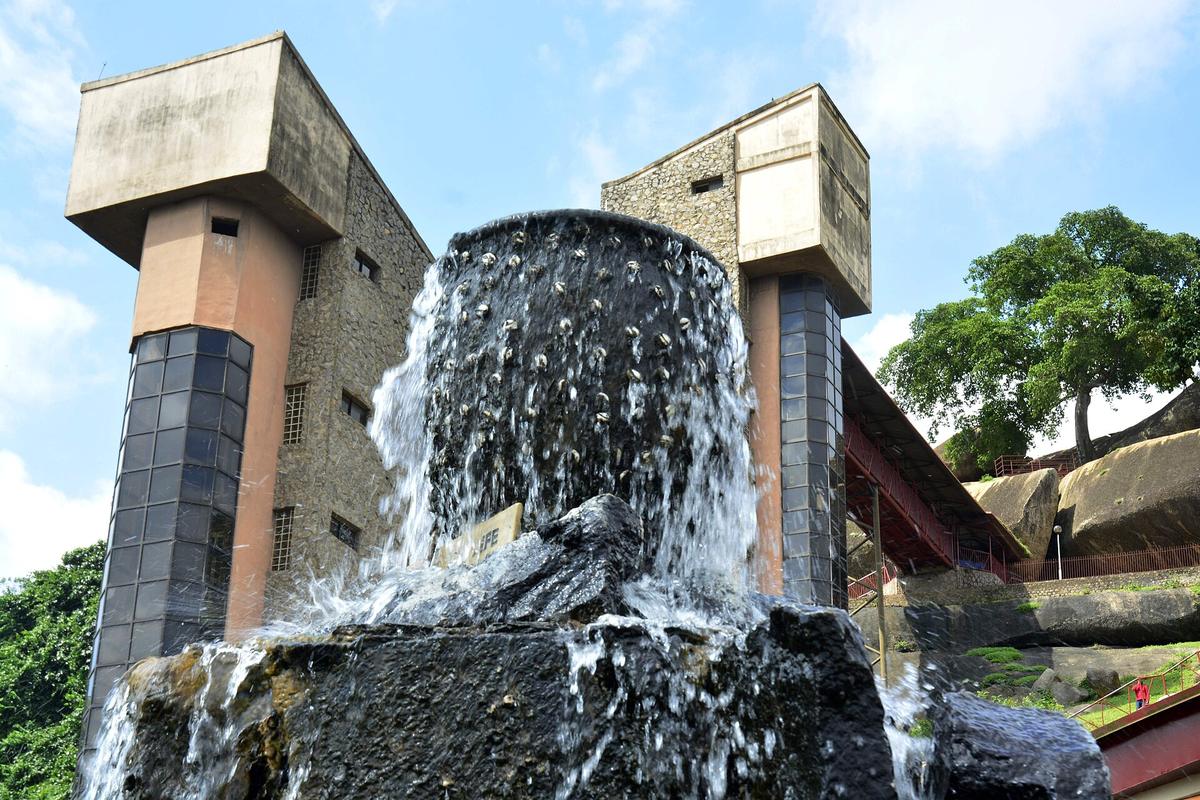

Abeokuta: Olumo Rock and the Egba Sanctuary
Climbing Olumo Rock
Abeokuta, meaning "under the rock", is built around a 137-metre granite outcrop called Olumo Rock. Climb the stairway to the top and you will pass shrines embedded in the rock face, left as offerings by warriors who hid here during the 19th-century Dahomey raids. The entry fee is around ₦1,000. Arrive by 07:30 to beat the tour groups from Lagos, which arrive around 10:00. The view from the top shows how the city spread in a radial pattern. Below, the Egba heritage sites include the Ake Palace and the Centenary Hall. These are walkable from the rock. Hire a guide at Olumo for ₦500 to ₦1,000; they are mandatory for access to the shrines.
The Ilorin Detour And The Markets
The Emir's Palace in Ilorin, built in the 1830s, is an optional detour if you are driving from Abeokuta toward the north. It is active, and visitors can enter the outer courtyards with permission. Do not go without phoning ahead. Ilorin is two hours north of Abeokuta by shared taxi. The detour adds a full day to your itinerary. Decide whether the palace matters to you. If it does not, skip Ilorin and use the time for the markets in Abeokuta, where the adire (indigo-dyed cloth) is better than what you will find in Lagos.
Getting Between These Cities
The rail service is limited. The Lagos, Ibadan standard-gauge line and the Abuja, Kaduna line exist, but there is no passenger rail north of Kaduna or east of Kano. You will use intercity buses and shared taxis. The bus from Lagos to Abeokuta takes 1.5 hours. From Abeokuta to Ibadan is 1.5 hours. From Ibadan to Kaduna is 8 to 10 hours on the road. From Kaduna to Kano is 3 to 4 hours. From Kano to Jos is 5 to 6 hours. From Jos to Aba is 10 to 12 hours through difficult terrain. Do not attempt the Jos, Aba leg in one day. Break it in Makurdi or Enugu. ATM reliability disappears outside state capitals. Carry enough cash in naira for each leg of the journey.
Aba: the Engine Room of Nigerian Industry
Ariaria International Market
Aba is not a city for sightseeing. It is a city for buying. Ariaria International Market, the largest market in Aba, spreads across hectares of covered stalls where artisans produce shoes, bags, textiles, and leather goods. Do not visit alone. Hire a local guide from the National Museum of Colonial History in Aba; they can introduce you to workshop owners who actually make the goods, not just resell them. The museum itself is modest, worth 45 minutes, but it gives context to the Igbo entrepreneurial tradition that drives this city. Ekeoha Market and Ngwa Road Market are secondary options if you are sourcing specific items.
Staying Safe And Commissioning Goods
Security is the constraint here. Aba is in Abia State, which the 2024 FCDO advisories did not flag at the same level as Borno or Kaduna, but the road from Aba to Port Harcourt passes through areas that can become tense. Travel only in daylight. Do not walk the markets with a visible camera or phone. The real value of Aba is in the artisanal industry: you can commission custom leather shoes or bags and collect them 48 hours later. That requires negotiation on day one and payment on collection. Do not pay in full upfront. Pay half, collect the goods, pay the balance. The dry season from November to March is the only practical window. In the wet months, the unpaved access roads to the workshops turn to mud.
One honest caveat: this route through Kano, Zaria, Jos, Abeokuta, and Aba works only if you accept that Nigeria will force you to slow down, negotiate every ride, carry cash at all times, and verify security conditions daily. It is not a smooth trip. It is a vivid one.
Common Questions
Do I need a local guide for Kano and Zaria, or can I manage alone?
You need a local contact for both cities. In Kano, a guide gets you into the dye pits without haggling. In Zaria, a contact at the university or a driver who knows the wall sections saves you hours. Without one, expect to be turned away at the palace gates.
How many days should I budget to cover all five cities properly?
Ten to fourteen days minimum. Kano and Jos need two days each. Abeokuta and Aba need one to two each. Zaria is a day trip. The travel time between them eats three to four full days. Rushing it means missing the workshops in Aba and the plateau walks in Jos.
Is Aba safe for a solo traveller who wants to buy at Ariaria Market?
Yes in daylight with a local guide. No if you wander alone with a phone out or a visible camera. The market is dense and pickpocketing is common. Hire a guide from the National Museum of Colonial History for 2,000 naira. Do not carry more than you intend to spend.
What is the biggest mistake travellers make on this route?
Trying to cover all five cities in under ten days. The road from Jos to Aba takes 10 to 12 hours and the roads south of Jos degrade quickly in the wet season. The other mistake is not carrying enough cash. ATMs outside state capitals are empty on weekends.
Read next
-
 Getting to Nauru, the Pacific State Where Air Schedules Define Your Stay
A logistics briefing on reaching Nauru by air — covering weekly flights from Brisbane and Honiara, visa-on-arrival requirements, and planning around fixed departure dates.
Getting to Nauru, the Pacific State Where Air Schedules Define Your Stay
A logistics briefing on reaching Nauru by air — covering weekly flights from Brisbane and Honiara, visa-on-arrival requirements, and planning around fixed departure dates.
-
 Nauru, the Pacific Republic That Phosphate Built and Nearly Erased
Nauru is one of the Pacific's most overlooked republics. A candid guide to topside, Buada Lagoon, colonial history, and how to actually get there.
Nauru, the Pacific Republic That Phosphate Built and Nearly Erased
Nauru is one of the Pacific's most overlooked republics. A candid guide to topside, Buada Lagoon, colonial history, and how to actually get there.
-
 Planning Independent Travel in the Wakhan Corridor, Tajikistan
Independent travel in Tajikistan's Wakhan Corridor: GBAO permits, road conditions from Ishkashim, realistic travel windows, and honest logistics for serious overlanders.
Planning Independent Travel in the Wakhan Corridor, Tajikistan
Independent travel in Tajikistan's Wakhan Corridor: GBAO permits, road conditions from Ishkashim, realistic travel windows, and honest logistics for serious overlanders.