Djibouti Beyond the Base: Lac Assal, the Goda Mountains and the Gulf of Tadjoura
Djibouti is a small country that is mostly landscape: Lac Assal's salt crust, whale sharks in the Gulf of Tadjoura, and the Goda Mountains rising from the rift.
- Flag
-
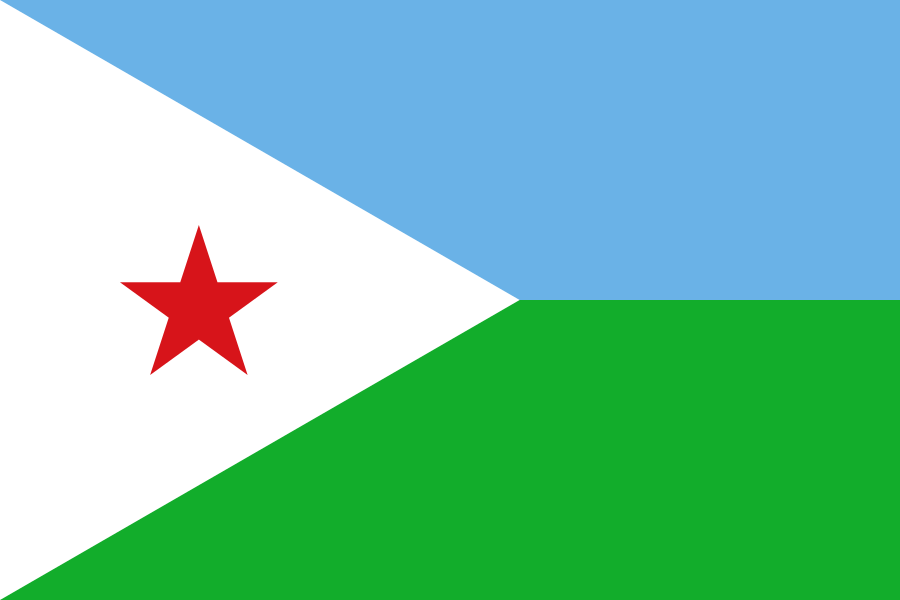
- ISO code
- DJ
- Population
- 958,920
- Currency
- DJF
- Dial code
- +253
Djibouti Beyond the Base: Lac Assal, the Goda Mountains and the Gulf of Tadjoura
At 6:30 AM on the Gulf of Tadjoura, the water is flat and grey and a dorsal fin cuts the surface without hurry. You are there because the reef is not the point, the beach is not the point, and the foreign military bases that dominate the country's reputation are emphatically not the point. Djibouti is almost entirely landscape: a salt lake at the lowest point in Africa, a whale shark migration route, the Goda Mountains rising from the rift. The bases are a fact of life but not the story. Read this country as a geological event. The Afar Triple Junction is tearing the continent apart and the scenery is the only thing worth the plane ticket.
- Lowest Point: Lake Assal, 155 m below sea level
- Lake Assal Salinity: 348 g/L (approx. 10 times seawater)
- Lac Abbé Notable Feature: Limestone chimneys with steam vents
- Ardoukoba Rift Last Eruption: 7, 14 November 1978
- Whale Shark Season: October to February in the Gulf of Tadjoura
- Hottest Months: June to August; average daily max in Djibouti City 41 °C with 50, 60% humidity
- Ethio-Djibouti Railway: 756 km standard gauge, Addis Ababa to Djibouti City (Nagad), opened 1 January 2018
- Primary Tourist Transport: Hired 4×4 with driver; cost USD 150, 250 per day (2025 rate)
- Currency: Djiboutian franc (DJF), pegged at 177.721 DJF = 1 USD
- International Airport: Djibouti, Ambouli International Airport (JIB)
Lac Assal and Lac Abbé: the Bottom of the Continent
Lac Assal, The Lowest Shore
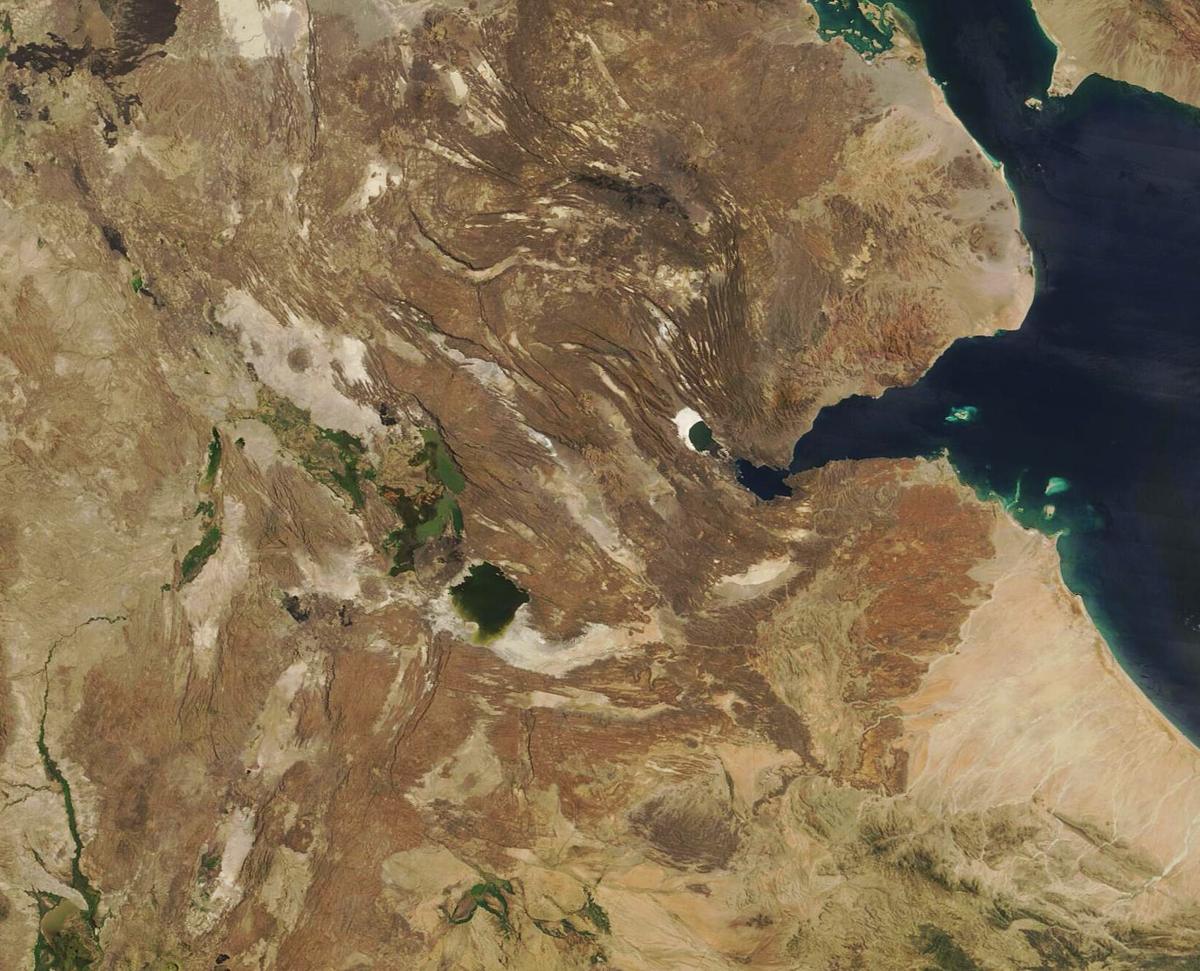
Drive west from Djibouti City and the road rises through volcanic rubble before dropping into something that looks like an error in the planet's construction. Lac Assal sits at 155 metres below sea level, the lowest point in Africa, and its salinity hits 348 grams per litre, roughly ten times that of seawater. You cannot swim in it, not the way you mean. Float, yes. But do not open your eyes underwater and keep any cut covered. The shore is salt crust, not sand, and it cracks underfoot like frozen snow that burns. Arrive by 08:00, before the heat turns the white glare punishing. The view from the rim, looking down at the deep blue water ringed by yellow salt terraces, is the one photograph that makes every guidebook. Take it. Then stay long enough to see nothing else move for an hour.
Lac Abbé, The Steam Chimneys
Lac Abbé, closer to the Ethiopian border, requires a 4×4 and a full day from Djibouti City. The limestone chimneys that rise from its flats are steam vents, formed by geothermal activity below the lake bed. They look like ruined towers, some reaching 50 metres, and in the early morning the mist rising from them makes the site feel post-human. You need a guide to find the safe route across the crust. Budget for a driver who knows the terrain because the surface does not forgive a wrong turn. The 2025 rate for a hired 4×4 with a driver ran USD 150 to 250 per day, and Lac Abbé is where you feel every franc was justified.
.jpg)
Swimming with Whale Sharks in the Gulf of Tadjoura
How The Encounter Works
From October through February, whale sharks gather in the Gulf of Tadjoura, and this is the single best reason to come to Djibouti if you care about the water. The season is short, the window is narrow, and the experience is nothing like the managed encounters in the Maldives or the Philippines. Here, you book a boat from Djibouti City or Tadjoura town, you motor out into open gulf, and you look for the shadow that is not a cloud. When you find one, you slip in. The water is warm, the visibility is decent but not crystalline, and the shark, which can reach 12 metres, shows no interest in you whatsoever. That is the point. You are not feeding it. You are not touching it. You are floating next to a creature that could choose to be anywhere and is here.
Booking And Timing
Book through a specialist operator in Djibouti City, not a general tour agency. Ask how many boats they run per morning. More than four means the sharks get crowded and the experience degrades. Arrange it for November when water temperature and visibility peak together. Do not expect whale sharks every day; the migration follows food, not a schedule. If you have three days in the gulf, you have a high probability. If you have one, accept the gamble.
The Goda Mountains and the Ardoukoba Rift
Day Forest And The Escarpment
The Goda Mountains rise north of the Gulf of Tadjoura, cutting across the landscape as a sudden green wall in a country that is mostly brown and grey. The Day Forest National Park sits here, a remnant of juniper and boxwood that survives on the moisture pulled in from the gulf. Day Forest is not a large park. You can walk its main trail in two hours. But the temperature drops by ten degrees compared to the coast, and the quiet is a different kind of quiet, one without wind. Drive up from Djibouti City via the road to Tadjoura; the switchbacks give you the full scale of the escarpment. The view from the top, looking south across the gulf toward the city, shows you the rift in its plainest form: a crack where the continent is pulling apart.
The Ardoukoba Rift
The Ardoukoba rift, south of Lake Assal, is where you see the same process at its most recent. The last eruption here ran from 7 to 14 November 1978. The lava fields are still black, still bare, still without lichen. Walk out onto them and you are standing on ground that is younger than you are. The rift itself is a fracture you can cross on foot, two metres wide in some places, and the fissures continue to widen at a rate measured in centimetres per year. Do not go without a guide. The terrain is deceptive, the heat radiates from the rock, and the nearest help is an hour away.

Honest Caveat
The truth about Djibouti is that it asks more of you than it gives back in comfort. The whale sharks are not guaranteed. Lac Assal burns your skin and your boots. The Goda Mountains require a driver who finds the right road, and the right road is sometimes a track with no markings. The country does not cater to the casual traveller. It is a desert on a rift, a place where the earth is still working, and it has no interest in whether you enjoy the show. If you need a trip that rewards effort with a cold beer and a clean bed, stay in Cotonou. If you need to stand where the continent is coming apart, book the flight.
Common Questions
Can I visit Lac Assal without a 4×4?
No. The road from Djibouti City is paved for most of the way, but the final approach to the lake shore requires high clearance and four-wheel drive. A standard sedan will bottom out on the salt crust access track.
How many days should I spend in Djibouti to see the landscapes?
Seven days minimum. Lac Assal and Lac Abbé each take a full day. Whale shark boat trips need at least two days for a reasonable chance of sightings. The Goda Mountains and Ardoukoba rift add two more. Rushing means missing the best light and the quiet that makes these places distinct.
Is Djibouti safe for solo travellers?
Yes, with standard precautions. Djibouti City is stable and tourist presence is low enough that you are not a target. Road travel outside the city requires a hired driver. Begging is minimal. The biggest risk is dehydration and heat exhaustion, not crime.
Do I need a guide for Lac Abbé?
Yes. The limestone chimneys sit on a crust that can collapse under weight. Local guides know the safe paths. Hire one through your 4×4 driver or a Djibouti City agency. The cost is included in a full-day trip for USD 200 to 250 total.
What is the whale shark success rate in November?
Operators report sightings on roughly 80 percent of trips during the peak month of November. Success drops in October and February. Book early November for the best odds and fewer boats on the water.
Can I see the Ardoukoba rift as a day trip from Djibouti City?
Yes. The site is about 90 minutes south of the city. Combine it with Lac Assal to save time. Most 4×4 drivers will offer a combined itinerary for around USD 200 for the day.
Is Djibouti a budget destination?
No. It is a high-cost destination. Accommodation in Djibouti City is expensive, 4×4 hire is mandatory for the landscapes, and food imports keep restaurant prices above regional averages. Budget for USD 200 to 300 per day for a mid-range trip including driver and accommodation.
Read next
-
 Getting to Nauru, the Pacific State Where Air Schedules Define Your Stay
A logistics briefing on reaching Nauru by air — covering weekly flights from Brisbane and Honiara, visa-on-arrival requirements, and planning around fixed departure dates.
Getting to Nauru, the Pacific State Where Air Schedules Define Your Stay
A logistics briefing on reaching Nauru by air — covering weekly flights from Brisbane and Honiara, visa-on-arrival requirements, and planning around fixed departure dates.
-
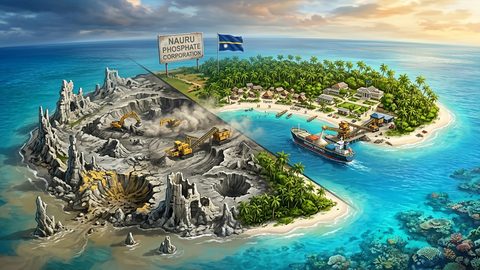 Nauru, the Pacific Republic That Phosphate Built and Nearly Erased
Nauru is one of the Pacific's most overlooked republics. A candid guide to topside, Buada Lagoon, colonial history, and how to actually get there.
Nauru, the Pacific Republic That Phosphate Built and Nearly Erased
Nauru is one of the Pacific's most overlooked republics. A candid guide to topside, Buada Lagoon, colonial history, and how to actually get there.
-
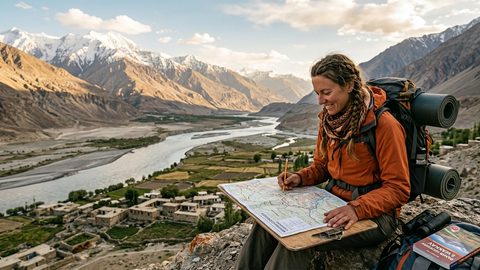 Planning Independent Travel in the Wakhan Corridor, Tajikistan
Independent travel in Tajikistan's Wakhan Corridor: GBAO permits, road conditions from Ishkashim, realistic travel windows, and honest logistics for serious overlanders.
Planning Independent Travel in the Wakhan Corridor, Tajikistan
Independent travel in Tajikistan's Wakhan Corridor: GBAO permits, road conditions from Ishkashim, realistic travel windows, and honest logistics for serious overlanders.