Fiji Past the Resort Gate
Fiji stretches far beyond the resort transfer: Nadi's highlands, Viti Levu's interior villages, and marine reserves that reward those who leave the Coral Coast behind.
- Flag
-

- ISO code
- FJ
- Population
- 883,483
- Currency
- FJD
- Dial code
- +679
Inland Roads and Marine Reserves
The transfer driver holds a sign with your name at Nadi International Airport. Fifteen minutes later you are in the resort lobby with a cold towel and a welcome cocktail. That is the default Fiji, and it is fine if you want two weeks of turquoise pools and turning your brain off. But the real Fiji is not on Denarau. It is three hours inland on a red dirt road where the only sounds are pigs shuffling and someone pounding kava root at dusk. It is a marine reserve where you count species on a whiteboard because the staff name every fish they see. These are the places for travellers who want to cross through the resort gate and not look back.
- Visa Requirement: Visa-free for stays up to 4 months for most nationalities. Full list published by Fiji Immigration.
- Arrival Airports: Nadi International Airport (NAN) and Nausori International Airport (SUV) handle scheduled international service.
- Wet / Cyclone Season: November to April. The dry season (May to October) offers lowest rainfall in June, July, and August.
- Peak Tourist Season: June to September and December to January. Book accommodation and boat transfers months ahead.
- Safety Advisory: Check current advisory at travel.state.gov (U.S.), smartraveller.gov.au (Australia), or gov.uk/foreign-travel-advice (UK). Annual updates.
The Shift from Arrival Chaos to Highland Silence
Getting to the Trailhead
Nadi town is a transit nerve. You land at Nadi International Airport, a 9 kilometre drive from the town centre. Most travellers exit left toward Denarau. You will exit right toward Lautoka and the highlands. The first test is transport. No scheduled public bus runs to Koroyanitu National Heritage Park. You need a 4WD taxi or a booked tour operator from Lautoka, which is about 15 kilometres from Abaca Village, the park entrance. Arrange the driver the day before through your accommodation. Do not assume you can flag one down on the roadside.
Koroyanitu rises from the cane fields east of Lautoka. Its elevation runs from roughly 500 metres to 1,195 metres at the summit of Mount Batilamu. The air cools fast as you climb. The trailhead starts at Abaca Village, where you pay a small community levy and register with the community-run trust. Do not skip this. The levy funds local projects and the trust employs guides. A guide is mandatory for the Mount Batilamu summit track. Plan for four to five hours round trip. Bring two litres of water per person and wear closed shoes. The trail is muddy even in dry season.
What You Are Walking Through
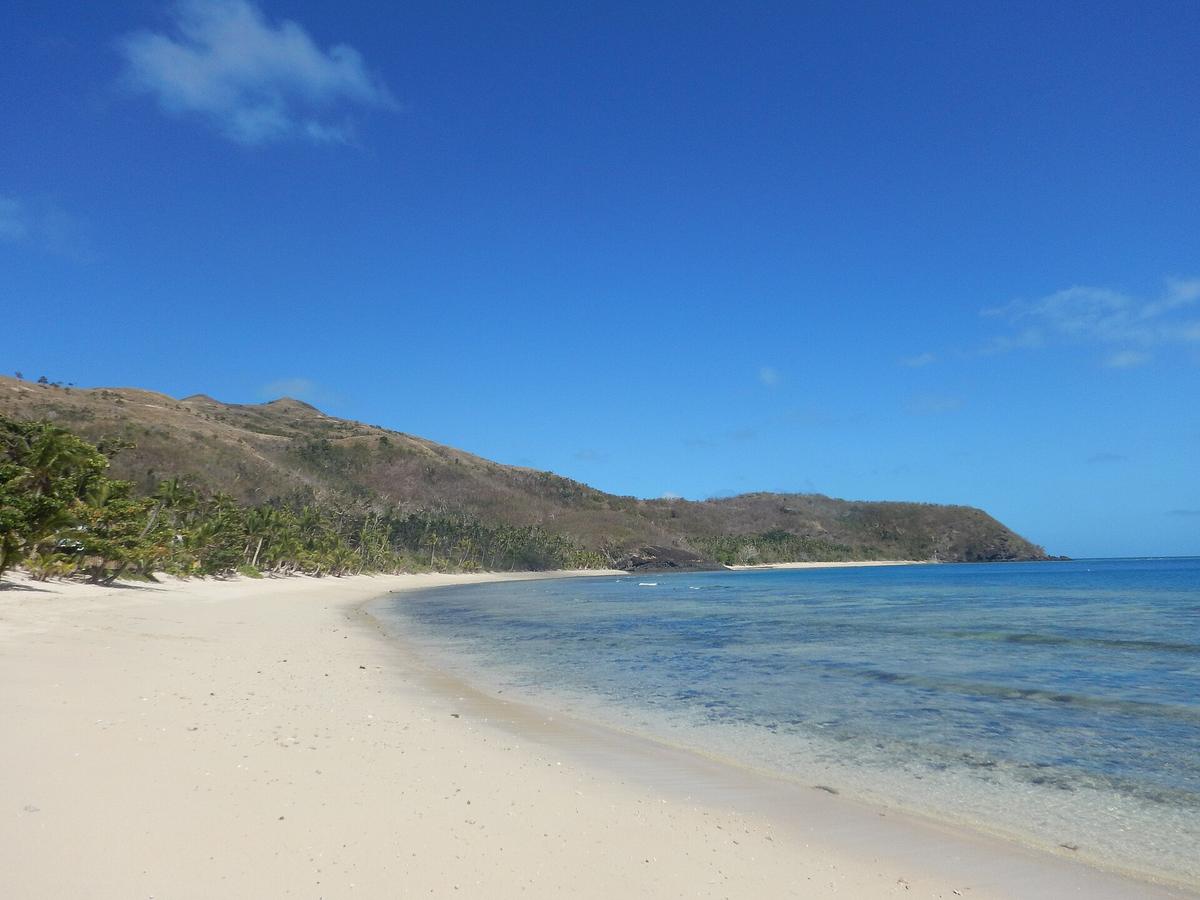
The payoff is not the summit view, though you can see the Yasawa chain on a clear day. It is the walk through a forest that has never known cane farming. You pass wild pandanus, giant ferns, and streams that taste like nothing from a tap. Visit in June or July, the driest months. The trail stays passable and the leeches stay manageable. Avoid November through April. The wet season turns the track into a slip hazard and clouds cap the summit by mid-morning.
_-_August_2016.jpg)
Village Life and the Marine Reserves
Village Protocol and Cash
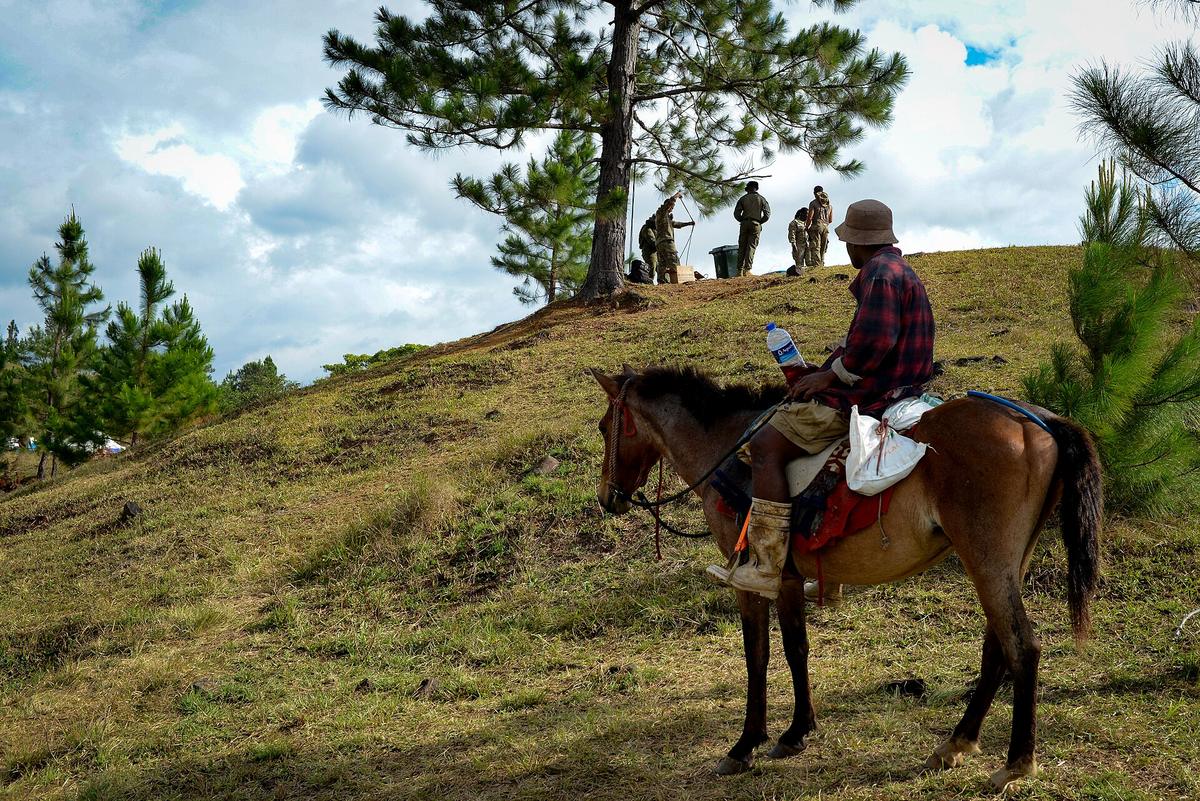
Highland travel on Viti Levu forces you into communities. This is not a tourist show. You walk through a settlement and someone offers you tea or yaqona. Accept the yaqona. Sit on the mat. Watch the ceremony. It is not scripted. The protocol is consistent: remove your shoes before entering any house, do not wear a hat in a community, do not touch someone's head. Women cover their shoulders and knees. Carry a sulu for this. A lightweight FJD 10 sulu from the Nadi market folds into a daypack and saves you the awkward moment.
Cash is the only thing that works in these places. ATMs exist in Nadi, Lautoka, and Suva. They do not exist on the road from Lautoka to Koroyanitu or anywhere near a meeting house. Pull out cash at a town machine before you leave. Small shops do not break FJD 50 notes. Keep FJD 5, FJD 10, and FJD 20 notes for local purchases, kava contributions, and guide tips.
Namena Marine Reserve: Not A Day Trip
Namena Marine Reserve sits between Viti Levu and Vanua Levu, off the southern coast of Savusavu. It covers about 70 square kilometres of protected reef. There is no public transport to Namena. Access is by pre-arranged boat from Savusavu, and the crossing takes one to 1.5 hours. This is not a casual morning hire from the Savusavu jetty. You book through a dive operator or eco-resort in the Savusavu area. The boat runs on a schedule set by wind and tide, not by tourist demand.
Stay for at least two nights at a lodge near Savusavu that runs Namena trips. A day visit from Savusavu town costs the same boat fuel and guide fee but gives you only three hours underwater. The reserve has 30 dive sites. Three hours is not enough. You will spend the first hour reaching the far sites, the second hour underwater, and the third hour heading back. Two full days let you hit the pinnacles, the wall, and the soft coral gardens. Book the lodge and the dive slots at least eight weeks ahead in the June-to-September peak season.
Castaway Island And The Resort Trap
Castaway Island in the Mamanuca group, called Qalito Island locally, is accessed by boat transfer from Port Denarau. It is a resort. You already know what that looks like. If you want marine reserve quality without the resort markup, skip Castaway and spend those days at Namena instead. The Mamanuca Islands count about 20 islands, and boat transfers from Port Denarau run 20 minutes to two hours depending on which island you pick. Resort transfers are a conveyor belt. Namena is not.
| Destination | Transport Type | From Where | Duration | Advance Booking Required |
|---|---|---|---|---|
| Natadola Beach | Taxi or hired car from Nadi | Nadi (40 km south) | 45 minutes | No, but arrange return time with driver |
| Mamanuca Islands | Resort boat transfer from Port Denarau | Port Denarau | 20 minutes to 2 hours | Yes, through resort or ferry operator |
| Koroyanitu National Heritage Park | 4WD taxi or tour operator | Lautoka (15 km to Abaca Village) | 30 minutes drive plus 4-5 hour hike | Yes, taxi arranged day before |
| Namena Marine Reserve | Pre-arranged boat from Savusavu | Savusavu | 1 to 1.5 hours crossing | Yes, 8 weeks ahead for peak season |
.jpg)
Logistics That Make or Break the Trip
Money and Transport Reality
Card acceptance in urban areas is fine. Visa and Mastercard work at hotels, supermarkets, and larger restaurants in Nadi, Suva, and Denarau. Card acceptance in rural areas is zero. Communities, small shops, markets, and outer island purchases require cash. The Fijian dollar is the currency. Do not pay in foreign cash anywhere except licensed exchange counters in Nadi and Suva.
Public buses operate on Viti Levu and Vanua Levu, with limited service on Taveuni and Ovalau. Buses are slow, cheap, and loud. They will get you from Nadi to Lautoka for a few dollars. They will not get you to Koroyanitu or to Namena. The gap in public transport is a feature, not a bug. It means the highlands and marine reserves remain quiet because you have to work to reach them. Work is part of the trip.
When to Go
The dry season from May to October is the window for inland travel. Roads on Viti Levu are sealed on the main Queens Road and Kings Road. Once you turn off toward Abaca Village or the Sigatoka Valley interior, the road narrows to gravel and the potholes collect rainwater. September and October are dry enough for dust but still warm enough for swimming. Avoid November through April not only for rain but for cyclone risk. The wet season and cyclone season overlap. Check the current advisory from your government travel safety source before booking. The U.S. and Australian authorities publish updated advisories annually.
Common Questions
Can I visit Koroyanitu National Heritage Park without a guide?
No. The community trust at Abaca Village requires you to hire a local guide for the summit track. This is not negotiable. Your guide's fee is around FJD 50 to FJD 80 and includes the community levy.
How far ahead should I book the boat to Namena Marine Reserve?
Eight weeks minimum if you travel between June and September. The reserve is not a high-volume site, which means operators run only a few boats per week and lodge rooms near Savusavu fill up with divers.
What cash amount should I carry for a week in the highlands?
Withdraw cash from an ATM in Nadi or Lautoka, in small notes (FJD 5, FJD 10, FJD 20). This covers community contributions, market snacks, kava, and guide tips. Do not expect to find an ATM anywhere near Abaca Village or the Koroyanitu trailhead.
Is Castaway Island worth the resort transfer cost?
Not if you want Fiji beyond the resort gate. Castaway is a standard island resort with a pool, buffet, and scheduled activities. If you have come for highlands and marine reserves, skip it and allocate that budget to Namena or a longer stay inland.
What is the best month to combine highland hiking and marine reserve diving?
June or July. These are the driest months, so the Koroyanitu trail stays firm and the sky clears. The weather also holds for the Savusavu boat crossing to Namena. Water temperature sits around 24 to 26 degrees Celsius in June and July, comfortable with a 3-millimetre wetsuit.
Read next
-
 Getting to Nauru, the Pacific State Where Air Schedules Define Your Stay
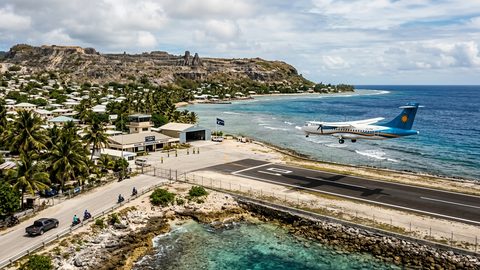
A logistics briefing on reaching Nauru by air — covering weekly flights from Brisbane and Honiara, visa-on-arrival requirements, and planning around fixed departure dates.
Getting to Nauru, the Pacific State Where Air Schedules Define Your Stay
A logistics briefing on reaching Nauru by air — covering weekly flights from Brisbane and Honiara, visa-on-arrival requirements, and planning around fixed departure dates.
-
 Nauru, the Pacific Republic That Phosphate Built and Nearly Erased
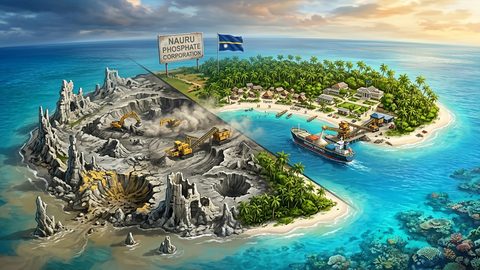
Nauru is one of the Pacific's most overlooked republics. A candid guide to topside, Buada Lagoon, colonial history, and how to actually get there.
Nauru, the Pacific Republic That Phosphate Built and Nearly Erased
Nauru is one of the Pacific's most overlooked republics. A candid guide to topside, Buada Lagoon, colonial history, and how to actually get there.
-
 Planning Independent Travel in the Wakhan Corridor, Tajikistan
Independent travel in Tajikistan's Wakhan Corridor: GBAO permits, road conditions from Ishkashim, realistic travel windows, and honest logistics for serious overlanders.
Planning Independent Travel in the Wakhan Corridor, Tajikistan
Independent travel in Tajikistan's Wakhan Corridor: GBAO permits, road conditions from Ishkashim, realistic travel windows, and honest logistics for serious overlanders.