Asmara's Modernist Architecture and the Road to the Eritrean Coast
Eritrea rewards patient travellers with Asmara's UNESCO-listed modernist architecture and the dramatic road down to Massawa on the Red Sea.
- Flag
-
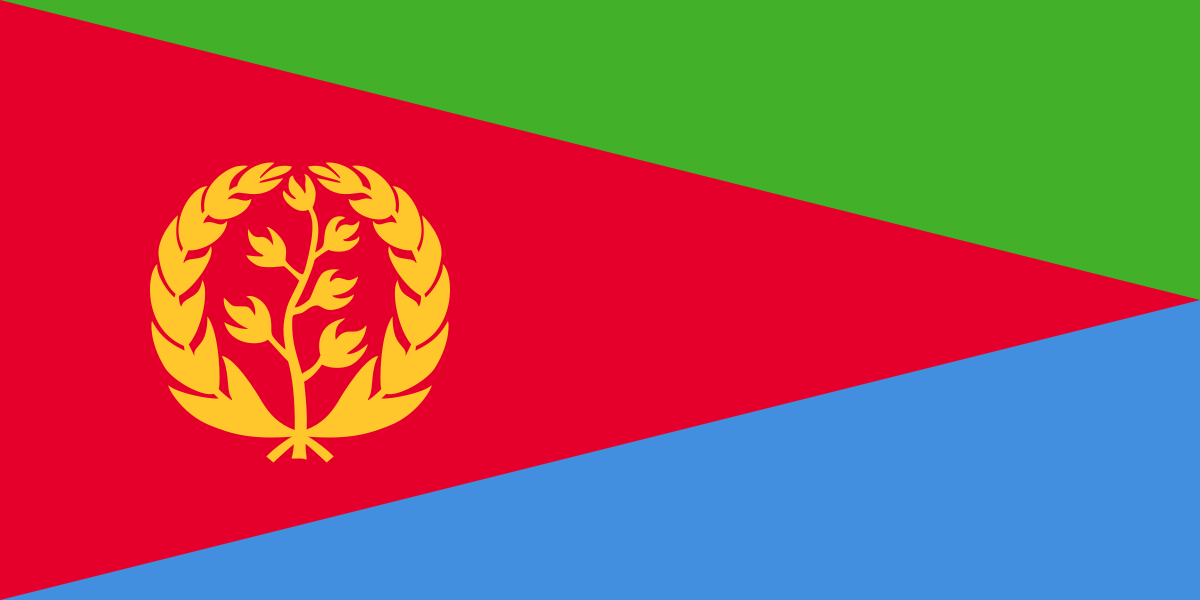
- ISO code
- ER
- Population
- 6,209,262
- Currency
- ERN
- Dial code
- +291
Asmara’s Modernist Architecture and the Road to Massawa Are Locked Behind a Permit
Most people who want to see Asmara's modernist architecture assume they can fly in, admire the Fiat Tagliero building, and head to the coast like they would in any other country. That assumption will strand you at a checkpoint. Eritrea requires a travel permit for any movement outside Asmara city limits. That permit takes 24 to 48 hours to process at the Ministry of Tourism office in the capital. The journey from the highlands to the Red Sea port is only 118 kilometers. The bureaucratic gate between them is real. You need to know exactly what that process looks like, why the road is worth the paperwork, and who should not attempt it at all.
You are here because you want to see the world's highest concentration of Futurist, Rationalist, and Art Deco buildings in their original 1930s context. You also want to drive the road that drops from 2,350 meters to sea level in under two hours. Those two experiences are the core of an Eritrea trip. Everything else is obstacle or reward, depending on how you prepare.

- Visa Required: Yes, for all foreign nationals. No e-visa available. Cost varies by nationality; no unified published fee schedule.
- Airport With Scheduled International Service: Asmara International Airport (ASM). Airlines: Ethiopian Airlines, EgyptAir, flydubai, Turkish Airlines, Tarco Aviation.
- Travel Permit: Required for travel outside Asmara city limits. Issued by Ministry of Tourism office in Asmara. Allow 24-48 hours processing.
- Currency And Cards: Eritrean nakfa (ERN). Credit and debit cards not accepted. No internationally connected ATMs. Cash-only economy.
- Best Season For Asmara: October to March. Dry season, mild temperatures.
- Best Season For Massawa Coast: November to February. Cooler, lower humidity. Hottest months June to September, regularly over 40°C.
- UNESCO Inscription: Asmara: A Modernist African City, inscribed 2017.
- Railway: Asmara-Massawa narrow-gauge line (950 mm). Tourist and charter service only. No scheduled public passenger service.
- Current UK FCDO Advisory (2026): Advises against all travel within 25 km of all border areas; advises against all but essential travel to rest of country.
- Current US State Department Advisory (2026): Level 3: Reconsider Travel.
Asmara: the Capital That Time Refused to Remodel
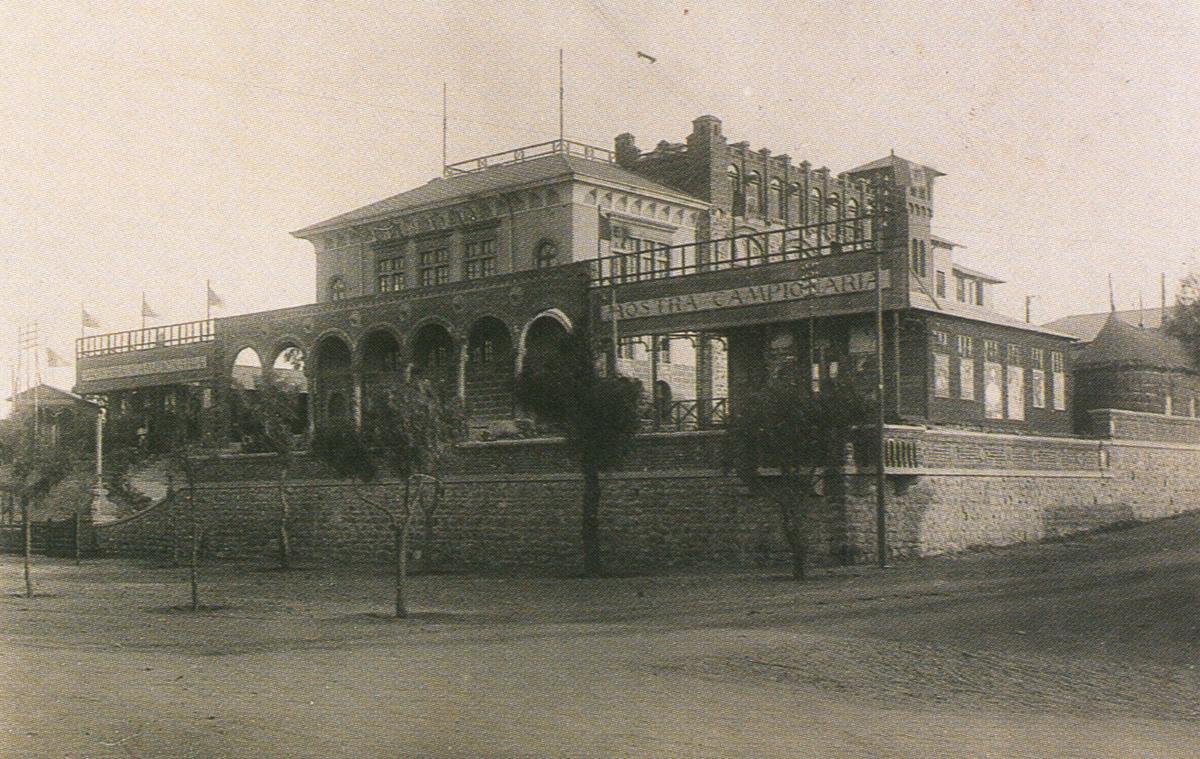
Asmara is not a museum because nobody preserved it. The city was simply left alone. Italian colonial planners built most of its civic and commercial core between 1935 and 1941, then the British military administration and subsequent Ethiopian rule added almost nothing. Independence in 1993 froze the architecture in place. The Fiat Tagliero building, completed in 1938 by architect Giuseppe Pettazzi, still functions as a gas station with its 30-meter cantilevered concrete wings. The Asmara Opera House, first completed in 1918 and rebuilt in the 1930s, still hosts performances. These buildings are not restored. They are original.
You can cover the UNESCO-listed core on foot in a single morning. Start at the Opera House on Harnet Avenue, walk south past the Cinema Impero and the Cinema Roma, and end at the Fiat Tagliero on the southern edge of the city center. Do not rush. The value is in the details: the bare concrete surfaces, the unpolished terrazzo floors, the fact that the service stations and post offices you pass were designed by the same architects who built Milan's central station.
Getting Your Travel Permit In Asmara
Before you see any of this, go to the Ministry of Tourism office on Liberation Avenue. Bring two passport photos and a photocopy of your visa. The staff will ask for your intended itinerary outside Asmara. Tell them you want to drive the road to the coast and visit the port. Processing takes 24 to 48 hours, so arrive in Asmara with at least two full days in hand before you plan to leave the capital. The permit is a single sheet of paper. Do not lose it. You will show it at checkpoints on the road, and the police will record your name and passport number in a ledger at each stop.
The Massawa Road: a 118 Kilometer Descent Into a Different Climate
Once you have the permit, drive the road. This is the single most dramatic landscape transition in the Horn of Africa. You leave Asmara at 2,350 meters above sea level in eucalyptus-scented highland air. A hundred and eighteen kilometers later you arrive at 6 meters above sea level, where the Red Sea heat hits you like a wall. The road descends through switchbacks cut into the escarpment, past villages where donkeys carry water and women balance firewood on their heads. The landscape looks like it did in the 1930s because the land-use patterns have not changed. Goats, acacia trees, terraced fields, stone houses.
The road surface is paved but narrow, with no guardrails on some of the steepest curves. A descent that takes 90 minutes in a private vehicle can take three hours in a shared bus because of stops at checkpoints. You will pass through at least two police checkpoints. Hand over your permit, your passport, and wait. The soldiers are professional, not hostile. Bring patience.
The Coast You Earned
The port city is not a resort. It is a settlement with Ottoman and Italian colonial buildings in varying states of decay, a functioning harbour, and extreme humidity even in the cooler months from November to February. Stay one night at most. The reason to come is the experience of arrival itself: the sudden heat, the smell of salt and diesel, the sight of dhows in the harbour. Walk the old quarter on Massawa Island, connected by causeway to the mainland. The Imperial Palace and the shops along the waterfront were built by the Ottoman and Egyptian administrations. They are not restored. They are authentic in the same way Asmara is authentic: nobody painted over them.
| Asmara | Massawa | |
|---|---|---|
| Elevation | 2,350 m | 6 m |
| Primary Appeal | Concentrated modernist architecture, walkable grid | Red Sea coast, Ottoman harbour, dramatic descent |
| Best Season | October to March (dry, mild) | November to February (cooler, lower humidity) |
| Days Needed | 2 to 3 days (including permit processing) | 1 night (arrive afternoon, leave next morning) |
| Infrastructure | Hotels, restaurants, reliable power | Limited hotels, intermittent power, cash-only |
| Checkpoint Frequency | None within city limits | 2+ on road from Asmara, minor checkpoints near port |
.jpg)
Safety and Practicalities for Asmara and Massawa
Both the UK Foreign, Commonwealth and Development Office and the US Department of State issue travel advisories for Eritrea. As of 2026, the UK FCDO advises against all travel within 25 kilometers of all border areas, and advises against all but essential travel to the rest of the country. The US State Department sets Eritrea at Level 3: Reconsider Travel. These advisories reflect the closed border with Ethiopia (tense since the 1998-2000 war and its aftermath), periodic tensions with Djibouti, and the lack of embassy representation for many nationalities inside the country. Asmara and Massawa are not near the border zones. Asmara is 100 kilometers from the Ethiopian border. The port sits on the coast, not on a land border. But you need to know the advisory exists and make your own risk assessment. Independent travel here is possible. It is not foolhardy. But it is not casual.
You also need to accept that Eritrea is a cash economy with no internationally connected ATMs. Bring enough US dollars or euros in cash to cover your entire stay. Change money at the bank in Asmara at the official rate. The unofficial market rate on the street will be better, but exchanging on the street is illegal and the penalty is severe. Do not risk it. Budget for a private driver or hired vehicle for the road. Shared buses exist but they run on no fixed schedule outside the Asmara-Keren corridor, and the permit system is easier to manage with your own transport.
Common Questions
Can I see Asmara's modernism without a permit?
Yes. The permit is required for travel outside Asmara city limits. You can walk the UNESCO-listed core, visit all the major buildings, and stay in Asmara for days without one. The permit only matters if you want to drive to the coast or anywhere else.
How long does the permit take to get?
Allow 24 to 48 hours. The Ministry of Tourism office in Asmara processes applications on weekdays during business hours. Arrive on a Monday, apply Monday morning, and you can drive on Wednesday.
Is the road to the coast safe to drive independently?
The road is paved but narrow with steep drops and switchbacks. Checkpoints are routine and safe. The primary risk is mechanical failure without nearby services. A hired 4x4 with a driver who knows the road is the better choice.
Who should skip this trip entirely?
Skip Eritrea if you need reliable internet, ATM access, credit card acceptance, or the ability to move spontaneously. Skip it if you cannot handle checkpoints, a cash-only economy, and government permits for a day trip. This is for self-sufficient travellers only.
Read next
-
 Getting to Nauru, the Pacific State Where Air Schedules Define Your Stay
A logistics briefing on reaching Nauru by air — covering weekly flights from Brisbane and Honiara, visa-on-arrival requirements, and planning around fixed departure dates.
Getting to Nauru, the Pacific State Where Air Schedules Define Your Stay
A logistics briefing on reaching Nauru by air — covering weekly flights from Brisbane and Honiara, visa-on-arrival requirements, and planning around fixed departure dates.
-
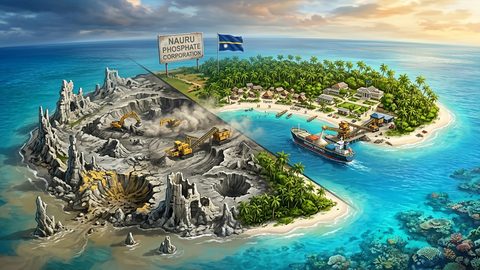 Nauru, the Pacific Republic That Phosphate Built and Nearly Erased
Nauru is one of the Pacific's most overlooked republics. A candid guide to topside, Buada Lagoon, colonial history, and how to actually get there.
Nauru, the Pacific Republic That Phosphate Built and Nearly Erased
Nauru is one of the Pacific's most overlooked republics. A candid guide to topside, Buada Lagoon, colonial history, and how to actually get there.
-
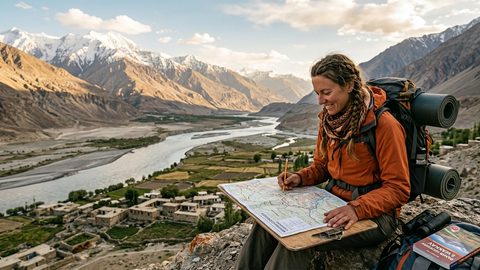 Planning Independent Travel in the Wakhan Corridor, Tajikistan
Independent travel in Tajikistan's Wakhan Corridor: GBAO permits, road conditions from Ishkashim, realistic travel windows, and honest logistics for serious overlanders.
Planning Independent Travel in the Wakhan Corridor, Tajikistan
Independent travel in Tajikistan's Wakhan Corridor: GBAO permits, road conditions from Ishkashim, realistic travel windows, and honest logistics for serious overlanders.