Cambodia Beyond the Temples: A Journey Through the Borderlands and Coast
Cambodia beyond Angkor: the border towns that trade in gems, the volcanic northeast, and the coastal stretch from Kep to the Cardamoms that most travellers never see.
- Flag
-
- ISO code
- KH
- Population
- 16,249,798
- Currency
- KHR
- Dial code
- +855
The Volcanic Northeast and the Cardamom Interior: Cambodia Beyond the Temples
You have seen the Angkor Wat sunrise photos, and you are still not booking a trip to Siem Reap. That is fine. Cambodia splits cleanly into two countries: the one with the temples and the one without. The second Cambodia is where the itinerary runs along riverine border towns, through Cardamom foothills, and onto a sleepy coast that most travellers skip entirely. Here is what a Cambodia travel beyond Angkor Wat itinerary actually looks like when you point yourself at the borders and the coast instead of the monuments.
The Volcanic Northeast
The northeast is where you start. Ratanakiri province, with its capital Banlung, sits 590 kilometres from Phnom Penh, a 10 to 12 hour bus ride that tells you immediately you have left the tourist circuit. The reason to go: Yeak Laom, a volcanic crater lake 800 metres across and 48 metres deep, set inside a protected forest. Swim in it, walk the 2.5 kilometre loop trail around the rim, and spend the night in a basic guesthouse in the provincial capital. The lake is sacred to the indigenous Bunong people. Do not treat it as a swimming pool. Enter from the north side where the path is gentlest. Arrive by 09:00 to avoid the heat and the afternoon rain that builds reliably from April through October.
The Cardamom Interior
From the northeast, the road southwest to the Thai border crosses the Central Cardamom Mountains National Park, anchored by Phnom Aural at 1,813 metres, Cambodia's highest peak. The Cardamoms are not a day trip. Budget three days minimum for a guided trek that includes overnight camping and a boat section on the Preaek Tuek Chhu river system that flows south toward Kampot. Book through an operator in Banlung or Phnom Penh. Do not attempt it independently. The park is remote, landmine contamination in the western provinces of Battambang and Pailin is a real hazard, and the Cambodian Mine Action Centre reported over 65,000 casualties from 1979 through 2024. Even in areas marked safe, stick to marked trails.

- Minimum Days Needed: 14. Distances are long and roads are slow. The northeast alone eats four days round trip from Phnom Penh.
- Best Season For The Coast And North: November to February. The dry season makes laterite roads passable and keeps the coast free of heavy rain. The Cardamom treks close in the wet season from May to October.
- Worst Time To Go: May to October. Roads in Ratanakiri and the Cardamoms turn to mud. The coast sees rough seas and frequent storms. Skip it.
- Key Border Town For History: Pailin. The last stronghold of the Khmer Rouge, it fell only in 1998. The gem mines that funded the regime still operate. Arrive with a guide.
- Key Border Town For Architecture: Battambang. Colonial French buildings line the riverfront. It is 290 kilometres from Phnom Penh, a 5 to 6 hour bus ride. Worth one overnight.
- Coastal Base: Kampot, not Sihanoukville. Kampot sits on the Preaek Tuek Chhu river, 150 kilometres from Phnom Penh, a 3 to 4 hour bus ride. Sihanoukville is under heavy construction. Kampot has the pepper farms, the river cruises, and the quieter pace.
- Coastal Islands: Koh Rong and Koh Rong Sanloem, accessed from Sihanoukville. Skip Sihanoukville itself. Take the ferry direct from the pier to the islands.
The Western Border Towns and the Coast
Pull west from the Cardamoms and you hit the Thai border at two towns that could not be more different. Pailin, 370 kilometres from Phnom Penh and a 7 to 8 hour bus ride, was the Khmer Rouge's last redoubt until 1998. The gem mines are still active. You do not walk into them. Hire a guide from the CMAC office in town to visit the memorial sites and the market where rough stones are traded by weight. The town has one decent hotel and a handful of guesthouses. Budget one night, then move on.
Battambang, 290 kilometres from Phnom Penh in 5 to 6 hours, has the colonial architecture. The riverfront is lined with shuttered French shop houses. The famous bamboo train was dismantled years ago; do not ask about it. Instead, take a sunset boat on the Sangker River or a hired tuk-tuk to the Phnom Sampeau mountain, where the killing caves memorial sits. Arrive by 15:00 to see the cave and the sunset from the summit. The bats emerge at dusk. The road from the colonial city south to the coast at Koh Kong runs 270 kilometres and takes 5 to 6 hours. It passes through the Cardamom foothills. Do not drive it after dark; the road is winding and unlit.
Kampot And The Pepper Country
Kampot is the coastal base you want. Skip Sihanoukville entirely. The beach town has been overtaken by Chinese casino construction. The islands Koh Rong and Koh Rong Sanloem are still worth the ferry ride from the Sihanoukville pier, but stay on the islands, not in the town. Kampot sits 150 kilometres from Phnom Penh on the Preaek Tuek Chhu river. The bus takes 3 to 4 hours. Book a room on the riverfront, not the main road. From Kampot, you visit the pepper plantations that hold GI status awarded in 2010. The pepper is real. Buy it from a farm, not a market stall. The farm tour costs around USD 5 and includes tasting. Arrive by 08:30 to see the harvest if you go between November and February.
Kep And The Crab Coast
South of Kampot, the coast turns into sleepy fishing villages and the Kep beach area. Kep is a 30 minute taxi from Kampot. The crab market is the main draw. Eat grilled crab with Kampot pepper at one of the beachfront shacks. The national park behind Kep offers a 5 kilometre hike to a summit with coastal views. Start before 07:00 to avoid the midday heat. Do not swim at the Kep beach itself. The water is shallow and rocky. Swim at the Rabbit Island ferry pier, a 20 minute boat ride from Kep.
Connecting the Whole Country Without the Temple Circuit
Once you leave the Angkor circuit, the country connects through the Tonlé Sap lake and its seasonal reversals. The lake drains into the Mekong in the dry season when it shrinks to 2,500 square kilometres and a depth of 1 metre. In the wet season, the Mekong pushes water back into the lake, expanding it to 15,000 square kilometres and 10 metres deep. The floating villages on the lake are accessible from Siem Reap, but also from the town of Kampong Chhnang, 90 kilometres south of Phnom Penh. Kampong Chhnang is the real lake town. The floating village there is less touristed. Hire a boat from the dock for USD 20. Arrive by 08:00 before the tour groups arrive from Phnom Penh.
Border Crossings And Visa Traps
From Kampot, the road east to Phnom Penh runs 150 kilometres. From Phnom Penh, the road south to the Vietnamese border at Bavet is a half-day drive. Bavet is known for the fake visa office scam at the border. If you hold an e-visa from evisa.gov.kh, valid for 30 days at USD 36 and processed in 3 business days, you can cross at Bavet. The e-visa costs USD 36; the visa on arrival costs USD 30 but requires one passport photo. Do not pay more. The border at Poipet, the main Thailand crossing, is known for visa overpricing scams. The border at Cham Yeam, near Koh Kong, is known for inflated health check fees. Cross at Tropaeng Kreal into Laos if you are continuing north. That crossing is quieter and less scam prone.
Safety On The Ground
Pailin and Battambang remain the only provinces with active landmine contamination. The CMAC target for a landmine free declaration is 2025. Until then, do not walk off roads or trails in these provinces. The risk is real. The rest of the country is safe for road travel, but the bus times are long. The Phnom Penh to Banlung route, 590 kilometres, takes 10 to 12 hours. Break it at Kampong Thom or Kratie. Overnight in Kratie to see the Irrawaddy dolphins at sunrise. The dolphin pool is 15 kilometres north of town. Arrive by 06:30. The boat fee is around USD 10.
| Crossing | Connects To | Known Scam | Recommendation |
|---|---|---|---|
| Poipet | Thailand (Aranyaprathet) | Visa overpricing: officials may claim your e-visa is invalid and demand extra fees | Avoid if possible. Cross at Ban Pakard instead, then take a local bus. |
| Bavet | Vietnam (Moc Bai) | Fake visa offices: unofficial booths charge for a visa you already have | Walk directly to the immigration booth. Do not stop at any desk before it. |
| Cham Yeam (Koh Kong) | Thailand (Hat Lek) | Inflated health check fee: officials add a USD 5 to 10 health surcharge | Pay only the posted fee. Ask for an official receipt. |
| Tropaeng Kreal | Laos (Voen Kham) | None reported; this is the quietest crossing | Best option for e-visa holders entering Laos. |
| O'Smach | Thailand (Chong Chom) | Infrequent; no major scam reports | Use only if you are already in this region. |
| Ban Pakard | Thailand (Ban Laem) | Minor; less traffic than Poipet | Good alternative to Poipet if traveling from Battambang. |

Building Your Itinerary: Two Weeks Without Angkor
You cannot cover Cambodia's borderlands and coast in under 14 days. The north south journey from Banlung to the coast alone eats two full days. Rush and you miss the ceremonies and conversations that make the trip worthwhile. Here is a workable two week route.
The Day-by-Day Plan
Day 1: Arrive Phnom Penh. Stay overnight. Withdraw USD from an ATM. The fee is USD 4 to 6 per transaction. ATMs dispense US dollars. The street rate for riel is 4,000 to 1 USD. Keep small change. Day 2: Bus to Banlung, 590 kilometres, 10 to 12 hours. Leave by 06:00. Arrive in time for dinner and a walk around the lake. Day 3: Yeak Laom morning swim and loop trail. Afternoon rest in the provincial capital. Day 4: Bus to Koh Kong, 270 kilometres from the northeast via Phnom Penh, break the journey at Kampong Cham. Overnight there. Day 5: Arrive Koh Kong in the morning. Take a boat to the mangrove forest. Day 6: Bus to Kampot, 150 kilometres south, 3 to 4 hours. Afternoon pepper farm tour. Day 7: Kep day trip. Crab market, national park hike, Rabbit Island swim. Day 8: Bus to Battambang, 290 kilometres north, 5 to 6 hours. Evening riverfront walk. Day 9: Battambang morning. Phnom Sampeau cave and sunset. Day 10: Bus to Pailin, 80 kilometres west, 2 hours. Gem market and memorial site. Day 11: Return to Battambang. Day 12: Bus back to Phnom Penh. Day 13 and 14: Buffer for travel delays. Add a day at Koh Rong if you want beach time. Subtract a day from the north if you skip Banlung.
Do not try to include both the northeast and the Cardamom trek in the same trip. You do not have the time. Pick one interior experience, then focus on the coast and borders.
Common Questions
Is Cambodia safe for solo female travellers outside Siem Reap?
Yes, with the same precautions you would take anywhere in Southeast Asia. The border towns are rougher. Do not walk alone at night in Pailin or on the outskirts of Battambang. In Kampot and Kep, the streets are safe. Buy a local SIM at the Phnom Penh airport. 4G coverage is decent in towns but patchy in the Cardamoms and around Banlung. Download offline maps in French and Khmer before leaving the capital.
How do I get from Kampot to the islands without staying in Sihanoukville?
Take a bus from Kampot to the Sihanoukville pier, 1.5 hours. Do not stay in Sihanoukville itself. Get off at the pier, buy a ferry ticket to Koh Rong or Koh Rong Sanloem, and board directly. The ferry takes 45 minutes. Book the return ticket at the same time to avoid being stranded.
Can I cross the Thai border at Poipet without being scammed?
It is difficult. Officials at Poipet are known to overcharge for visa services, even for e-visa holders. Cross at Ban Pakard instead, 30 kilometres north, if you are coming from Battambang. If you must use Poipet, walk directly to the immigration booth. Do not stop at any window or desk before it. Do not pay more than the USD 30 visa on arrival fee plus the standard overland crossing fee.
What is the real cost of a bus from Phnom Penh to Banlung?
A standard bus ticket costs USD 12 to 18. The trip takes 10 to 12 hours. The road is rough after Kampong Cham. Bring snacks, water, and a cushion. The bus will stop once for a meal. Do not take a minibus. They are faster but less safe on the poor roads.
When is the best time to visit the Cardamom Mountains?
November to February, the dry season. The trails are passable. The wet season from May to October turns the dirt roads to mud and closes the trekking routes. The park office in Koh Kong or Phnom Penh will not issue permits during heavy rain. Book your guide at least two weeks ahead. The park requires advance booking for lodge and guide.
How do I pay for things in the border towns?
US dollars are accepted everywhere. Keep small bills. USD 1 and USD 5 notes work for street food, moto rides, and market purchases. ATMs dispense US dollars but charge USD 4 to 6 per transaction. Withdraw a large amount in Phnom Penh to save on fees. Riel is used as change for amounts under USD 1. The fixed street rate is 4,000 riel to 1 USD. Do not accept torn or marked US bills. Many businesses will reject them.
Is the landmine risk real for backpackers in Battambang and Pailin?
Yes. Battambang, Pailin, and Banteay Meanchey are the most heavily landmine contaminated provinces in Cambodia. The CMAC recorded over 65,000 casualties from 1979 through 2024. Do not walk off roads, trails, or clearly marked paths. Do not enter forested areas without a guide. Do not touch any metal object on the ground. The target for a landmine free declaration is 2025, but clearance is not complete. Stick to paved roads and well used tracks.
Read next
-
 Getting to Nauru, the Pacific State Where Air Schedules Define Your Stay
A logistics briefing on reaching Nauru by air — covering weekly flights from Brisbane and Honiara, visa-on-arrival requirements, and planning around fixed departure dates.
Getting to Nauru, the Pacific State Where Air Schedules Define Your Stay
A logistics briefing on reaching Nauru by air — covering weekly flights from Brisbane and Honiara, visa-on-arrival requirements, and planning around fixed departure dates.
-
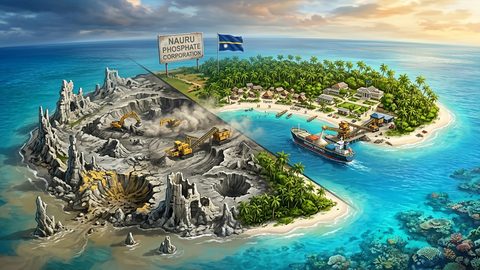 Nauru, the Pacific Republic That Phosphate Built and Nearly Erased
Nauru is one of the Pacific's most overlooked republics. A candid guide to topside, Buada Lagoon, colonial history, and how to actually get there.
Nauru, the Pacific Republic That Phosphate Built and Nearly Erased
Nauru is one of the Pacific's most overlooked republics. A candid guide to topside, Buada Lagoon, colonial history, and how to actually get there.
-
 Planning Independent Travel in the Wakhan Corridor, Tajikistan
Independent travel in Tajikistan's Wakhan Corridor: GBAO permits, road conditions from Ishkashim, realistic travel windows, and honest logistics for serious overlanders.
Planning Independent Travel in the Wakhan Corridor, Tajikistan
Independent travel in Tajikistan's Wakhan Corridor: GBAO permits, road conditions from Ishkashim, realistic travel windows, and honest logistics for serious overlanders.