Basel on the Rhine: Art, Industry and the Dreiländereck Where Switzerland Touches Germany and France
Basel is where Switzerland, Germany and France converge: a city of world-class museums, a working Rhine, and locals who swim home from the office.
- Flag
-
- ISO code
- CH
- Population
- 177,595
- Currency
- CHF
- Timezone
- Europe/Zurich
The Most Un-Swiss City in Switzerland
If your mental image of Switzerland is alpine pastures and polite calm, Basel will disorient you. This city smells of chemicals, not wildflowers. Its river is full of floating commuters carrying dry clothes in a fish-shaped nylon bag called a Wickelfisch. Its tram lines cross into Germany and France without a passport check. Basel is Switzerland's industrial hinge, and that is what makes it worth your time.
The Dreiländereck, the point at 47.589°N, 7.589°E where Switzerland touches Germany and France, is not a tourist attraction you visit and leave. It is a fact of daily life. Residents shop across borders, work across borders, send their children to schools across borders. The city's identity is tri-national, not Swiss. Plan for that. Eat dinner in France one night, buy bread in Germany the next morning. Never treat the border as a destination.
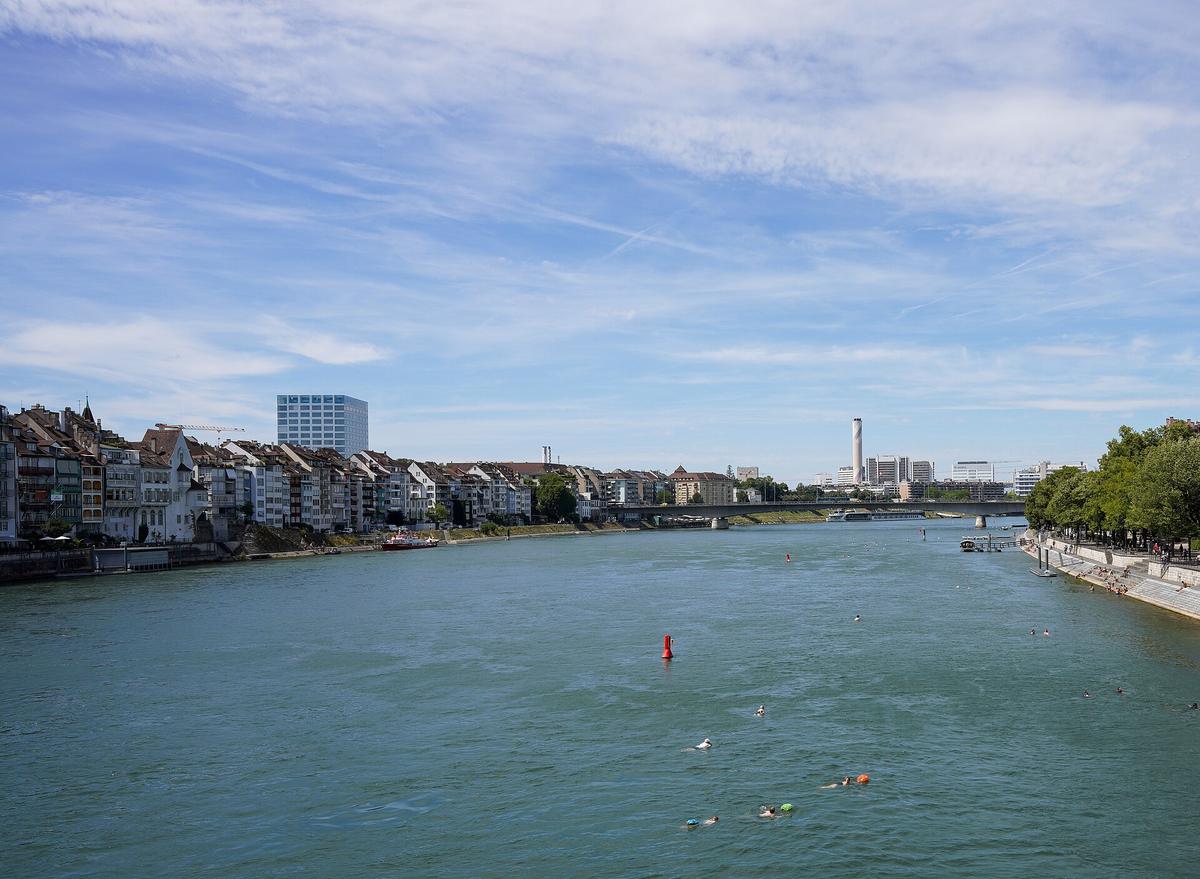

The Rhine is the City’s Spine
Basel does not sit on the Rhine. It lives in it. From May to September, when the water temperature sits between 18 and 24 °C, the river fills with swimmers. They drift downstream with the current, carrying their valuables in a Wickelfisch, climb out on the opposite bank, and walk back across a bridge. This is not a leisure activity reserved for tourists. It is how thousands of Basel residents commute home from work. Join them. But do it correctly.
How to Swim the Rhine
Buy a Wickelfisch before you enter the water. They come in 10, 20, 35 and 50 litre sizes. Pack your clothes, phone, wallet and shoes into it. Seal it, inflate it, tie it around your waist. Enter at one of the public access points on the Grossbasel bank. Float with the current, not against it. The river moves fast enough that you do not need to paddle. Exit at the designated steps on Kleinbasel. The whole trip takes 20 to 40 minutes depending on your entry point. Do not swim alone your first time. Do not drink alcohol beforehand. The current is stronger than it looks.
The Ferry System Without Engines
Four ferries cross the Rhine year round, weather permitting: St. Alban, Münster, Klingental and Leu. They run on current alone, tethered to an overhead cable. No engine. The 2026 fare is CHF 2.00 per adult and CHF 1.00 per child. It is not the fastest way across the river. It is the only way to experience the Rhine's power without getting wet. Use the Münster ferry after visiting the Basler Münster, whose two towers (Georgsturm at 67.3 m and Martinsturm at 65.5 m) were built between 1019 and 1500 in Romanesque and Gothic styles. The cathedral is worth the climb. The view from the top shows you exactly how the city sits at the bend of the river.
Forty Museums and No Tourists
Basel has approximately 40 museums within the Basel-Stadt canton. Most of them are excellent because the city's chemical and pharmaceutical wealth funds them. The Kunstmuseum Basel, founded in 1661 and public since 1671, holds roughly 300,000 works across three buildings. It is the oldest public art collection in the world. Go there first, not last. Book your ticket online and arrive when it opens at 10:00 to avoid the midday crowd.
The Fondation Beyeler, opened in 1997 and designed by Renzo Piano, sits in a park in Riehen. Its collection focuses on modern and contemporary art. The building itself is part of the experience. Budget at least two hours. The Museum Tinguely, opened in 1996 and designed by Mario Botta, is a noisy, kinetic celebration of Jean Tinguely's moving sculptures. It is the opposite of a quiet gallery. Children love it. Some adults find it exhausting. Decide which camp you are in and plan accordingly.
Museum Passes and What They Cost
The Basel Museum Pass costs CHF 69 for one day and CHF 99 for three consecutive days in 2026. These prices are set by the museums association and are revised annually. Buy the three day pass if you are staying that long. It pays for itself after three museums. Do not bother with single tickets unless you only have time for one visit.
| Pass Type | Price (CHF) | Validity | Best For |
|---|---|---|---|
| 1 Day Pass | 69 | 1 consecutive day | A single museum day or one major exhibition |
| 3 Day Pass | 99 | 3 consecutive days | Two full museum days plus a third casual visit |

When to Come and When to Run
December through February is the dry season across Basel's river basin. Cooler temperatures, less rain, clearer skies for walking the old town across Grossbasel and Kleinbasel. This is also when the major festivals cluster, though Basler Fasnacht does not fall in winter. It starts the Monday after Ash Wednesday at exactly 04:00 and runs for 72 hours until Thursday at 04:00. The 2027 dates are 15 February to 18 February. The 2028 dates are 6 March to 9 March. If you want to see it, book accommodation nine months ahead. If you want to sleep, leave town during those three days.
Avoid the week of Art Basel if you care about your hotel bill. The fair takes place annually, with 2027 running 17 to 20 June. Hotel rates multiply by 2x to 5x standard rates, and rooms vanish months in advance. If you are not attending the fair, do not come that week. The city is crowded, expensive, every restaurant booked solid. Come in late September or early October instead, when the crowds thin and the river is still swimmable.
Getting Around the Tri-National City
Basel has 13 tram lines operated by Basler Verkehrs-Betriebe (BVB): lines 1, 2, 3, 6, 8, 10, 11, 14, 15, 16, 17, E11 and 21. They run into Germany and stop at Weil am Rhein. Line 8 crosses into France. Buy a day pass at any tram stop ticket machine or the BVB app. Validate it before boarding. The fine for riding without a valid ticket is CHF 100 and inspectors are frequent.
The city has two main rail stations. Basel SBB handles Swiss Federal Railways trains and international services to Zurich, Geneva and Milan. Basel Badischer Bahnhof is a Deutsche Bahn station that sits on Swiss soil with customs facilities on site. Use it for trains to Freiburg, Berlin or Hamburg. Do not confuse the two. They are 15 minutes apart on foot and you do not want to arrive at the wrong one with a minutes-tight connection.
Common Questions
Do I need a passport to cross into Germany or France from Basel?
No. Switzerland has been in the Schengen Area since 12 December 2008. You walk or ride the tram across the border without any document check. Bring your passport anyway. Swiss police and their German or French counterparts conduct random controls within the border zone, and not having it can mean a fine.
What is a Wickelfisch and where do I buy one?
A Wickelfisch is a waterproof swim bag shaped like a fish. You seal your clothes, phone and wallet inside, inflate the air chambers, and tie it around your waist so you can swim the Rhine without getting your belongings wet. Buy one at any Basel sports shop or department store like Migros or Coop. Prices range from CHF 15 to CHF 30 depending on size (10 L to 50 L).
Is the Rhine safe to swim in?
Yes, but only if you follow the rules. Swim only between May and September when the water temperature is 18 to 24 °C. Enter only at designated access points. Never swim against the current. Never drink alcohol before swimming. Do not swim alone your first time. Rescue boats patrol during peak season, but they cannot catch everyone.
Which Basel museum is worth skipping?
Skip the Spielzeugmuseum (Toy Museum) unless you travel with children who need a break. The collection is extensive but dated, and the building has no air conditioning in summer. Spend that time at the Kunstmuseum or the Fondation Beyeler instead.
How do I get from EuroAirport to Basel city centre?
Take bus line 50 from the Swiss sector. The journey takes approximately 20 minutes. The airport is in Saint-Louis, France, 3.5 km northwest of Basel city centre. Do not take a taxi unless you have heavy luggage. The bus runs every 7 to 8 minutes during peak hours and costs a standard tram ticket.
Read next
-
 Switzerland at Ground Level: The Border Cities and the Valleys Behind Them
Switzerland at ground level: the border cities where three languages meet, the Rhône valley's industrial ribbon, and the Jura towns behind the famous peaks.
Switzerland at Ground Level: The Border Cities and the Valleys Behind Them
Switzerland at ground level: the border cities where three languages meet, the Rhône valley's industrial ribbon, and the Jura towns behind the famous peaks.
-
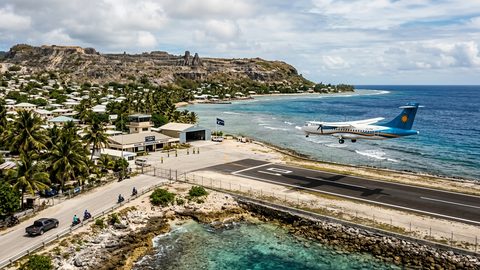 Getting to Nauru, the Pacific State Where Air Schedules Define Your Stay
A logistics briefing on reaching Nauru by air — covering weekly flights from Brisbane and Honiara, visa-on-arrival requirements, and planning around fixed departure dates.
Getting to Nauru, the Pacific State Where Air Schedules Define Your Stay
A logistics briefing on reaching Nauru by air — covering weekly flights from Brisbane and Honiara, visa-on-arrival requirements, and planning around fixed departure dates.
-
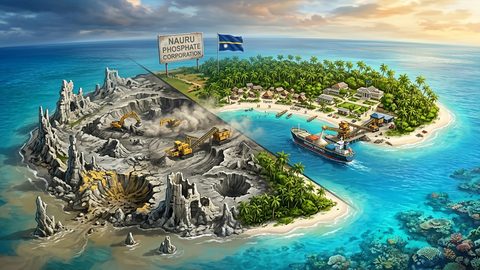 Nauru, the Pacific Republic That Phosphate Built and Nearly Erased
Nauru is one of the Pacific's most overlooked republics. A candid guide to topside, Buada Lagoon, colonial history, and how to actually get there.
Nauru, the Pacific Republic That Phosphate Built and Nearly Erased
Nauru is one of the Pacific's most overlooked republics. A candid guide to topside, Buada Lagoon, colonial history, and how to actually get there.
-
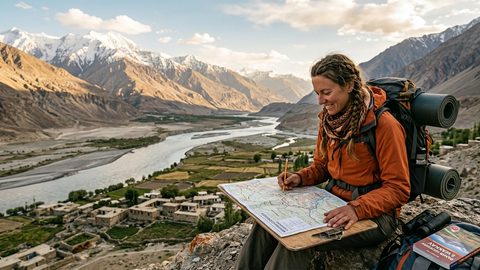 Planning Independent Travel in the Wakhan Corridor, Tajikistan
Independent travel in Tajikistan's Wakhan Corridor: GBAO permits, road conditions from Ishkashim, realistic travel windows, and honest logistics for serious overlanders.
Planning Independent Travel in the Wakhan Corridor, Tajikistan
Independent travel in Tajikistan's Wakhan Corridor: GBAO permits, road conditions from Ishkashim, realistic travel windows, and honest logistics for serious overlanders.