Europe Beyond the Capitals: The Provinces Worth the Detour
The provincial Europe that guidebooks compress into a line: a guide to the secondary cities and rural regions where the continent's cultural depth survives.
The Regions of Europe That Still Belong to Themselves
Your guidebook tells you to spend three days in Paris, two in Rome, and one in Barcelona. It compresses Normandy into a half-day trip from the capital and reduces Provence to a logistical line about trains. This is a failure of imagination, not a plan. The soul of Europe now lives in its regions, not in the overrun capitals where souvenir shops replace bakeries and apartment rents push residents to the periphery. The real European experience slow, culturally rich, and human-scaled happens in the towns and countryside between the famous stops.
Provincial Europe is not a collection of undiscovered villages. It is an argument. If you want to find traditional life and local identity intact, skip the capital entirely. Go to the areas guidebooks reduce to a sentence. Stay longer than you planned. Stop treating the journey between cities as dead time.
Why the Capitals Lost What the Regions Kept
Florence receives 15 million visitors a year. The result is not culture. It is queue management. Venice has been bleeding residents since the 1950s, pushed out by short-term rentals and cruise ship crowds. Barcelona caps hotel construction and fines illegal apartments, but the damage is done: the Gothic Quarter is a stage set. The regions absorb almost none of this pressure. A town like Alba in Piedmont still functions for the people who live there. The Sunday market sells cheese to locals, not postcards to day-trippers. The baker closes when the bread runs out. That is not inconvenience. That is evidence of a place that belongs to itself.
What the Regions Offer That the Capitals Cannot
Three things. First, density of tradition per square meter. Second, prices that reflect local economies, not tourist demand. Third, the chance to be the only foreigner in the room. In the capital, you are anonymous in a crowd. In the region, you are visible, which means you are accountable, which means conversations happen. A fisherman in Camogli will explain why the anchovies taste different this year. A vintner in Ribeira Sacra will tell you which slope faces north and why that matters. No one in a capital has time for that exchange.


- Why Regions, Not Capitals: Capitals lose cultural depth to overtourism; regions retain local identity, traditional economies, and human scale.
- Where to Start: Pick one region, not three. Minimum 7 days to slow down enough for the rhythm to reveal itself.
- Best Months: Shoulder seasons: May, June, September, October. Avoid August in southern Europe.
- Transport Reality: Rent a car. Regional rail connections are sparse. A car gives you the flexibility to stop at the market that is not in any guidebook.
- Budget Rule: You spend less per day in a region than a capital, but the transport cost is higher. Budget for a rental car and longer drives.
The Regions That Resist Reduction
Three areas exemplify the regional Europe worth the detour. Each has its own internal gravity. Each demands a minimum of four days to feel coherent. Each rewards the visitor who arrives without a checklist.
Alentejo, Portugal
Lisbon has become a tech hub: coworking spaces, international rents, and a tourism apparatus that pushes locals to the suburbs. Alentejo, two hours east, is the opposite. The cork oak forests stretch to the horizon. The whitewashed hill towns Évora, Monsaraz, Marvão operate on a schedule determined by the sun and the harvest. The region produces half the world's cork, and the landscape shows it. You see the bark being stripped in late spring, stacked in red piles along the roadside. The food is the reason to come: açorda (bread stew), migas (bread with garlic and pork), and the Alentejo wine region, where Talha wine is fermented in clay amphorae. Skip the Pousada in Évora. Stay in a monte, the traditional farmhouse, and arrive hungry. The owner will explain the difference between the morning cheese and the evening cheese, and you will remember the explanation because there is nothing else competing for your attention.
Franconia, Germany
Munich is a destination. Nuremberg is a day trip. But the Franconian wine region between them is its own country. The Steigerwald forest, the Bamberg smoked beer, the Baroque palaces of the Schönborn bishops, and the wine villages along the Main River, Volkach, Sommerach, Iphofen, are not stops on the way to somewhere else. They are the destination. Franconia grows Silvaner, a grape most Germans ignore, and the result is a wine culture that has not been smoothed into international palatability. The wine taverns, called Straußenwirtschaft, open for a few weeks at a time when the wine is ready. The menu is printed on a chalkboard. The seating is in the vineyard. You do not find this on a Rick Steves list because there is no consistent schedule. You find it by being there, asking, and following a local recommendation. Bamberg, with its UNESCO old town and nine breweries within the city limits, is the anchor. But the villages along the Main make the trip. Plan for five days. Rent a bicycle along the Main cycle path. The distance between villages is 3 to 8 kilometers. You cover the ground at the speed of a leisurely lunch.
Basilicata, Italy
Amalfi and Cinque Terre are postcard bottlenecks. Basilicata, the instep of the Italian boot, receives a fraction of the traffic. Matera, the Unesco city of cave dwellings, is the draw. But the region expands beyond it. The Pollino National Park, Italy's largest protected area, is in walking distance from the small towns of Rotonda and Viggianello. The park has no cable cars, no visitor center with digital exhibits. It has trails that climb to the Serra Dolcedorme summit, with views across the Ionian Sea to Greece on a clear day. Below the limestone peaks, the bread and cheese culture holds. The pecorino from Moliterno is aged in caves. The bread of Matera uses a specific durum wheat and a 24-hour fermentation. The local pasta, orecchiette, is still rolled by hand on wooden boards in the alleyways of the Sassi. Book a cooking class in someone's home in Matera for half what you pay for a group class in Tuscany. Choose the class that starts at the market, not in the kitchen. That is where the real instruction begins.
How to Avoid the Guidebook Trap
The guidebook reduces a region to a single line because the writer had 50 words left in the assignment and the editor would not trade a paragraph of restaurant recommendations for a paragraph of cultural context. Avoid this by changing your research strategy. Stop reading the "Top 10" list on a site that monetises affiliate links for hotels. Start reading a single blog written by someone who moved there. A farmer who posts about olive harvest. A winemaker who explains the vintage. A baker who describes the texture of the local flour. That content has no SEO incentive to lie. It tells you when the road washes out, which village has a restaurant that still serves the grandmother's recipe, and which festival is worth the drive instead of being a pageant for tourists. Book accommodation directly. A farm stay that takes bookings on WhatsApp, not a global booking platform, will give you the owner's attention. Pay in cash. Shop at the Monday market, not the tourist market. When the guidebook says "this region can be seen in a day," ignore it. It is a map, not an agenda.
| Region | Capital | What You Gain | What You Sacrifice |
|---|---|---|---|
| Alentejo, Portugal | Lisbon | Cork forests, Talha wine, farm stays, slower pace | Nightlife, coworking spaces, Uber on demand |
| Franconia, Germany | Munich | Silvaner wine, Bamberg smoked beer, vineyard taverns | World class museums, English fluency everywhere |
| Basilicata, Italy | Naples/Amalfi | Matera cave city, Pollino hiking, hand rolled pasta classes | Coastal glamour, ferry connections, resort infrastructure |
| Piedmont, Italy | Turin | Alba truffles, Barolo wine villages, local bakeries | Museums, train connections, international dining |


The Only Wrong Way to Do This
The common mistake is covering three regions in ten days. That is a race, not a trip. Each area above requires a minimum of five days to stop feeling like a visitor and start feeling like someone who arrived. The north-south journey in Basilicata, from Matera to the Pollino foothills, takes two hours on a two-lane road. Do not rush that drive. Stop at the bakery in San Chirico Raparo when you smell wood smoke. Buy a loaf of bread still hot from the oven. Eat it on a stone wall while you look at the valley. That is the trip. The guidebook cannot sell that moment because it cannot predict which bakery will be open on which Tuesday. So it does not mention it. Your job is to create the conditions for that moment to happen. Slow down. Stay longer. Leave the itinerary loose. The regions reward the traveller who trusts them to produce their own agenda.
Countries in Europe
-
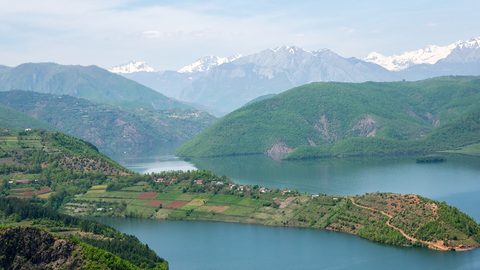
 Albania
A guide to the Albanian interior towns of Burrel and Lushnje, where the land between the coast and the mountains reveals the country's stark, unfiltered centre.
Albania
A guide to the Albanian interior towns of Burrel and Lushnje, where the land between the coast and the mountains reveals the country's stark, unfiltered centre.
-
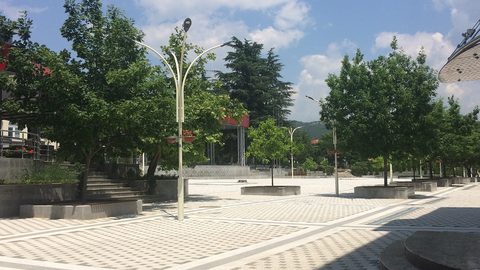
 Bulgaria
Using Sliven and its famous clock tower as a base to explore the textile towns, wood-built villages, and slow rhythms of Bulgaria's Balkan foothills.
Bulgaria
Using Sliven and its famous clock tower as a base to explore the textile towns, wood-built villages, and slow rhythms of Bulgaria's Balkan foothills.
-
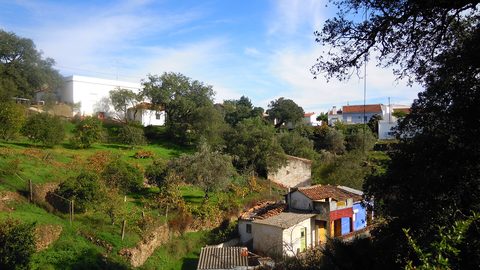
 Portugal
A guide to Portugal's interior: the granite north, the fortified border towns, and the wide Alentejo plains far from the coastal crowds.
Portugal
A guide to Portugal's interior: the granite north, the fortified border towns, and the wide Alentejo plains far from the coastal crowds.
-
 Switzerland
 at ground level: the border cities where three languages meet, the Rhône valley's industrial ribbon, and the Jura towns behind the famous peaks.
Switzerland
Switzerland at ground level: the border cities where three languages meet, the Rhône valley's industrial ribbon, and the Jura towns behind the famous peaks.
Common Questions
Can I visit a region without renting a car?
Not for the full experience. Regional bus service exists but is infrequent, especially on Sundays. A rental car gives you control over timing, spontaneous stops, and access to villages without a train station. Book a compact car; regional roads are narrow.
How do I find local food markets that are not tourist traps?
Arrive on the day the weekly market opens, not Saturday. Ask your accommodation host which market the locals use, not the one in the town square. Buy what is in season. If the cheese is wrapped in plastic, skip it. If the vendor is also the producer, buy everything.
Is it safe to travel alone in these regions?
Yes, with the same precautions you take anywhere. Rural areas in Alentejo, Franconia, and Basilicata have low crime rates. Petty theft is less common than in capitals. The real concern is isolation. Tell someone your route, carry a paper map, and fill the gas tank when you see a station.
Do I need to speak the local language?
You need 20 phrases, not fluency, plus a translation app for menus and signs. French in Alentejo is limited; English in the villages of northern Franconia is rare. The effort to attempt the local language is rewarded with better service, lower prices, and invitations that a polite English request will not generate.
Read next
-
Portugal
A guide to Portugal's interior: the granite north, the fortified border towns, and the wide Alentejo plains far from the coastal crowds.
-
Switzerland
Switzerland at ground level: the border cities where three languages meet, the Rhône valley's industrial ribbon, and the Jura towns behind the famous peaks.
-
Bulgaria
Using Sliven and its famous clock tower as a base to explore the textile towns, wood-built villages, and slow rhythms of Bulgaria's Balkan foothills.
-
Albania
A guide to the Albanian interior towns of Burrel and Lushnje, where the land between the coast and the mountains reveals the country's stark, unfiltered centre.
-
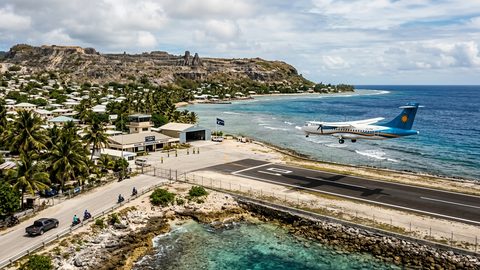 Getting to Nauru, the Pacific State Where Air Schedules Define Your Stay
A logistics briefing on reaching Nauru by air — covering weekly flights from Brisbane and Honiara, visa-on-arrival requirements, and planning around fixed departure dates.
Getting to Nauru, the Pacific State Where Air Schedules Define Your Stay
A logistics briefing on reaching Nauru by air — covering weekly flights from Brisbane and Honiara, visa-on-arrival requirements, and planning around fixed departure dates.
-
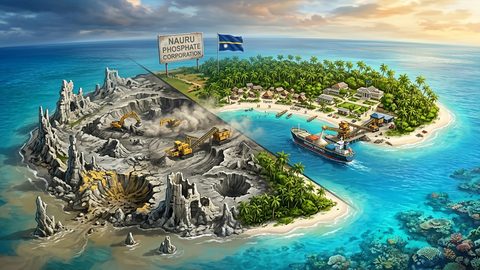 Nauru, the Pacific Republic That Phosphate Built and Nearly Erased
Nauru is one of the Pacific's most overlooked republics. A candid guide to topside, Buada Lagoon, colonial history, and how to actually get there.
Nauru, the Pacific Republic That Phosphate Built and Nearly Erased
Nauru is one of the Pacific's most overlooked republics. A candid guide to topside, Buada Lagoon, colonial history, and how to actually get there.
-
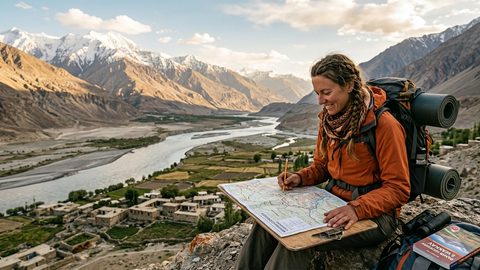 Planning Independent Travel in the Wakhan Corridor, Tajikistan
Independent travel in Tajikistan's Wakhan Corridor: GBAO permits, road conditions from Ishkashim, realistic travel windows, and honest logistics for serious overlanders.
Planning Independent Travel in the Wakhan Corridor, Tajikistan
Independent travel in Tajikistan's Wakhan Corridor: GBAO permits, road conditions from Ishkashim, realistic travel windows, and honest logistics for serious overlanders.