Serowe, Botswana: Khama Royal History, the Village Museum, and the Khama Rhino Sanctuary
Serowe, Botswana's largest village and Bamangwato royal capital, is home to the Khama III Memorial Museum and the nearby Khama Rhino Sanctuary.
- Flag
-

- ISO code
- BW
- Population
- 55,676
- Currency
- BWP
- Timezone
- Africa/Gaborone
A Morning at the Kgotla, Then Up the Hill
Get to the kgotla before 08:30, while the dust is still settled on Serowe’s main road. The shade tree fills early. This is Botswana’s largest traditional village, seat of the Bamangwato people, and the birthplace and burial ground of the country’s first president. You are here for the Khama III Memorial Museum. Before you walk through its doors, understand what Serowe represents: a royal dynasty that shaped a nation, and a village that produced some of southern Africa’s most important writing.
The Khama III Memorial Museum Inside Tshekedi Khama’s House
The Khama Family Archive
The museum occupies the former residence of Tshekedi Khama, regent of the Bamangwato from 1926 to 1950. It is not a grand building. The collection inside is extraordinary. Khama family letters, typed on thin airmail paper, document the political exile of Seretse Khama after his 1948 marriage to Ruth Williams, a white British woman. You will find photographs of Seretse and Ruth in London, the correspondence between Tshekedi and the British authorities, and the personal effects of Khama III, who converted to Christianity in the 1870s and banned initiation rites and alcohol across Ngwato territory.
Allow one hour minimum. The museum sits near the main kgotla, the traditional court. You can hear cases being argued while you browse the display cases.
The Bessie Head Collection
A separate section holds the Bessie Head collection: manuscripts, letters, and personal items from the writer who arrived in Serowe on a one-way exit permit from South Africa in 1964. Head wrote five major works in Serowe, including When Rain Clouds Gather and A Question of Power. Her grave is in the Botalaote ward cemetery on the edge of the village.
_(3905762011).jpg)
The Royal Cemetery and the Hill Over Serowe
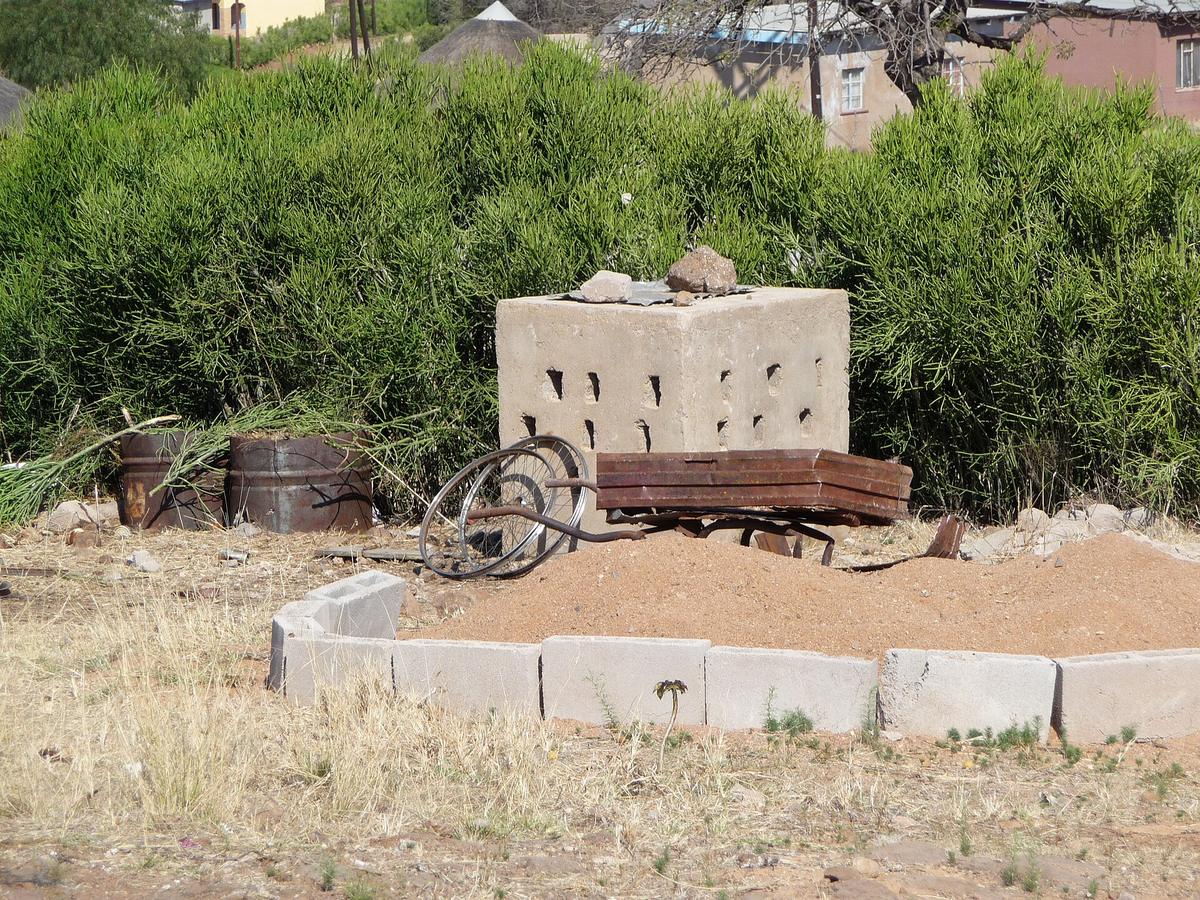
Above the village, on a bare hilltop, lies the Serowe Royal Cemetery. Khama III (died 1923), his son Sekgoma II (1925), regent Tshekedi Khama (1959), Seretse Khama (1980), and Ruth Williams Khama (2002) are all buried here. The view across the village and the surrounding acacia scrub is wide and quiet.
Access Rules You Must Follow
You cannot walk up without permission. Go to the main kgotla office first. Explain what you want to see and receive verbal authorisation. Remove your shoes before entering the fenced burial area. Photography may be restricted. The kgotla will tell you. Do not argue.
The Khama Rhino Sanctuary and the Serowe Palapye Road
The Sanctuary
Twenty-five kilometres north of Serowe, the Khama Rhino Sanctuary protects white rhino and black rhino on 4,300 hectares. The 2024 entry fee for non-residents was BWP 115, plus a BWP 50 vehicle fee. Residents paid BWP 50. These rates are set by the Department of Wildlife and National Parks and may have changed. The sanctuary also hosts zebra, giraffe, wildebeest, kudu, impala, leopard, and brown hyena. You can camp or stay in a chalet. Rates vary by season and unit type. Book ahead if you want a chalet.
Serowe on the A1
Serowe sits directly on the A1 highway that runs north, south between Gaborone and Francistown. The road between Serowe and Palapye, 70 kilometres south, is sealed and fast. Most travellers driving the A1 use Serowe as a lunch stop or an overnight break. Do that. The museum and the cemetery take three hours total. The sanctuary needs another three if you want to see rhino.

What to Skip and What it Costs You
Do not visit Serowe expecting polished tourism infrastructure. The museum has no cafe. The royal cemetery has no signpost. The guidebooks call Serowe ‘Botswana’s biggest village’ but that phrase hides the lack of restaurants, a decent hotel, or anything to do after 17:00. The market sells basic vegetables and mobile phone credit. You eat at a roadside chicken shop or you drive back to Palapye. None of this makes Serowe less worth visiting. It means you come prepared. Bring water. Accept that the reason to be here is the Khama history and the Bessie Head archive, not a pleasant afternoon stroll.
What to See in Serowe
Practical Questions Answered
How do I get permission to visit the Royal Cemetery?
Walk to the main kgotla office in central Serowe. Ask for the secretary. Explain that you want to visit the cemetery. They will give verbal permission. No appointment is needed, but do this before driving up the hill.
Is the Khama III Memorial Museum worth a detour from the A1?
Yes. It is the only place where you will see original Seretse and Ruth correspondence and Bessie Head’s manuscripts. One hour of your time. If you are driving Gaborone to Francistown, the museum is precisely on the route.
Can I see rhino without a guide at the sanctuary?
You can self-drive on the sanctuary roads. A guide is not mandatory. Rhino sightings are not guaranteed. The earlier you enter, the better your odds. Arrive at opening time.
How much time should I budget for Serowe in total?
Five hours: one hour at the museum, one hour at the cemetery including the walk up, three hours at the sanctuary. If you are not visiting the sanctuary, two hours is enough. Serowe has no worthwhile nightlife. Arrive by mid-morning and leave by late afternoon.
Read next
-
 Khama III Memorial Museum
The Khama III Memorial Museum in Serowe tells how a Bamangwato king outmanoeuvred Cecil Rhodes and laid the foundations for modern Botswana.
Khama III Memorial Museum
The Khama III Memorial Museum in Serowe tells how a Bamangwato king outmanoeuvred Cecil Rhodes and laid the foundations for modern Botswana.
-
 Botswana Beyond the Delta Towns Museums and the Roads Between Them
Botswana is more than the Okavango Delta—its large villages, museums, and long roads reveal a country of deep history and quiet cultural riches.
Botswana Beyond the Delta Towns Museums and the Roads Between Them
Botswana is more than the Okavango Delta—its large villages, museums, and long roads reveal a country of deep history and quiet cultural riches.
-
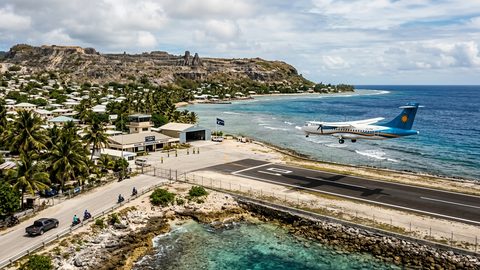 Getting to Nauru, the Pacific State Where Air Schedules Define Your Stay
A logistics briefing on reaching Nauru by air — covering weekly flights from Brisbane and Honiara, visa-on-arrival requirements, and planning around fixed departure dates.
Getting to Nauru, the Pacific State Where Air Schedules Define Your Stay
A logistics briefing on reaching Nauru by air — covering weekly flights from Brisbane and Honiara, visa-on-arrival requirements, and planning around fixed departure dates.
-
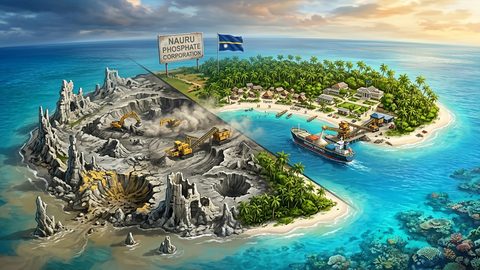 Nauru, the Pacific Republic That Phosphate Built and Nearly Erased
Nauru is one of the Pacific's most overlooked republics. A candid guide to topside, Buada Lagoon, colonial history, and how to actually get there.
Nauru, the Pacific Republic That Phosphate Built and Nearly Erased
Nauru is one of the Pacific's most overlooked republics. A candid guide to topside, Buada Lagoon, colonial history, and how to actually get there.
-
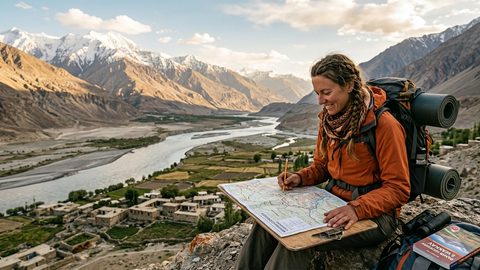 Planning Independent Travel in the Wakhan Corridor, Tajikistan
Independent travel in Tajikistan's Wakhan Corridor: GBAO permits, road conditions from Ishkashim, realistic travel windows, and honest logistics for serious overlanders.
Planning Independent Travel in the Wakhan Corridor, Tajikistan
Independent travel in Tajikistan's Wakhan Corridor: GBAO permits, road conditions from Ishkashim, realistic travel windows, and honest logistics for serious overlanders.