A small museum in Serowe that holds Botswana's political soul
The Khama III Memorial Museum in Serowe tells how a Bamangwato king outmanoeuvred Cecil Rhodes and laid the foundations for modern Botswana.
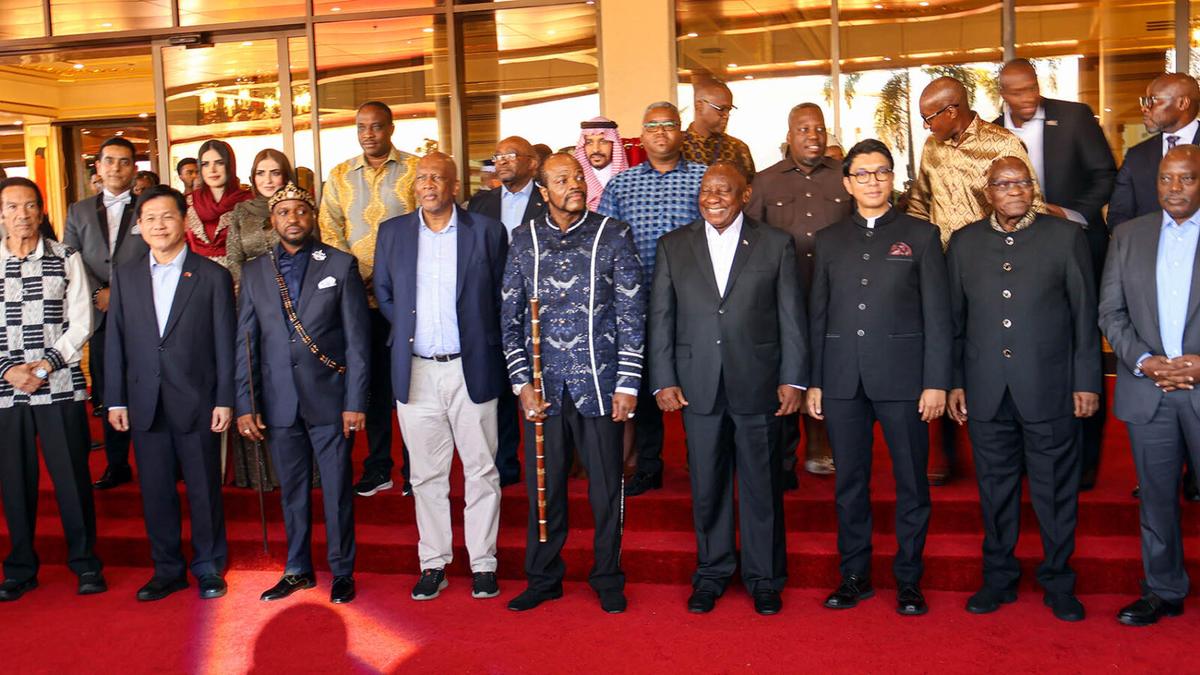

A Small Museum in Serowe That Holds Botswana’s Political Soul
You have come to understand how a poor, landlocked southern African territory became one of the continent's most stable democracies, and you have just realised that no national monument in Gaborone tells that story. The answer sits north, in a colonial veranda house with a corrugated iron roof, on a dusty hill in Serowe. Khama III Memorial Museum is not a grand institution. It is the keeper of Botswana's political origin story, housed in the former residence of the man who made the modern nation possible. If you are a history buff tracing how a country was forged, this is where you start.
- Museum Name: Khama III Memorial Museum
- Location: Serowe, Central District, Botswana
- Building Original Purpose: Residence of Kgosi Khama III
- Building Construction Year: 1910
- Architectural Style: Colonial veranda style with corrugated iron roof
- Museum Founding Year: 1985
- Founding Entity: Serowe Brigades Development Trust
- Opening Days: Monday to Saturday, 08:00, 17:00. Closed Sunday.
- Entrance Fee (Adult Citizen): BWP 10 (2025 fee set by Serowe Brigades Development Trust)
- Entrance Fee (Adult Non-Citizen): BWP 50 (2025 fee set by Serowe Brigades Development Trust)
- Entrance Fee (Child Citizen): BWP 5 (2025 fee set by Serowe Brigades Development Trust)
- Entrance Fee (Child Non-Citizen): BWP 25 (2025 fee set by Serowe Brigades Development Trust)
- Key Collections: Royal effects of Khama III, Sekgoma II, and Seretse Khama; Bessie Head papers; natural history specimens
- Royal Cemetery: Serowe Royal Cemetery on the hilltop above the museum, with burials of Khama III, Sekgoma II, Seretse Khama, and other Bamangwato royals
The Man Who Defied Cecil Rhodes
Khama III, Kgosi of the Bamangwato from 1875 to 1923, was born in 1837 into a region then known as the Bechuanaland Protectorate. His reign is the hinge on which modern Botswana swings. In the 1890s, Cecil Rhodes and his British South Africa Company pushed to absorb Bamangwato territory into the company's sphere. Khama III refused. He travelled to Britain in 1895 with two other Tswana chiefs, pleaded directly with Queen Victoria, and secured a guarantee that his land would remain under British protection, not company rule. That protection kept the territory out of the chaos that followed in Rhodesia and South Africa. It preserved the political space that later filled with a functioning state.
Khama III was also a Christian convert who reformed Bamangwato society around church teachings. He banned initiation rites, limited the power of traditional healers, and imposed monogamy. Those reforms split his people and remain controversial. They also created a centralised, literate, treaty-capable royal administration that could negotiate with colonial powers on equal terms. The museum holds his royal effects: walking sticks, furniture, letters, and the Bible he read. Each object is a document of statecraft.
The Dynasty That Delivered Independence
From Khama III To Seretse Khama
Khama III died in 1923. His son Sekgoma II reigned for only two years before dying in 1925. Then came the grandson: Seretse Khama, born in 1921, educated in South Africa and Britain, exiled by the British colonial government for marrying a white woman, yet returned to lead Botswana to independence on 30 September 1966 as its first president. He served until his death in 1980. The museum tracks this family line room by room. You see Sekgoma II's brief reign, Seretse's controversial marriage to Ruth Williams, and the political craft required to turn a protectorate into a peaceful multiparty democracy.
The Bessie Head Archive
Upstairs, an entirely different story waits. The museum holds the papers and personal effects of Bessie Head, the South African born writer who lived in Serowe from 1964 until her death in 1986. Head wrote "When Rain Clouds Gather", "Maru", and "A Question of Power" from this town. Her presence in the museum signals that Serowe was not just a political capital. It was a refuge for creative exiles. Head's notebooks, typewriter, and photographs sit alongside the royal regalia. That pairing is unusual and deliberate. The Serowe Brigades Development Trust, which founded the museum in 1985, saw that political history and literary history belonged in the same building.
The Royal Cemetery
Walk up the hill behind the museum to the Serowe Royal Cemetery. Khama III, Sekgoma II, and Seretse Khama are buried there, along with other Bamangwato royals. The graves are simple. No grand monuments. The site overlooks the town. Stand there for five minutes and the scale of the dynasty's achievement becomes physical: a stable nation started on this ridge, from decisions made in the house below. From Serowe, the route west to Maun marks the transition from the nation’s political heartland to the threshold of the Okavango Delta.
How to Visit and What to Look for
Timing And Entry
Arrive in Serowe with a full morning. The museum opens Monday to Saturday at 08:00 and closes at 17:00. Budget 90 minutes inside and another 30 for the cemetery walk. The entrance fees set by the Serowe Brigades Development Trust for 2025 are BWP 10 for adult citizens and BWP 50 for adult non-citizens. Children pay BWP 5 (citizen) or BWP 25 (non-citizen). Confirm the current rate with the trust before you go.
What To Prioritise
Focus your attention on three objects:
- Khama III's treaty correspondence with the British government. These documents are the legal foundation of Botswana's territorial integrity.
- The photographs of Seretse Khama and Ruth Williams. The exile and return story is the emotional core of the independence narrative.
- Bessie Head's handwritten manuscripts. They show how political exile turned into literary production.
The natural history collection is secondary. It is a standard regional display of taxidermy and geological samples. Skip it if you are short on time and prioritise the royal effects and the Head archive. The museum staff can open display cases on request. Ask.

Common Questions
Why is the Khama III Memorial Museum in Serowe, not Gaborone?
Serowe was the royal capital of the Bamangwato, the largest Tswana tribe, and the political base of the Khama dynasty. Khama III lived and ruled from here. The museum occupies his actual residence. Gaborone became the capital of independent Botswana in 1966, but the political origin story belongs to Serowe.
How long should I spend at the museum?
Budget 90 minutes inside the building and an additional 30 minutes for the walk up the hill to the Royal Cemetery. Do not skip the cemetery. You cannot grasp how the Khama dynasty is physically embedded in this landscape without standing among the graves.
Can I visit the Royal Cemetery without entering the museum?
The cemetery sits on the open hilltop behind the museum, so you can. But visiting the graves without seeing the exhibits inside robs you of context. Visit both. The museum explains why those graves matter.
What is the connection between Bessie Head and the museum?
Bessie Head lived in Serowe from 1964 until her death in 1986 and wrote her major novels there. The museum holds her personal papers, manuscripts, and effects. She is not a political figure in the Khama sense, but her work as a writer in exile makes her part of Serowe's intellectual history.
Is the museum suitable for children?
Yes, for older children interested in history or politics. There is little interactive content. The entrance fee for citizen children is BWP 5 and for non-citizen children BWP 25 (2025 rate). Younger children will find the static displays and quiet rooms dull.
Read next
-
 Botswana Beyond the Delta Towns Museums and the Roads Between Them
Botswana is more than the Okavango Delta—its large villages, museums, and long roads reveal a country of deep history and quiet cultural riches.
Botswana Beyond the Delta Towns Museums and the Roads Between Them
Botswana is more than the Okavango Delta—its large villages, museums, and long roads reveal a country of deep history and quiet cultural riches.
-
 Getting to Nauru, the Pacific State Where Air Schedules Define Your Stay
A logistics briefing on reaching Nauru by air — covering weekly flights from Brisbane and Honiara, visa-on-arrival requirements, and planning around fixed departure dates.
Getting to Nauru, the Pacific State Where Air Schedules Define Your Stay
A logistics briefing on reaching Nauru by air — covering weekly flights from Brisbane and Honiara, visa-on-arrival requirements, and planning around fixed departure dates.
-
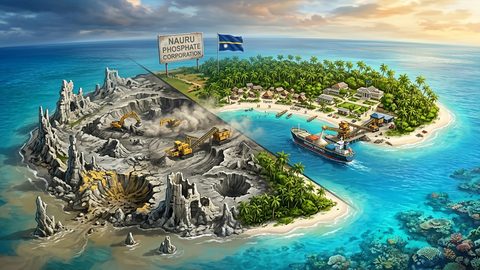 Nauru, the Pacific Republic That Phosphate Built and Nearly Erased
Nauru is one of the Pacific's most overlooked republics. A candid guide to topside, Buada Lagoon, colonial history, and how to actually get there.
Nauru, the Pacific Republic That Phosphate Built and Nearly Erased
Nauru is one of the Pacific's most overlooked republics. A candid guide to topside, Buada Lagoon, colonial history, and how to actually get there.
-
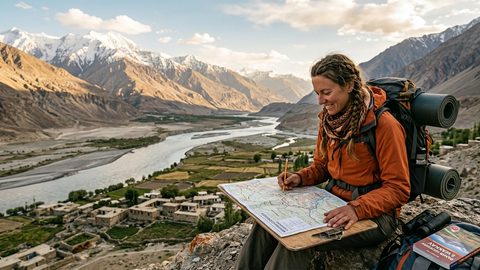 Planning Independent Travel in the Wakhan Corridor, Tajikistan
Independent travel in Tajikistan's Wakhan Corridor: GBAO permits, road conditions from Ishkashim, realistic travel windows, and honest logistics for serious overlanders.
Planning Independent Travel in the Wakhan Corridor, Tajikistan
Independent travel in Tajikistan's Wakhan Corridor: GBAO permits, road conditions from Ishkashim, realistic travel windows, and honest logistics for serious overlanders.