Travelling Burkina Faso, From Ouagadougou to the Sahel and Banfora Escarpment
Burkina Faso offers Ouagadougou's film festival, the Banfora escarpment, and Sahel trading towns, but security constraints now define any journey here.
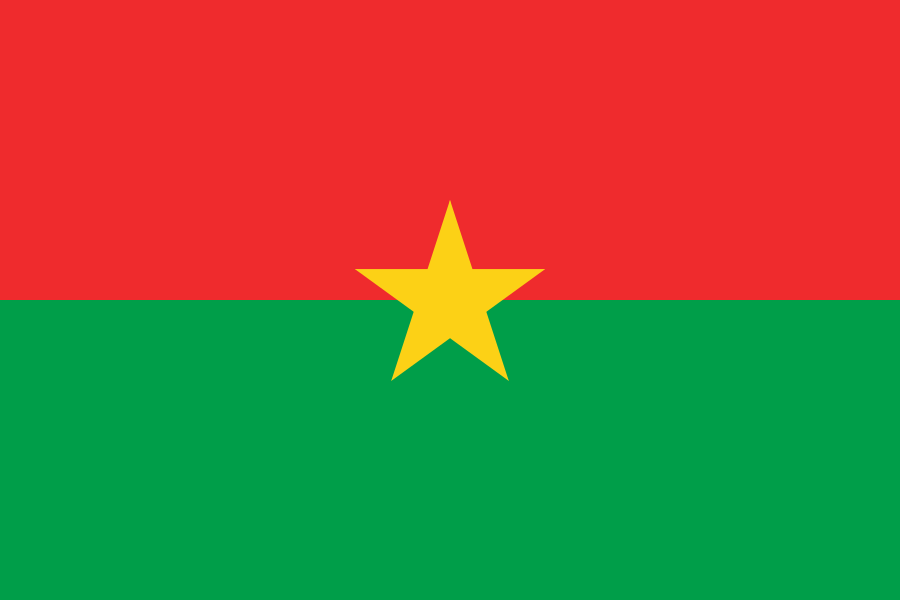
- Flag
-
- ISO code
- BF
- Population
- 19,751,535
- Currency
- XOF
- Dial code
- +226
Travelling Burkina Faso, from Ouagadougou to the Sahel and Banfora Escarpment
Harmattan dust settles over Ouagadougou at dawn. The call to prayer from the Grande Mosquée fades as the first motos weave through Ouaga 2000. By 08:00 the ticket queues at the Palais des Sports are already dense. This city has hosted the continent's filmmakers for decades. But in 2026, the overriding question is not what to watch or where to eat. It is whether you can move safely from this point to the next.
Large parts of Burkina Faso are under active government travel warnings. The UK Foreign, Commonwealth & Development Office advises against all travel to a swath of provinces that includes most of the Sahel region, the east, and the north central belt. The US Department of State assigns the whole country a Level 4: Do Not Travel rating. The Government of Canada says avoid all travel. Those advisories are the starting point for any honest conversation about visiting Burkina Faso, not a footnote to be buried.
Yet the country still receives independent visitors in two specific regions: the Cascades region around Banfora and the Hauts-Bassins region around Bobo-Dioulasso. Ouagadougou itself, the capital, is assessed at the all but essential level by the FCDO. The land borders with Mali and Niger are officially closed. The borders with Benin, Togo, Ghana and Côte d'Ivoire are open, subject to conditions that change without notice. What follows is a route map for the traveller who accepts these constraints, understands that conditions update frequently, and will consult the three official advisory sources before booking anything.
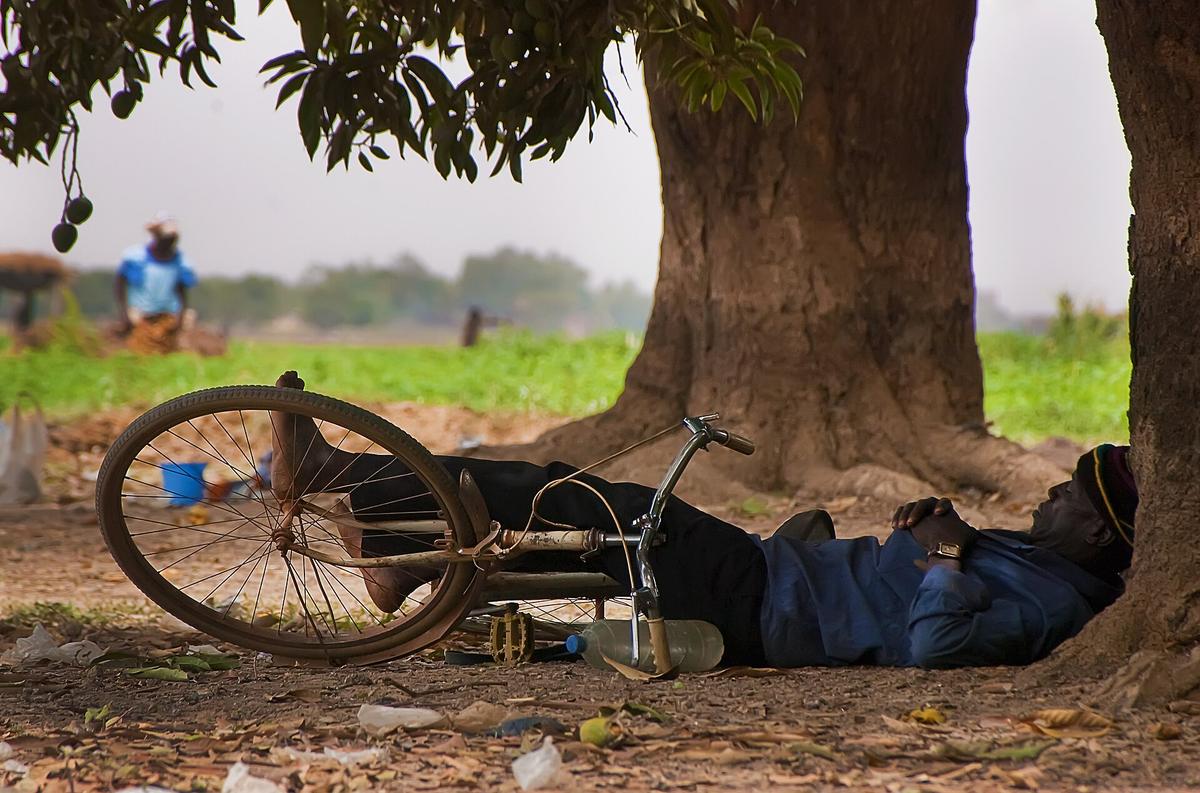
![This photo was taken by Roman Bonnefoy ( Romanceor [parlons-en]). Feel free to use my p...](https://commons.wikimedia.org/wiki/File:Sleeping_man_in_Ouagadougou.jpg)
- Security Advisory Authority: UK Foreign, Commonwealth & Development Office (FCDO), US Department of State, Government of Canada
- Security Status As Of: 2026-08-21
- FCDO Advisory: All Travel Avoided: Provinces of Komondjari, Kompienga, Tapoa (south of RN19), Koulpélogo, Gourma (east of Fada N'Gourma), Gnagna, Séno, Soum, Oudalan, Yagha, Loroum, Bam, Sanmatenga, Namentenga, Kossi, Sourou, Nayala
- FCDO Advisory: All But Essential Travel: Rest of Burkina Faso except Ouagadougou city limits
- FCDO Advisory: Ouagadougou: All but essential travel
- US Department of State: Level 4: Do Not Travel
- Government of Canada: Avoid all travel
- Regions Still Receiving Independent Visitors: Cascades region (Banfora and surrounds); Hauts-Bassins region (Bobo-Dioulasso)
- Security Situation Volatility: High; advisories update frequently
- Source For Current Security Detail: gov.uk/foreign-travel-advice/burkina-faso; travel.state.gov; travel.gc.ca
What Remains Open and What Does Not
Ouagadougou's Cultural Anchors
Burkina Faso's cultural weight does not disappear because the safety situation is grim. The country is the seat of FESPACO, the Festival Panafricain du Cinéma et de la Télévision de Ouagadougou, which ran its 29th edition from 22 February to 1 March 2025. The next edition is expected in 2027, dates unconfirmed. That event alone, held at the Palais des Sports de Ouaga 2000, draws filmmakers and audiences from across the continent and is a reason Ouagadougou retains a pulse even under advisories. The Village Artisanal de Ouagadougou on Avenue de la Grande Chancellerie, near the SIAO grounds, continues to sell bronze castings, batik, leatherwork, wood carvings and jewellery. The Grand Marché de Rood-Woko on Avenue Kwamé Nkrumah, rebuilt after the 2012 fire, is still the city's commercial spine.
Routes That Are Closed
But you need to be direct with yourself about what you cannot do. You cannot cross the Sahel by road from Dori to Gorom-Gorom. The provinces of Séno, Soum and Oudalan are under a Do Not Travel advisory. You cannot take the classic overland route east to Fada N'Gourma and down to the Pendjari National Park link with Benin. The provinces of Gourma east of Fada, Kompienga and Tapoa south of Route Nationale 19 are all prohibited. The cemetery of caravans that was the Mali border crossing at Koloko has been officially closed for years. This is not a country for a loop itinerary or a grand traverse. This is a country for a targeted visit to two southern and western nodes, with eyes glued to the news.
The Viable Corridor: Ouagadougou to Bobo-Dioulasso to Banfora
Getting In And Getting South
The viable corridor runs roughly southwest from the capital. Ouagadougou's Aéroport International de Ouagadougou (OUA), located in the central Zone Aéroportuaire, is serviced as of 2025 by Air France, Brussels Airlines, Turkish Airlines, Ethiopian Airlines, Air Côte d'Ivoire, ASKY Airlines and Royal Air Maroc. Fly in, or enter overland through the open land borders from Ghana, Togo, Benin or Côte d'Ivoire, subject to conditions on the day you cross. Visa on arrival is not available. You must obtain a visa in advance through a Burkina Faso embassy or consulate, or apply via the e-visa portal of the Direction Générale de la Police Nationale.
Bobo-Dioulasso
From Ouagadougou, Bobo-Dioulasso is roughly a four hour drive on RN1, a paved road passable in the dry season. Bobo retains its reputation as the country's cultural second city, with a music scene that pulses in its maquis bars and courtyards. The market here is quieter than Ouagadougou's Grand Marché, but the carved doors of the old quarter and the Grande Mosquée built in Sudanic style are among the most intact in the region. Stay in Bobo for two to three days. Move with a local driver or a known guide. This is not self drive country.
Banfora And The Cascades Region
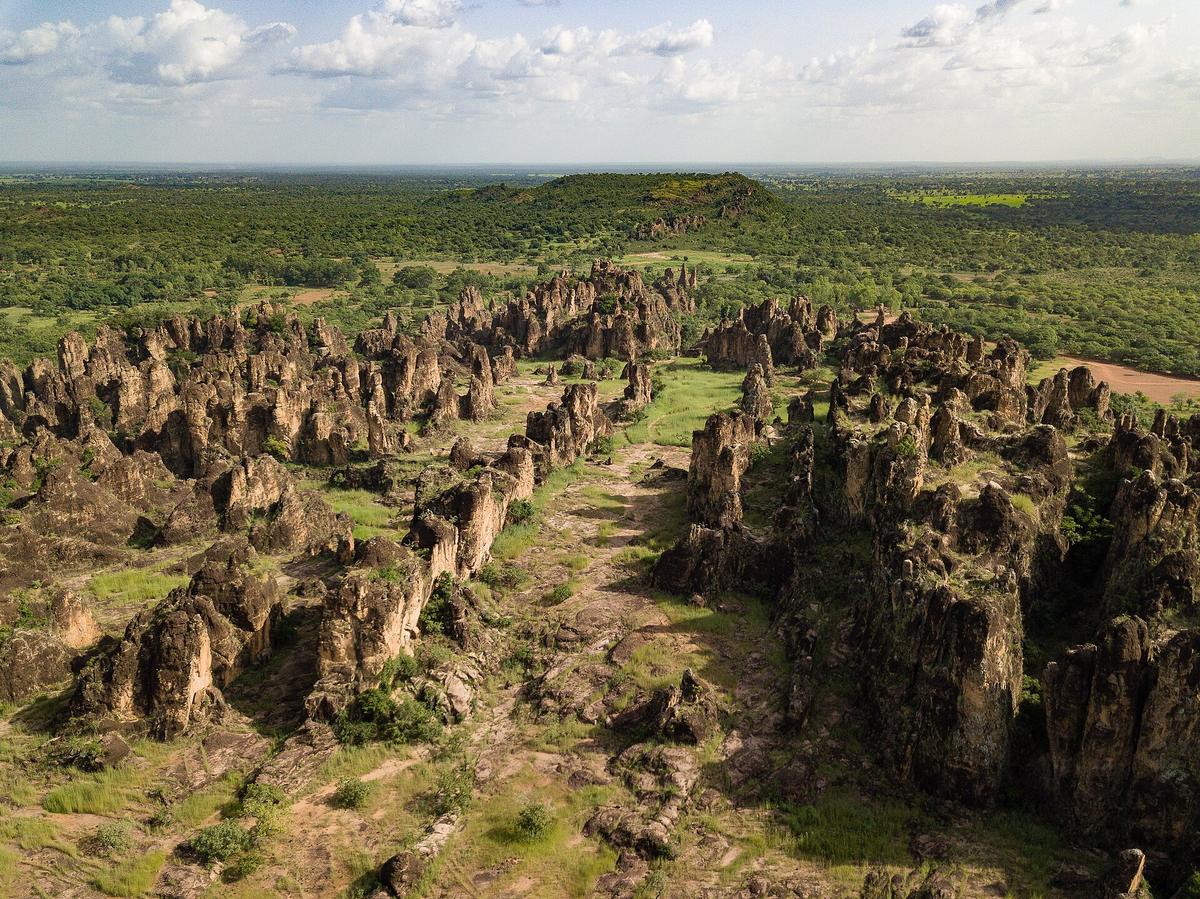
Another 85 kilometres southwest of Bobo, Banfora sits at the edge of the Cascades region, one of two zones the FCDO still assesses as receiving independent visitors. The escarpment that gives Banfora its drama is a series of sandstone cliffs and seasonal waterfalls. The most famous is the Cascades de Banfora itself, a multi-tiered drop into a pool swimmable in the dry season. The nearby Domes de Fabedougou are a geological oddity: dome shaped sandstone formations that look like a petrified ocean floor. The sugar cane plantation that surrounds Banfora is visible from the road. Lac de Tengréla, about 15 kilometres west of town, offers pirogue trips to an island that is a protected area for hippopotamus.
Banfora is the place where the overland route still works. The road from Bobo to Banfora is paved and dry in harmattan season, November to February, when temperatures range from 15°C to 30°C and laterite roads are dry, if corrugated. The rainy season from June to September turns unpaved access roads to the waterfalls and the Domes into impassable mud. September to October is the worst period, with humidity above 80% and laterite roads gluing themselves into a red soup. If you are coming for the Cascades, the window is harmattan season. The dust haze lowers visibility in the mornings but the road conditions hold.
How to Move and What to Carry
On The Road
Do not assume you can rent a car and navigate yourself. Roadblocks on RN1 and RN7 are frequent. Police and gendarmerie checkpoints will ask for your passport, visa, and sometimes an explanation of your route. Carry multiple photocopies of your passport data page and visa. The original stays in your money belt or hotel safe. The photocopy goes into the window. If a checkpoint officer asks for money, you decide how to handle that, but the expectation is that a photocopy and a polite response in French is the baseline. English is not widely spoken outside the top tier hotels. A working French phrasebook or a translator on your phone is mandatory.
Cash And Cards
Cash reliance is high. ATMs exist only in Ouagadougou and Bobo-Dioulasso, and even those are frequently out of service. West African CFA francs (XOF) are the only currency accepted on the ground. The fixed peg is EUR 1 = XOF 655.957. Bring euros or US dollars in cash and exchange at banks in the capital before you head southwest. Card acceptance is limited to major hotels and a few restaurants in Ouagadougou. Do not expect to swipe a card in Banfora.

An Honest Caveat About the Ouagadougou–Banfora Corridor
The Burkina Faso that remains accessible in 2026 is a narrow corridor, not a countrywide itinerary. You cannot see the Sahel. You cannot see the painted houses of Tiébélé or the cliff dwellings of Banfora's more remote escarpments. The Grand Marché de Ouagadougou will give you an afternoon of excellent bronze work and batik, but the old overland route that connected this city to the Niger bend and the salt caravans of the Sahara is gone. The decision to visit is a decision about whether the film culture of Ouagadougou and the waterfall hollows of Banfora are worth the risk profile that every government advisory describes. That is not a question a travel guide can answer for you. What matters is knowing exactly which route works, exactly when the roads hold, and exactly where the warnings apply. The rest is your call, and it is a serious one.
Common Questions
Is it possible to travel overland from Burkina Faso to Benin or Ghana right now?
The land borders with Benin, Togo, Ghana and Côte d'Ivoire are open, subject to conditions that change without notice. The borders with Mali and Niger are officially closed. Before any overland crossing, verify the current status with the FCDO, US Department of State and Government of Canada advisories. Reconfirm with border authorities or a trusted local contact within 48 hours of travel.
I want to attend FESPACO. Is it safe to go to Ouagadougou for the festival?
The FCDO assesses Ouagadougou at the all but essential travel level. The 29th edition took place in February-March 2025. The 30th edition is expected in 2027, with dates unconfirmed. If you choose to attend, understand that the advisory means the UK government considers the situation serious enough to discourage non-essential travel. Travel insurance may be void for trips undertaken against FCDO advice. Check your policy before booking.
How many days do I need for a viable trip to Banfora and Bobo-Dioulasso?
A minimum of seven days is realistic. Fly into Ouagadougou, spend two nights, drive to Bobo-Dioulasso for two nights, continue to Banfora for three nights, then return to Ouagadougou for your departure. The return drive from Banfora to Ouagadougou takes a full day. This does not include time for border crossings if you enter overland.
What is the rainy season schedule, and can I travel in August?
The rainy season runs June to September, peaking in August. Temperatures range 22°C to 35°C and humidity is often above 80%. Unpaved roads in the Cascades region become impassable mud. Paved roads are passable but localised flooding is possible. If you travel in August, restrict yourself to paved routes and accept that the waterfalls will have less accessible trails.
I have heard about the Fête du Vodoun in Benin. Does Burkina Faso have a similar festival?
No. The Fête du Vodoun on January 10 is specific to Benin's Ouidah. Burkina Faso's major cultural events are FESPACO (biennial film festival) and the SIAO (Ouagadougou International Art and Craft Fair, held in even-numbered years). Neither is directly comparable to Vodun ceremonies. If Vodun is your primary interest, direct your trip to Benin, not Burkina Faso.
Read next
-
 Getting to Nauru, the Pacific State Where Air Schedules Define Your Stay
A logistics briefing on reaching Nauru by air — covering weekly flights from Brisbane and Honiara, visa-on-arrival requirements, and planning around fixed departure dates.
Getting to Nauru, the Pacific State Where Air Schedules Define Your Stay
A logistics briefing on reaching Nauru by air — covering weekly flights from Brisbane and Honiara, visa-on-arrival requirements, and planning around fixed departure dates.
-
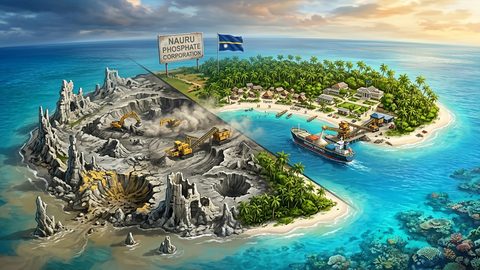 Nauru, the Pacific Republic That Phosphate Built and Nearly Erased
Nauru is one of the Pacific's most overlooked republics. A candid guide to topside, Buada Lagoon, colonial history, and how to actually get there.
Nauru, the Pacific Republic That Phosphate Built and Nearly Erased
Nauru is one of the Pacific's most overlooked republics. A candid guide to topside, Buada Lagoon, colonial history, and how to actually get there.
-
 Planning Independent Travel in the Wakhan Corridor, Tajikistan
Independent travel in Tajikistan's Wakhan Corridor: GBAO permits, road conditions from Ishkashim, realistic travel windows, and honest logistics for serious overlanders.
Planning Independent Travel in the Wakhan Corridor, Tajikistan
Independent travel in Tajikistan's Wakhan Corridor: GBAO permits, road conditions from Ishkashim, realistic travel windows, and honest logistics for serious overlanders.