Landing on Funafuti: Daily Life on the Runway and the Sea Around Tuvalu
In Funafuti, Tuvalu, the airport is the town common, the sea is both a wonder and a threat, and the conservation area holds a silent, pristine Pacific.
- Flag
-

- ISO code
- TV
- Population
- 11,508
- Currency
- AUD
- Dial code
- +688
Landing on Funafuti: Daily Life on the Runway and the Sea Around Tuvalu
You booked a ticket to the world's least visited country. Here is what happens when you land. Your plane touches down on a strip of tarmac that, between flights, becomes a soccer field, a children's play area, a dog-walking circuit, and the social center of an entire nation. The runway is not a side note. It is Funafuti's public square. That single fact tells you more about this place than any statistic will.
- Capital: Funafuti
- Population: 11,900 (2025 estimate, UN Population Division)
- Land area: 26 km²
- Highest elevation: 4.6 m above mean sea level
- Official languages: Tuvaluan, English
- Currency: Australian dollar (AUD), Tuvaluan dollar (TVD, pegged 1:1 to AUD, coins only)
- Scheduled international airline: Fiji Airways
- Scheduled international route: Suva (Nausori) , Funafuti
- Flight frequency: 2-3 flights per week (varies by season and schedule period)
- ATM on Tuvalu: None
- Cash reliance: Near-total; Australian dollars required for all transactions
- Public transport on Funafuti: None
- Sea-level rise (1993, 2023): 3.9 mm per year (Australian Bureau of Meteorology and University of Hawaii Sea Level Center)
The Runway is the Town Square. Act Accordingly.
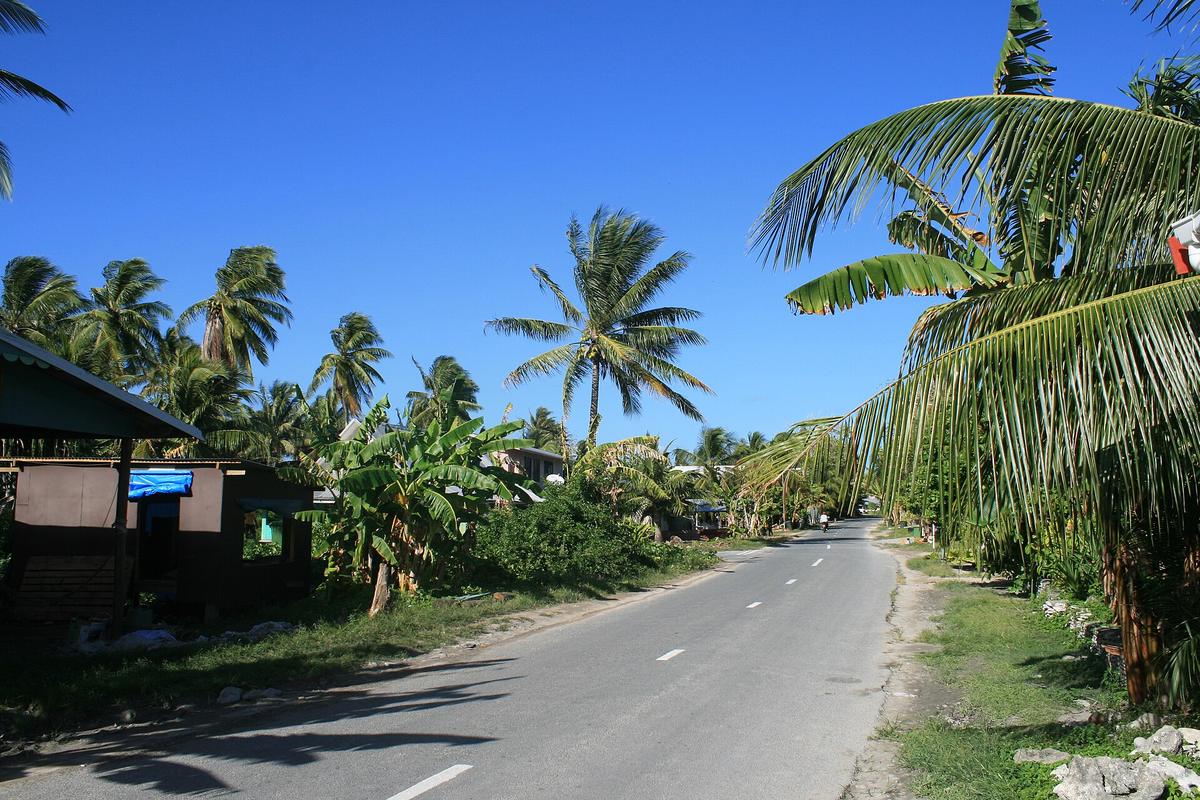
Arrive on a Tuesday afternoon and you step off the Fiji Airways flight into a scene that feels staged. The airport has no fence. Residents on bicycles and motorbikes wait on the grass verge for the all-clear to reclaim their main street. By evening, the same strip where you cleared immigration hosts a volleyball game. Children fly kites where the ATR 72 taxied. Dogs nap on the warm asphalt. The runway is not a security zone. It is the widest, flattest, safest piece of public land on Fongafale, and it gets used accordingly.
Plan your social interactions around the flight schedule. Before a departure, the runway fills with families seeing people off. After arrival, it fills with people greeting newcomers. These are your best moments to observe daily life and to be observed yourself. Smile. Nod. Accept the curiosity. You are one of the few thousand foreign visitors who arrive in a full year.
.jpg)
The Conservation Area: Snorkeling Without a Single Boat in Sight
You came for the water. The Funafuti Marine Conservation Area, established in 1996, covers 33 square kilometers of lagoon, reef passages, and six uninhabited islets. It holds what your travel fantasies promised: coral gardens, large pelagics, green turtles, and water at 29°C with visibility that stretches further than you can kick. The catch: you get yourself there. No tour boats wait at a dock. No daily departures exist.
How to Reach the Conservation Area
Hire a private boat from Funafuti. Negotiate directly with a local fisherman or ask at your guesthouse. Pay in Australian dollars, cash, and agree on the duration before you leave. A half-day trip with a stop at one of the islets for lunch is the standard. You will not see another tourist boat. You will likely not see another person at all. The silence on the water is the point.
What You Will See Underwater
The coral cover is better than most of the Pacific because almost no one dives here. No liveaboard fleets, no day-tripper crowds, no sunscreen runoff from hundreds of bodies. Bring your own mask and fins. Tuvalu has no dive shop that rents gear reliably. If you are a confident snorkeler, the reef drop-offs along the lagoon side of the islets hold the most life. Stay aware of currents through the reef passages. Ask your boat driver where the flow runs before you enter the water.
Landing on an Uninhabited Islet
Your boat driver will pull up on a sand cay that has no toilet, no shade structure, no vendor, no rubbish bin. Pack out everything you bring. Bring more drinking water than you think you need. Bring a sun shirt. The midday sun is unfiltered and the reflection off the sand burns from below. You are responsible for your own safety. Twist an ankle and there is no rescue service on standby. That is the trade for having a deserted island to yourself.
| What You Need To Know | The Facts |
|---|---|
| Visa on arrival cost | AUD 100, payable in cash only |
| Maximum stay on visa on arrival | 30 days, extendable |
| Departure tax | AUD 30, payable in cash at airport |
| ATM on Tuvalu | None. Bring enough AUD for your entire stay |
| Credit card acceptance | Very limited. National Bank of Tuvalu may process cash advances but verify before relying on it |
| Public transport on Funafuti | None. Walk, hire a motorbike taxi, or arrange private pickup |
| Road network on Funafuti | Single main road, approximately 11 km, running the length of Fongafale islet |
| Inter-island transport | Government vessel Nivaga III and Manu Folau, every 2-4 weeks, schedule irregular |
| Cyclone season | November to April |
| Mean annual temperature | 27°C to 31°C |

The Climate Frontline is Not Abstract Here. it is Under Your Feet.
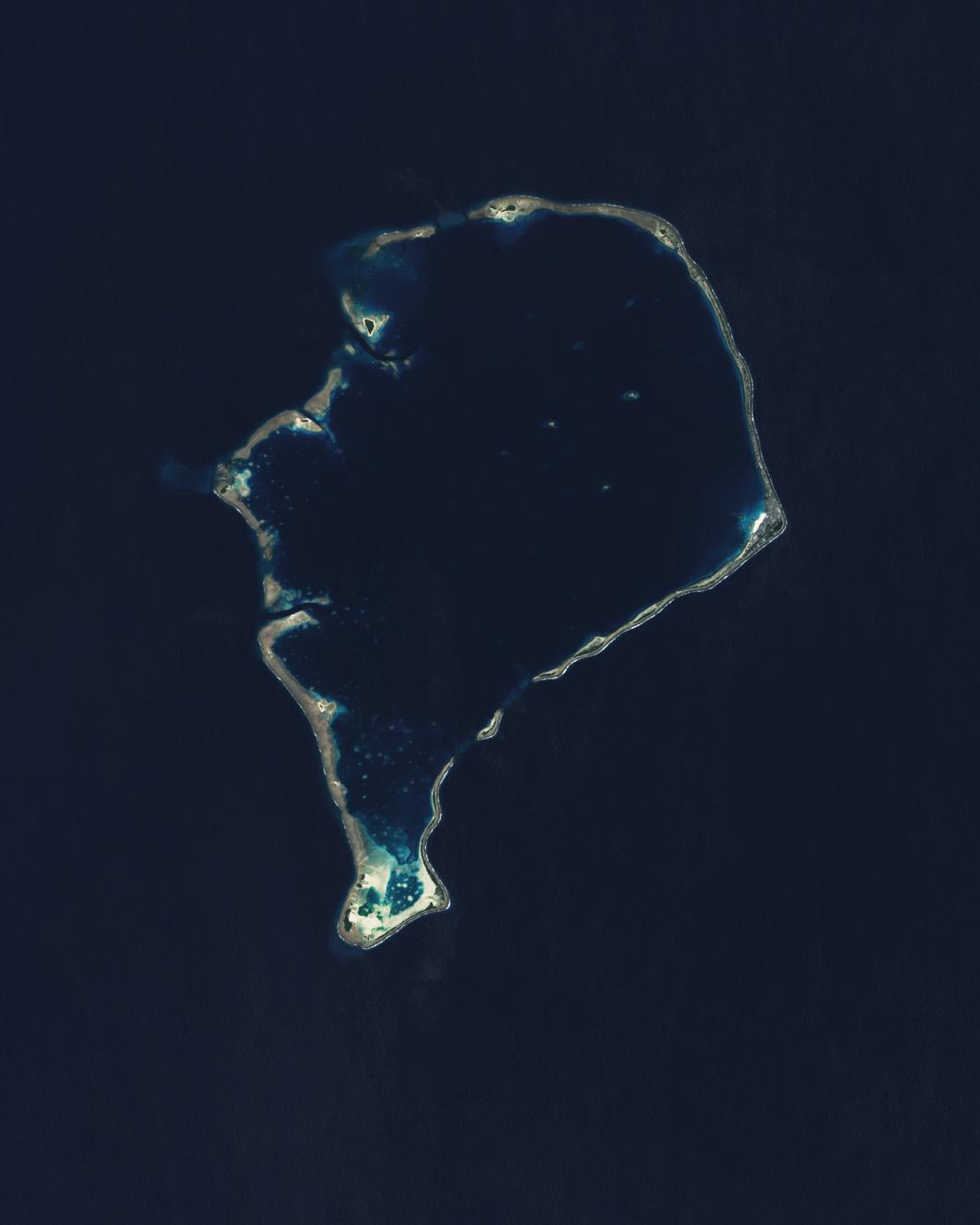
You feel the tension the moment you walk the island's length. The single 11 kilometer road runs the spine of Fongafale, and on both sides, the Pacific is visible. The island is never more than a few hundred meters wide. The mean elevation of the entire country is 1.83 meters above sea level. The highest point on Tuvalu is 4.6 meters. The tide gauge at Funafuti recorded a sea-level rise of 3.9 millimeters per year between 1993 and 2023. That is not a projection. That is the last thirty years of data.
The IPCC AR6 assessment from 2021 projects that under a high-emissions scenario, the majority of Tuvalu's land area will fall below mean high water springs by 2100. You do not need a climate scientist to see the evidence. Walk the ocean side of Fongafale after a spring tide. Watch the waves undercut the coconut palms. Talk to any resident over forty. They will show you where the shoreline was when they were children. It has moved inland.
How to Engage Without Exploiting
Ask questions, but do not demand stories. The people of Tuvalu are aware that their country is the global symbol of climate vulnerability. They are also a living community, not a documentary subject. You are a guest in a home under threat. Listen more than you speak. Buy from local vendors. Stay at locally owned guesthouses. Do not arrive with a savior complex. The resilience you will witness is not a performance for visitors. It is daily life conducted on a landmass that exists at the mercy of the tide.
The Heavy Quiet Atmosphere
There is a specific mood on Funafuti you will not find on other Pacific islands. It is not despair. It is a quiet knowing. Conversations among locals about the future are matter-of-fact. The government has explored digital nationhood and land purchase agreements abroad. The runway you walked on may be under water within your lifetime. That knowledge sits in the air. Respect it. Do not treat Tuvalu as a doom tourism stop. Treat it as a place where people are getting on with the business of living, raising children, running schools, fishing, laughing, and hosting the occasional curious traveler.
Common Questions
Can I walk on the runway when no flight is scheduled?
Yes. Locals use the runway as a public space between flights. No fence restricts access. Check the flight schedule and clear the strip when an aircraft is due.
How do I reach the Funafuti Marine Conservation Area?
Hire a private boat from Funafuti. Negotiate directly with a fisherman or through your guesthouse. Agree on the duration and price in Australian dollars before you leave. No scheduled tours operate.
Is the snorkeling in the conservation area worth the effort?
Yes, if you are a self-sufficient snorkeler. The coral is healthy and you will have the reef to yourself. Bring your own mask and fins. No dive shop on Funafuti rents gear reliably.
How visible is coastal erosion to a visitor?
Immediately visible. Walk the ocean side of Fongafale after a spring tide or talk to any long-term resident. The shoreline has moved inland significantly in living memory.
Is Tuvalu depressing to visit?
That depends on your mindset. The climate threat is real and present. The community is resilient and welcoming. Treat the visit as a cultural exchange, not a disaster tour, and you will leave with a fuller understanding of Pacific life.
Can I visit outer islands from Funafuti?
Only via the government-operated cargo vessel Nivaga III or Manu Folau, which sails every 2 to 4 weeks on an irregular schedule. Outer islands like Nukulaelae have no commercial accommodation. Plan months ahead and expect delays.
What is the main thing that surprises first-time visitors?
How normal daily life feels. The runway as a public space, the lack of tourists, the small scale of everything. Tuvalu is not a curated resort destination. It is a functioning micro-nation where you are a rare guest.
Read next
-
 Getting to Nauru, the Pacific State Where Air Schedules Define Your Stay
A logistics briefing on reaching Nauru by air — covering weekly flights from Brisbane and Honiara, visa-on-arrival requirements, and planning around fixed departure dates.
Getting to Nauru, the Pacific State Where Air Schedules Define Your Stay
A logistics briefing on reaching Nauru by air — covering weekly flights from Brisbane and Honiara, visa-on-arrival requirements, and planning around fixed departure dates.
-
 Nauru, the Pacific Republic That Phosphate Built and Nearly Erased
Nauru is one of the Pacific's most overlooked republics. A candid guide to topside, Buada Lagoon, colonial history, and how to actually get there.
Nauru, the Pacific Republic That Phosphate Built and Nearly Erased
Nauru is one of the Pacific's most overlooked republics. A candid guide to topside, Buada Lagoon, colonial history, and how to actually get there.
-
 Planning Independent Travel in the Wakhan Corridor, Tajikistan
Independent travel in Tajikistan's Wakhan Corridor: GBAO permits, road conditions from Ishkashim, realistic travel windows, and honest logistics for serious overlanders.
Planning Independent Travel in the Wakhan Corridor, Tajikistan
Independent travel in Tajikistan's Wakhan Corridor: GBAO permits, road conditions from Ishkashim, realistic travel windows, and honest logistics for serious overlanders.