The Base for the Atakora: Tata Houses, Cooler Hills and Pendjari Access
A guide to Natitingou, the base for Benin's Atakora hills: visiting Tata Somba houses, arranging Tanéka Béri permission, and accessing Pendjari National Park.
- Flag
-

- ISO code
- BJ
- Population
- 53,284
- Currency
- XOF
- Timezone
- Africa/Porto-Novo
Natitingou Sits at 460 Metres, and Those 460 Metres Change Everything
After 600 kilometres of road from Cotonou, the drop in humidity hits you before you get out of the car. Natitingou, administrative capital of the Atakora Department, sits high enough to pull the night temperature down to 17°C in December and January. That is not just comfortable. It is the difference between sleeping and not sleeping. The Sudanian climate brings a single rainy season from May to October, not the double soaking the south gets. The harmattan winds from December to February strip the air dry. You come here because the hills start here, and because the town is the only practical base for the things that make northern Benin worth the two-day round trip from the coast: the Tata Somba fortress-homes of the Betammaribe people, the animist rituals of Tanéka Béri, and the wildlife of Pendjari National Park.
Do not mistake Natitingou for a sightseeing destination. It is a functional hub. A market fills the main streets on market days. A regional museum is worth an hour. Hotels cater to travellers passing through to somewhere else. The town itself is not photogenic. It is dusty, busy with moto-taxis, and short on evening diversions. Treat it as a staging post. Sleep here, eat here, arrange your transport here, then head into the hills.

Boukoumbé and the Tata Somba: Permission is Not Optional
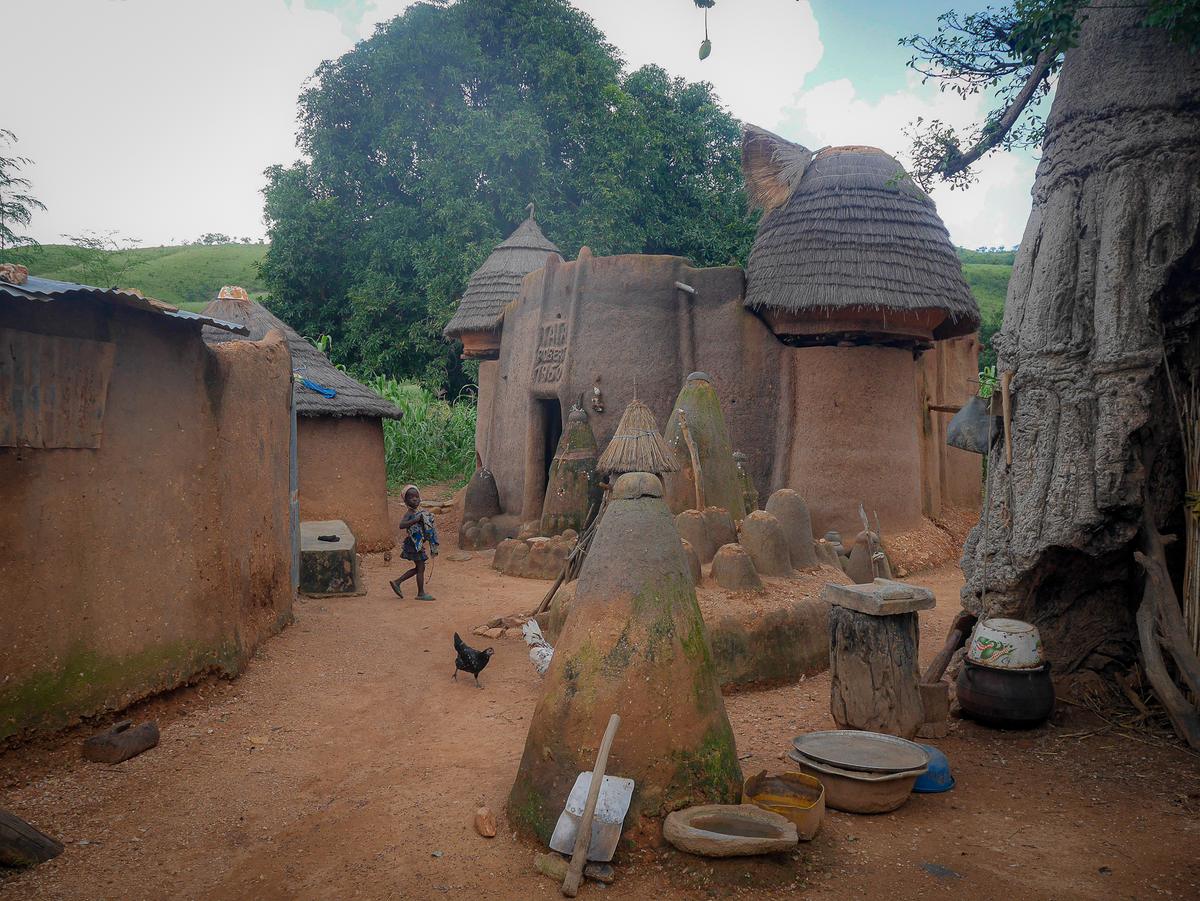
The fortified earthen dwellings of the Betammaribe people, known as Tata Somba, are the reason many travellers make the journey north. Two-storey tower-houses with conical thatched roofs, defensive walls, and external granaries: they look like something a child would draw if a child drew defensive architecture. The primary area to see them is the commune of Boukoumbé, about 40 kilometres from Natitingou, and the villages scattered through the Atakora hills.
This is not a drive-by attraction. You need a guide. Local guide fees run XOF 5,000 to 10,000 per half-day, negotiable, and that is money you should not skip. The guide you hire speaks the language, knows which households are open to visitors, and handles the protocol. The protocol is simple and non-negotiable: before you enter a Tata Somba compound or raise a camera, you ask permission from the village chief or the household head. Not your guide. You. If permission is granted, you may be asked for a small contribution. Entry fees vary by village, typically between XOF 1,000 and 3,000 per person. This is not a fixed national rate. Carry small denominations.
What the Tata Somba Houses Are and Are Not
The Koutammakou, the Land of the Batammariba, was inscribed as a UNESCO World Heritage Site in 2004. As of 2023, the extension to include the Beninese side was pending. Practically, this changes nothing about how you visit. The houses are still lived in. The granaries still hold millet. The roofs still need replacing every few years. You are walking through someone's home, not a museum. Act accordingly.
If you have only one morning, hire a zemidjan in Natitingou, agree on a return time, and head to the closest cluster of Tata compounds. The spectacle is not the individual houses but the way they sit on the hillside, each one a self-sufficient fortress in a landscape that never really submitted to central authority.
Tanéka Béri: Plan Weeks Ahead or Skip it
Tanéka Béri is a village about 30 minutes from Natitingou by zemidjan, and it holds animist rituals that are among the most intact in West Africa. That is exactly the problem. The rituals are not staged for tourists. They are real, irregular, and closed to outsiders unless you have arranged permission in advance. You cannot show up and hope. Contact a guide or a local intermediary weeks before your trip. Explain what you hope to witness. Wait for an answer. The answer may be no.
If you do get access, you will see ceremonies involving masquerades, invocations to ancestors, and sacrifices that do not flinch from the blood. Photography is almost always restricted. Respect that restriction. The village has been burned by travellers who posted sacred images online. One bad visitor closed the door for everyone who followed.
The alternative is to skip Tanéka Béri entirely and focus on the Tata Somba villages and Pendjari. That is a valid choice. A local guide in Natitingou can tell you whether any ceremonies are scheduled during your stay. Do not count on it. The rituals follow the agricultural calendar and the spiritual calendar, not yours.
Pendjari National Park: Book Everything Before You Leave Cotonou
Pendjari National Park, part of the UNESCO-listed W-Arly-Pendjari Complex since 2017, covers 2,755 square kilometres of Sudanian savannah. It has lions, elephants, buffalo, antelope, and the last viable population of cheetahs in West Africa. It also has a rule that catches travellers out repeatedly: you must book your lodge and your guide in advance. The African Parks Network has managed the park since 2017 and runs a professional operation. No spontaneous day trips. No showing up at the Batia entrance, 50 kilometres from Natitingou on a road that is paved until the final unpaved track, and expecting to get in.
Book your accommodation at one of the lodges inside or just outside the park. Reserve a guided safari vehicle. The drive from Natitingou to the main entrance takes about an hour on a good day. Road condition and check-in procedures mean you treat Pendjari as a multi-day commitment. Minimum two nights. One night is possible but rushed. Zero nights booked means you do not go in.
The dry season from December to February is the best window. Animals concentrate around water sources. The grass is low. The roads are passable. March hits 36°C and the animals are still visible, but the heat is punishing. The rainy season, May to October, turns the unpaved tracks to mud and drives the animals deeper into the bush. Do not attempt Pendjari in the rains unless you have a serious 4x4 and a tolerance for frustration.
Kota Falls and Tanougou Falls
If you have time between Natitingou and the park, two waterfalls sit along the route. Kota Falls, about 15 kilometres southeast of Natitingou near the village of Kota, drops about 20 metres and flows perennially, strongest from July to September. Tanougou Falls, about 30 kilometres northeast of Natitingou near the village of Tanougou on the road toward Pendjari, drops about 15 metres and follows the same seasonal pattern. Both are worth a swim, not a detour that changes your trip. Visit them if you have a spare morning. Skip them if you are pressed for time. The hills themselves are the main event.

The Musée Régional and the Practical Math of Getting Here
The Musée Régional de Natitingou, in the town centre near the main roundabout, holds ethnographic collections covering the Somba, Waaba, Berba, and Fulani peoples: traditional architecture models, musical instruments, local history. The entry fee was XOF 1,500 in 2023, set by the municipal authority. Allow 45 minutes. It is a primer for the hills, not a destination in itself.
The real question is how you get here. Cotonou to Natitingou by road is about 600 kilometres, paved the whole way on RNIE 2 through Bohicon, Parakou, and Djougou. A private vehicle takes 9 to 11 hours. Bus companies including Confort Lines, ATT, and La Poste du Bénin run the route. The bus takes 10 to 13 hours. The one-way fare in 2023 ran XOF 7,000 to 10,000. Natitingou has an airport, NAE, with an unpaved runway, but scheduled commercial flights were not operational as of 2024. Do not plan around flying unless you have a charter.
A common mistake is trying to combine Natitingou with the south of Benin in a single week. Do not attempt it. The north-south journey alone eats two full days. Minimum seven days for the whole country. If you have only four or five days, pick either the south or the north, not both.
What to See in Natitingou
Common Questions
How many days do I need in Natitingou to see the Tata houses and Pendjari?
A minimum of three nights in Natitingou itself if you want to visit Boukoumbé and one of the waterfalls before heading to Pendjari. Add two more nights if you plan to enter the park for game drives. The total for the northern circuit is five to six nights, not counting travel from Cotonou.
Do I need a 4x4 to reach the Tata Somba villages?
Not in the dry season. A regular car with reasonable ground clearance can reach most villages from November to April. In the rainy season from May to October, the laterite tracks turn to mud and a 4x4 becomes necessary. Many travellers hire a zemidjan or a taxi with a driver who knows the roads.
Can I photograph inside a Tata Somba house?
Only after you have asked permission from the household head or village chief and received it. Some families allow photography for an additional fee. Some refuse entirely. Do not photograph without asking. Your guide will facilitate the request.
What is the best time of year for Natitingou and Pendjari?
December to February. The harmattan winds lower humidity, the nights are cool at 17°C, the roads are passable, and animals in the park concentrate around remaining water sources. March is the hottest month at 36°C daily maximum and is still workable. Avoid the rainy season from May to October.
How do I book Pendjari National Park?
Contact the African Parks-managed booking office in Cotonou or Natitingou. Reserve your lodge and a guided safari vehicle at least two weeks in advance. Walk-in bookings are not accepted. Confirm your reservation before travelling north.
Is English spoken in Natitingou?
Rarely. French is the operating language. The local languages include Ditammari, Waama, and Fulfulde. Carry a phrasebook or translation app with offline French capability. A local guide who speaks French and English can be arranged through most hotels.
Is the Musée Régional de Natitingou worth visiting?
Yes, if you want context before heading into the hills. Allow 45 minutes. The entry fee in 2023 was XOF 1,500. The collection of traditional architecture models helps you understand what you are looking at in Boukoumbé. Skip it if you are short on time and have done your reading.
Read next
-
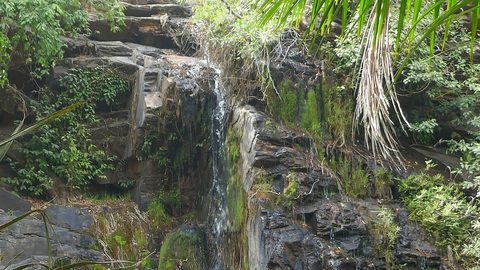 Kota Falls
 near Natitingou is a seasonal cascade in the Atakora hills; outside the rainy months the water slows to a trickle and the track is rough.
Kota Falls
Kota Falls near Natitingou is a seasonal cascade in the Atakora hills; outside the rainy months the water slows to a trickle and the track is rough.
-
 Benin End to End: Cotonou, the Vodun Coast and the Atakora Hills
Benin end to end: a travel guide for adventurous travellers covering Cotonou, the Vodun coast, the Dahomey palaces, and the remote Atakora hills.
Benin End to End: Cotonou, the Vodun Coast and the Atakora Hills
Benin end to end: a travel guide for adventurous travellers covering Cotonou, the Vodun coast, the Dahomey palaces, and the remote Atakora hills.
-
 Getting to Nauru, the Pacific State Where Air Schedules Define Your Stay
A logistics briefing on reaching Nauru by air — covering weekly flights from Brisbane and Honiara, visa-on-arrival requirements, and planning around fixed departure dates.
Getting to Nauru, the Pacific State Where Air Schedules Define Your Stay
A logistics briefing on reaching Nauru by air — covering weekly flights from Brisbane and Honiara, visa-on-arrival requirements, and planning around fixed departure dates.
-
 Nauru, the Pacific Republic That Phosphate Built and Nearly Erased
Nauru is one of the Pacific's most overlooked republics. A candid guide to topside, Buada Lagoon, colonial history, and how to actually get there.
Nauru, the Pacific Republic That Phosphate Built and Nearly Erased
Nauru is one of the Pacific's most overlooked republics. A candid guide to topside, Buada Lagoon, colonial history, and how to actually get there.
-
 Planning Independent Travel in the Wakhan Corridor, Tajikistan
Independent travel in Tajikistan's Wakhan Corridor: GBAO permits, road conditions from Ishkashim, realistic travel windows, and honest logistics for serious overlanders.
Planning Independent Travel in the Wakhan Corridor, Tajikistan
Independent travel in Tajikistan's Wakhan Corridor: GBAO permits, road conditions from Ishkashim, realistic travel windows, and honest logistics for serious overlanders.