The Royal Palaces of Abomey, What Remains of the Dahomey Kingdom
The UNESCO-listed Royal Palaces of Abomey are partly ruined but the surviving bas-reliefs tell the story of the Dahomey kingdom in vivid detail.
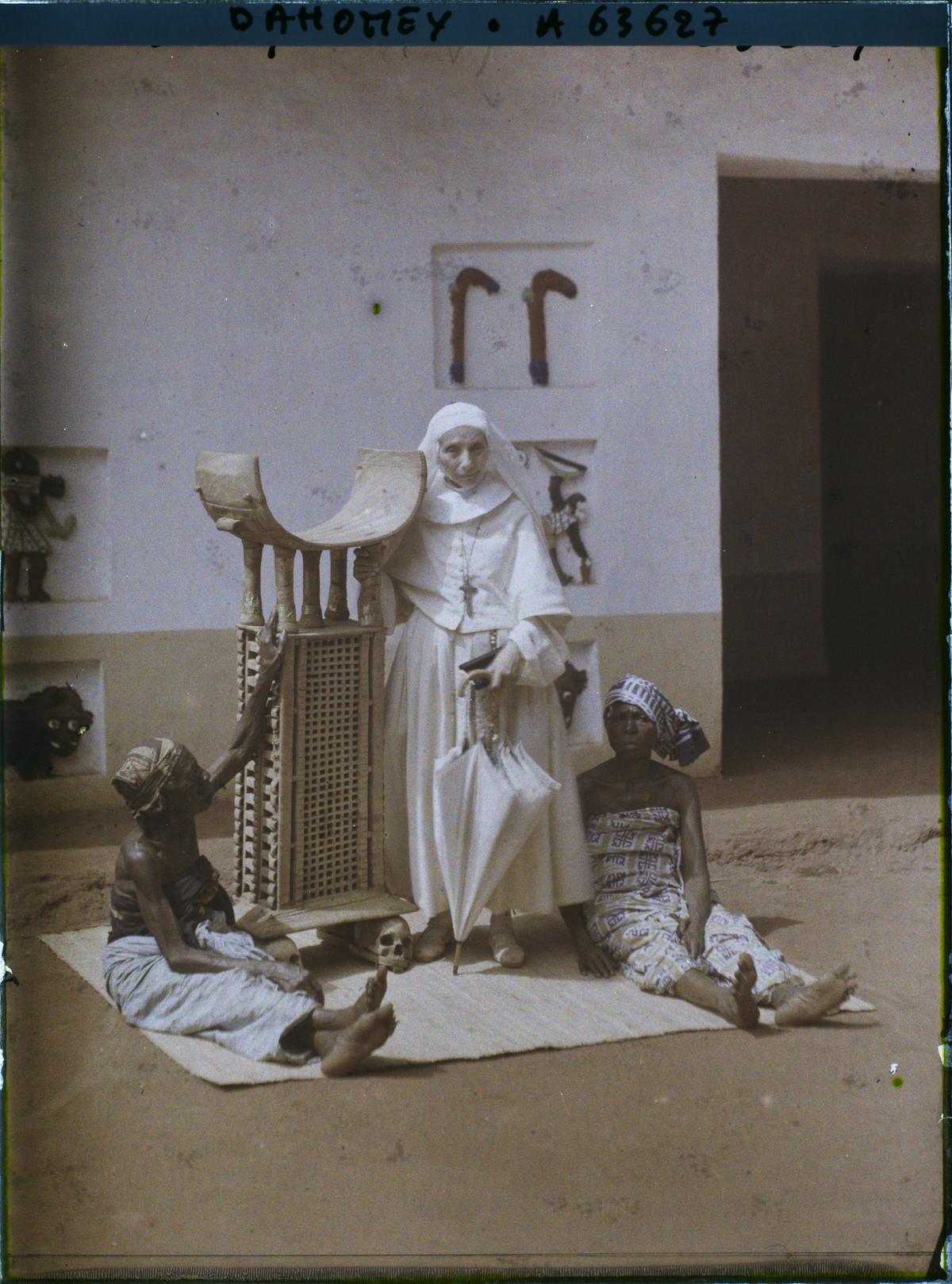

The Surviving Walls and Bas-Reliefs of Abomey’s Royal Compound
In 1892, King Behanzin set fire to his own capital. French colonial forces were advancing on Abomey, and Behanzin chose to destroy what he could not defend. The royal compound, built by 12 kings across more than two centuries, burned for days. What you see today is the fraction that survived that fire, the tornado that hit in 1984, and the subsequent restoration work. Here is exactly which sections are intact, what the bas-reliefs on the surviving walls actually depict, and how to see them without wasting your one day in Abomey.
- UNESCO Inscription: 1985 (Danger List 1985, 2007)
- Site Area: 47 hectares core zone, 108 hectare buffer zone
- Kings Who Built On Site: 12, from Houegbadja (c. 1645, 1685) to Agoli-Agbo (1894, 1900)
- Museum: Historical Museum of Abomey (Musée Historique d'Abomey)
- Opening Hours: 08:30, 18:00, daily (open every day of the week; verify on arrival)
- Foreign Adult Ticket (2025 rate): XOF 3,000 (publisher: Ministry of Tourism, Culture and Arts, Republic of Benin)
- Foreign Child Ticket (2025 rate): XOF 1,500
- ECOWAS Adult Ticket (2025 rate): XOF 2,000
- ECOWAS Child Ticket (2025 rate): XOF 1,000
- Guided Tour: Mandatory. Hire a guide on arrival. French and English available.
- Photography Inside Museum: Prohibited. Outdoor photography permitted. Video camera requires separate permit and fee.
What Physically Survived the Fire and the Tornado
You are visiting two separate sites, not one. The ticket system requires it. Your XOF 3,000 foreign adult ticket (2025 rate set by the Ministry of Tourism, Culture and Arts) covers entry to both the main palace complex on Palace Square and the second site a few hundred metres north, the palace of King Ghezo. Do not skip the second site. Most visitors spend 90 minutes on the main complex and miss the more intact narrative panels at Ghezo's hall entirely.
The Main Complex: Museum and Royal Tombs
The main compound contains the Historical Museum of Abomey, housed in the palace of King Glèlè. Inside the museum, photography is prohibited. The collection includes royal thrones, ceremonial weapons, textiles, and the surviving fragments of wall panels from the fire. You cannot photograph them. Budget your attention accordingly. Outside, in the courtyards, photograph the reconstructed walls and the tombs of the kings freely.
Four royal tombs are visible in the main complex. They are low, raised earth mounds under corrugated iron shelters. Not the grandiose structures you might expect. The tomb of King Houegbadja, the founder, sits near the entrance. King Kpengla and King Agonglo are also interred here. The tomb of King Behanzin, the king who set the fire, stands in a separate enclosure within the compound. These tombs are the only continuous physical link to every king from the 17th century to the end of the kingdom.
King Ghezo's Palace: The Panels You Came For
Walk north from the main entrance for roughly ten minutes. The palace of King Ghezo is smaller but holds the most complete surviving set of polychrome earthen wall panels in Abomey. These panels are the reason this UNESCO site matters. Craftsmen reconstructed them after the 1984 tornado using original fragments and traditional techniques. The colours remain vivid: red from laterite clay, white from kaolin, blue from indigo, yellow from ochre. Each panel tells a specific story.
The guide you hire on arrival will decode these for you. The imagery is symbolic and literal at the same time. A panel showing a ship with European figures records the first contact with Portuguese traders. A crocodile eating a fish represents the proverb: the king bites his enemies like a crocodile bites its prey, without warning. A severed head under a royal parasol means the king conquered that specific rival kingdom. An axe with a curved handle means the king's ancestors came from the sky and brought the iron age to the region. The panels were both a visual chronicle and a legal claim to territory.
The Reconstructed Halls and Their Damage
The main audience hall of King Ghezo's palace has been rebuilt to its original dimensions. The roof is thatch, supported by carved wooden pillars. Inside, the walls are lined with the narrative panels documenting Ghezo's reign. He ruled from 1818 to 1858, a period of military expansion and increased slave trading with European merchants. The panels show his victories against the Yoruba city states of Oyo and Abeokuta. They also show ritual ceremonies, including the Annual Customs where captured enemies were sacrificed.
Do not expect the panels to be free of damage. Some are reconstructed from fragments. Some have weathered badly. Your guide will point out which ones are original and which are modern restorations. The original fragments are kept inside the museum vault and are not on public display.
How to Decode the Wall Panels at the Royal Palaces
The wall panels are not decorative art. They functioned as a written history for a society that used oral tradition and visual symbolism instead of a European alphabet. Each king commissioned a set of panels for his own palace. The panels recorded his divine lineage, his military victories, the ceremonies he performed, and the proverbs that defined his rule.
Your guide will walk you through the following recurring symbols. Write them down or memorise them before you arrive. The guide you hire at the entrance will speak quickly. The heat in the courtyards is punishing by 10:00 AM.
- Animals: A lion means strength and royal authority. A shark means the king's power extends over the sea. A chicken pecking at grain means the king provides for his people. A crocodile is both a warning and a claim of territory.
- Objects: A royal stool or throne means legitimate kingship. A ceremonial sword means justice and punishment. A gun means military victory against European or African enemies. A ship with a mast means foreign trade.
- Human Figures: A kneeling figure holding a tray means tribute being paid. A figure with a severed head is a claimed victory. A figure inside a palace means the king receiving ambassadors.
- Abstract Motifs: Geometric patterns of lozenges and zigzags represent the boundaries of the kingdom and the roads that connect it. The repeated X motif means the king's word is final and cannot be crossed.
The most celebrated panel is at Ghezo's palace. It shows King Ghezo holding a human head by the hair. The head represents the king of the Yoruba city state of Owu, defeated in battle. Your guide will tell you the name. These panels were public monuments. They were meant to intimidate visitors and remind subjects of the king's absolute power.
What You Will Not See
The original compound was 47 hectares. What stands today is less than one third of that. The adobe walls that did not burn were demolished by the French after 1892 to build administrative buildings. The current museum occupies only the palace of King Glèlè. The palaces of Kings Agadja, Tegbessou, and Akaba are gone entirely. The perimeter walls that survived are red laterite, between 3 and 5 metres high, with narrow slits that once served as defensive arrow loops. Walk along the outer wall on the east side of the main complex. That section is the longest continuous stretch of original wall on the site. While the Dahomey kings once ruled from Abomey, their dynasty traces its origins to the royal court of Allada just to the south.
Getting Your Ticket, Guide, and Reaching Both Palaces
Arrive at 08:30. The site opens at 08:30 and closes at 18:00 daily. The morning light is lower and cooler, and the wall panels are easier to photograph before 10:00 when the sun hits them directly. The ticket booth is inside the main gate. Hand over XOF 3,000 for a foreign adult (2025 rate from the Ministry of Tourism, Culture and Arts). ECOWAS nationals pay XOF 2,000. Children under the published tariff pay half these rates.
The ticket is a two site ticket. It covers the main complex and King Ghezo's palace. Keep the ticket stub. You will show it at the second site entrance. The second site has its own ticket taker and its own guide rotation. Do not pay a second time. If the taker demands payment, insist that your ticket covers both sites and show the stub.
Hire a guide on arrival. Do not book in advance. A queue of licensed guides waits inside the main gate. Negotiate the price. The official rate is XOF 5,000 to XOF 10,000 for a one hour tour covering both sites. Agree on the price before the tour begins. Specify that you want to see the panels at Ghezo's palace. Some guides will try to shorten the tour by skipping the second site. Insist on both.
Tour languages available are French and English. If you do not speak French fluently, ask for an English speaking guide directly. Not all guides speak English. If none are available, hire a French speaking guide and follow along with a written cheat sheet of the wall panel symbols. A translation app on your phone helps with the explanations you hear.
The second site is a ten minute walk north from the main gate. The road is unpaved. Red dust will coat your shoes. There is no shade. Carry water, a hat, and a sun sleeve or cover up. Power cuts are common in Abomey. Charge your phone and camera battery before you arrive. Bring a power bank.
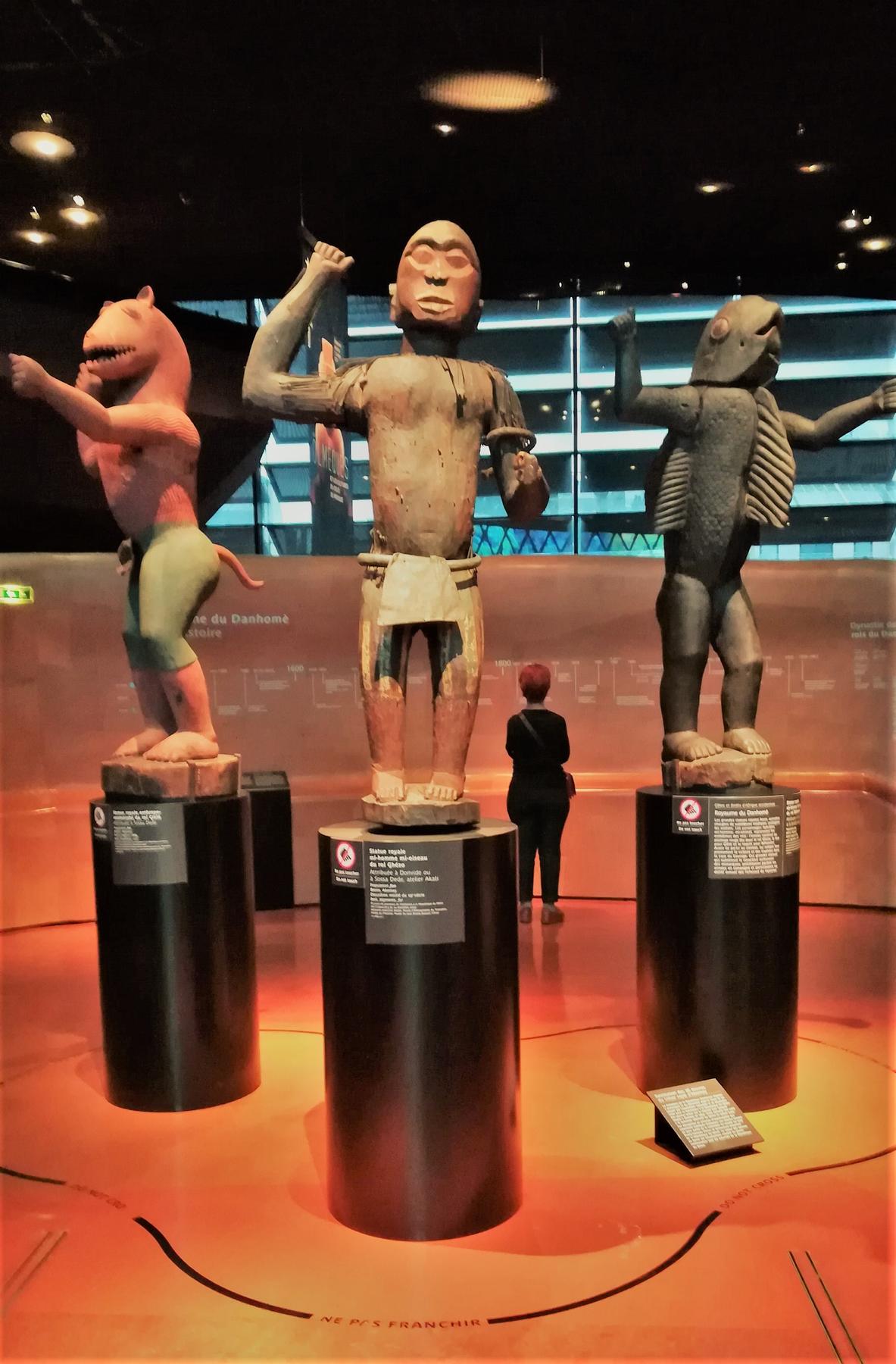

Frequently Asked Questions About the Royal Palaces of Abomey
How much time do I need at the Royal Palaces of Abomey?
Two hours minimum. One hour for the main complex and museum, one hour for King Ghezo's palace and the wall panels. If you want to photograph carefully, budget three hours total.
Can I visit the palaces without a guide?
No. A guided tour is mandatory. Guides are arranged on arrival at the main gate. There is no self guided route.
What do the wall panels actually show?
Each panel records a specific king's military victories, royal lineage, ritual ceremonies, and proverbs. Common imagery includes lions, ships, severed heads, royal stools, and crocodiles. The panels at King Ghezo's palace are the most complete and best preserved set.
Is the Historical Museum of Abomey worth the visit?
Yes, but accept that photography inside the museum is prohibited. The collection includes thrones, weapons, textiles, and panel fragments that survived the 1892 fire. Allow 30 minutes inside.
Do I need a separate ticket for King Ghezo's palace?
No. Your single ticket covers both the main complex and Ghezo's palace. Show your ticket stub at the second site entrance. Do not pay a second time.
What should I bring to the palaces?
Water, hat, sunscreen, comfortable walking shoes, a power bank for your phone, small cash denominations (XOF 500 and 1,000 notes) for your guide's tip and incidental purchases, and a charged camera for the outdoor areas.
Is the site wheelchair accessible?
Not reliably. The pathways are unpaved red earth with occasional steps. The second site requires a ten minute walk on a dirt road. If you have mobility limitations, ask at the ticket booth if a wheelchair and assistant are available; they often are not.
Read next
-
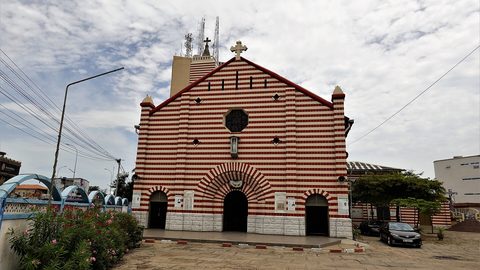
 Benin End to End: Cotonou, the Vodun Coast and the Atakora Hills
Benin end to end: a travel guide for adventurous travellers covering Cotonou, the Vodun coast, the Dahomey palaces, and the remote Atakora hills.
Benin End to End: Cotonou, the Vodun Coast and the Atakora Hills
Benin end to end: a travel guide for adventurous travellers covering Cotonou, the Vodun coast, the Dahomey palaces, and the remote Atakora hills.
-
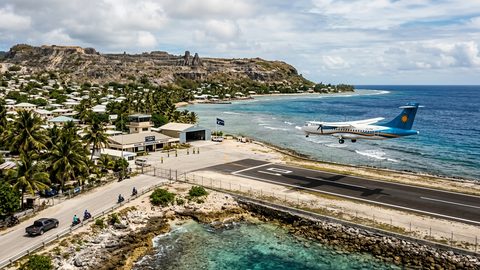 Getting to Nauru, the Pacific State Where Air Schedules Define Your Stay
A logistics briefing on reaching Nauru by air — covering weekly flights from Brisbane and Honiara, visa-on-arrival requirements, and planning around fixed departure dates.
Getting to Nauru, the Pacific State Where Air Schedules Define Your Stay
A logistics briefing on reaching Nauru by air — covering weekly flights from Brisbane and Honiara, visa-on-arrival requirements, and planning around fixed departure dates.
-
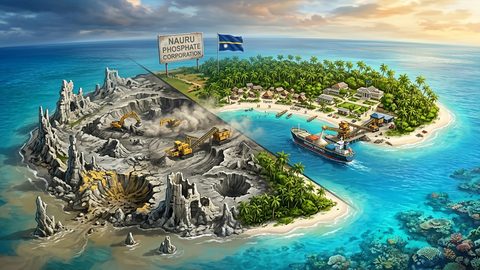 Nauru, the Pacific Republic That Phosphate Built and Nearly Erased
Nauru is one of the Pacific's most overlooked republics. A candid guide to topside, Buada Lagoon, colonial history, and how to actually get there.
Nauru, the Pacific Republic That Phosphate Built and Nearly Erased
Nauru is one of the Pacific's most overlooked republics. A candid guide to topside, Buada Lagoon, colonial history, and how to actually get there.
-
 Planning Independent Travel in the Wakhan Corridor, Tajikistan
Independent travel in Tajikistan's Wakhan Corridor: GBAO permits, road conditions from Ishkashim, realistic travel windows, and honest logistics for serious overlanders.
Planning Independent Travel in the Wakhan Corridor, Tajikistan
Independent travel in Tajikistan's Wakhan Corridor: GBAO permits, road conditions from Ishkashim, realistic travel windows, and honest logistics for serious overlanders.