Inside the Allada Royal Palace, a Living Monarchy on the Cotonou Road
The Allada royal palace is a living court an hour from Cotonou where the king still receives visitors, with strict protocol and a small museum.
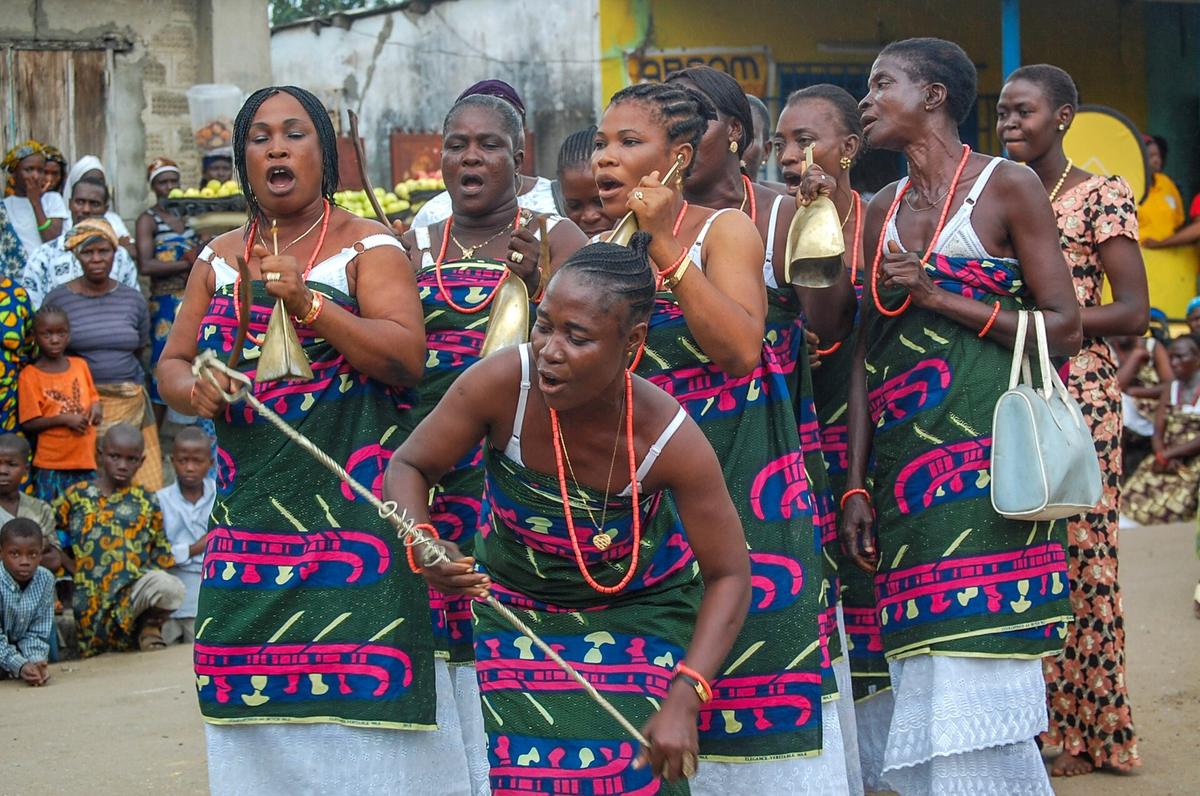

Inside the Allada Royal Palace, a Living Monarchy on the Cotonou Road
You cannot buy a ticket online, call ahead, or check opening hours for the Allada Royal Palace. Arrive at the entrance, tell a courtier you wish to be received, and wait. That is the protocol. The palace is not a museum like the Royal Palaces of Abomey. It is a working seat of the King of Allada, where audiences are held, ceremonies performed, and the 13th-century lineage of the Ardra kingdom continues in plain view an hour north of Cotonou.
A visit here follows precise customs: what to wear, who to speak to, what to pay, and where you can and cannot point a camera. Treat the palace like a state institution rather than a tourist attraction, and you will leave with something most visitors to Benin miss, an audience with a living monarchy.
- Site Name: Allada Royal Palace (Palais Royal d'Allada)
- Town and Department: Allada, Atlantique, Benin
- Kingdom and Founding: Allada (Ardra), founded c. 13th century
- Reigning Monarch: King Kpodégbé Lanmanfan Toyi Djigla, enthroned 2 December 1992
- Visitor Requirement: Permission from the king or his designated intermediary
- Entry Fee (Palace): Variable, XOF 2,000, 5,000 per person plus guide gratuity (2024 rate, subject to revision)
- Entry Fee (Memorial): XOF 1,000, 2,000 per person (2024 rate, subject to revision)
- Combined Visit Time: 2, 3 hours total, including the Toussaint Louverture Memorial 500 m away
- Photography: By permission only; some interior spaces and rituals are off-limits
Visiting the Royal Palace: How You Get in and What Happens Next
There is no published phone number for the palace and no booking platform. Your one method of contact is an in-person request at the palace entrance. Do this between 09:00 and 12:00 or 15:00 and 17:00, Monday through Saturday. Sunday visits are not guaranteed; ceremonies take priority.
Show Up, Ask, Wait
Walk to the main gate of the palace compound in central Allada. A courtier or guard will approach you. State in French, or via a translator, that you would like to pay respects to the palace and request a guide. English is rare in Allada. If you do not speak French, hire a translator in Cotonou for the day. Budget XOF 15,000, 25,000 for a half-day translator plus zemidjan fares.
The courtier will either fetch the designated protocol officer assigned by King Kpodégbé Lanmanfan Toyi Djigla, or ask you to wait. Wait times vary from ten minutes to an hour. This is not rudeness. It is the pace of a working court. Accept it.
The Donation and the Fee
The 2024 palace entry fee was a negotiable XOF 2,000 to 5,000 per person. Pay in cash. No card machine exists, and no ATM in Allada reliably accepts foreign Visa cards. Bring euros or dollars as backup and exchange them at a bank in Cotonou before you leave. On top of the entry fee, budget an additional XOF 2,000, 5,000 as a gratuity for the guide who escorts you. Hand the gratuity directly to that guide at the end, not to the courtier.
Dress Modestly
Men: long trousers and covered shoulders. Women: long skirt or long trousers, covered shoulders, and a headscarf if your guide requests one. No shorts. No sleeveless tops. No sandals that slip off easily. You will be walking across packed-earth courtyards and stepping over low thresholds. Dress for respect and for dust.
Photography: Ask Before Every Shot
The rule is simple: you photograph nothing until your guide gives explicit permission. Some interior spaces, the royal cemetery, and any ongoing ritual are permanently off-limits to cameras. Point a lens without asking, and your guide will stop the tour, you may be asked to leave. Smartphone cameras follow the same rule. Bring a camera you can stow quickly.
Inside the Royal Palace of Allada
The tour covers four distinct zones within the compound, followed by the Toussaint Louverture Memorial a five-minute walk away. Allow two to three hours total.
The Courtyard and Reception Hall
You enter a wide courtyard shaded by trees. The reception hall is on the far side. Inside, royal umbrellas and staffs of office are displayed. These are not museum pieces. They are used in ceremonies. The palace custodians will explain which umbrella belongs to which rank of chief and why the staffs are carved with specific symbols of the Ardra kingdom.
The Throne Room
This is the most guarded space. The throne is the symbolic seat of the Allada monarchy, which predates the split of the kingdom around 1625 into Dahomey (Abomey), Porto-Novo (Hogbonu), and the rump state of Allada. The palace custodians will point out regalia that survived the Dahomey conquest of 1724. You may sit only if invited. You will not be invited.
Ancestral Altars and Sacred Trees
Behind the throne room, a cluster of altars and trees marks the spiritual centre of the palace. Offerings of palm oil, corn, and sodabi palm spirit are left here. Vodun is not a show in Benin. These altars receive real sacrifices. Do not touch anything. Do not step over a line of stones or powder. Ask before you take a single step into this area.
The Royal Cemetery
Tombs of past kings of Allada are enclosed in a separate walled section. Photography is almost never permitted here. The palace custodians decide. If the answer is no, do not argue.
The Small Museum Section
A single room holds artefacts linked to the transatlantic slave trade era: chains, trade goods, and documents. The collection is modest. Its value is contextual. This is not a curated exhibition. It is a storage of memory kept by the palace itself.
Toussaint Louverture Memorial
Five hundred metres from the palace, the Toussaint Louverture Memorial sits on a 0.5-hectare site inaugurated on 10 August 2023. The centrepiece is a 4.5-metre bronze statue of Louverture, whose father is said to have originated from Allada. An exhibition pavilion covers Louverture's life and Allada origins. The memorial also holds a bust of Louverture, an original 1978 work by Ludovic Booz. Entry costs XOF 1,000, 2,000 per person (2024 rate). The palace custodians can arrange both sites in a single walk. Do not pay twice for guiding.
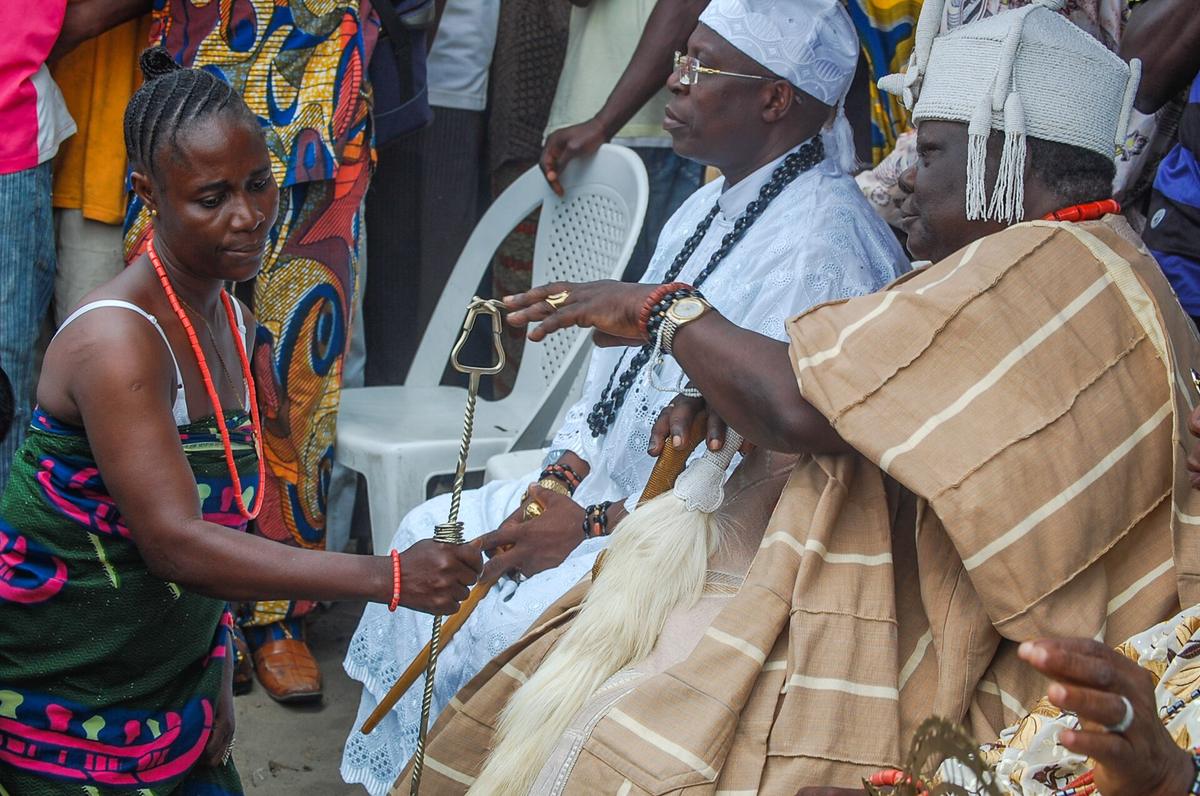

Who Should Visit and Who Should Skip
This visit is for anthropology and religion researchers, adventurous solo travellers, photographers who chase authentic ceremonies, and history buffs focused on the transatlantic slave trade. If you are a return visitor to West Africa looking for a less-trodden path, Allada rewards you with something no museum can offer: a conversation with a living court.
Skip it if you are a first-time Africa visitor, a beach-resort seeker, or a family with young children needing predictable comforts. Skip it if you refuse to use French or hire a translator. The palace has no Wi-Fi, no printed brochure, no cafe, and no toilet paper. Carry your own.
Getting There and When to Go
Benin demands seven days minimum because distances are short but roads are bad. Allada is an easy day trip from Cotonou. Pair it with Ouidah in the same day if you start early. From Cotonou, take a shared taxi-brousse or hire a zemidjan for the roughly hour-long ride. The road is paved but potholed. Expect to pay XOF 10,000, 15,000 for a private taxi one way. Do not attempt this trip during the rainy seasons of March to May or September to October unless you enjoy mud and cancellations. Peak season is December to February, when the harmattan winds clear the air and the laterite roads stay passable.
Common Questions
Do I need an appointment to visit the Allada Royal Palace?
No. You request permission in person at the palace entrance. No phone number or online booking exists.
What should I wear to the palace?
Men: long trousers and covered shoulders. Women: long skirt or trousers, covered shoulders, and a headscarf if requested. No shorts or sleeveless tops.
How much does it cost to visit the palace?
The 2024 entry fee was XOF 2,000, 5,000 per person. Add a guide gratuity of XOF 2,000, 5,000. Pay in cash. No cards accepted.
Can I take photos inside the palace?
Only with explicit permission from your guide. Some interior spaces and all rituals forbid photography. Ask before every shot.
How long does the visit take?
Allow two to three hours total, including the Toussaint Louverture Memorial 500 m away.
Is English spoken at the palace?
Rarely. Bring a French speaker or hire a translator in Cotonou for the day.
Can I visit the palace on the same day as Ouidah?
Yes. Start early. Allada is roughly an hour from Cotonou. Ouidah is roughly an hour from Allada. Hire a private taxi for the full day.
Read next
-
 Benin End to End: Cotonou, the Vodun Coast and the Atakora Hills
Benin end to end: a travel guide for adventurous travellers covering Cotonou, the Vodun coast, the Dahomey palaces, and the remote Atakora hills.
Benin End to End: Cotonou, the Vodun Coast and the Atakora Hills
Benin end to end: a travel guide for adventurous travellers covering Cotonou, the Vodun coast, the Dahomey palaces, and the remote Atakora hills.
-
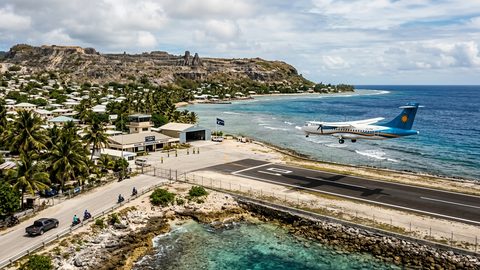 Getting to Nauru, the Pacific State Where Air Schedules Define Your Stay
A logistics briefing on reaching Nauru by air — covering weekly flights from Brisbane and Honiara, visa-on-arrival requirements, and planning around fixed departure dates.
Getting to Nauru, the Pacific State Where Air Schedules Define Your Stay
A logistics briefing on reaching Nauru by air — covering weekly flights from Brisbane and Honiara, visa-on-arrival requirements, and planning around fixed departure dates.
-
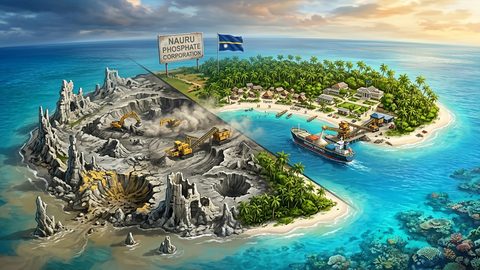 Nauru, the Pacific Republic That Phosphate Built and Nearly Erased
Nauru is one of the Pacific's most overlooked republics. A candid guide to topside, Buada Lagoon, colonial history, and how to actually get there.
Nauru, the Pacific Republic That Phosphate Built and Nearly Erased
Nauru is one of the Pacific's most overlooked republics. A candid guide to topside, Buada Lagoon, colonial history, and how to actually get there.
-
 Planning Independent Travel in the Wakhan Corridor, Tajikistan
Independent travel in Tajikistan's Wakhan Corridor: GBAO permits, road conditions from Ishkashim, realistic travel windows, and honest logistics for serious overlanders.
Planning Independent Travel in the Wakhan Corridor, Tajikistan
Independent travel in Tajikistan's Wakhan Corridor: GBAO permits, road conditions from Ishkashim, realistic travel windows, and honest logistics for serious overlanders.