Benin or Togo for a First Independent West Africa Trip
A practical guide to Benin or Togo for a First Independent West Africa Trip.
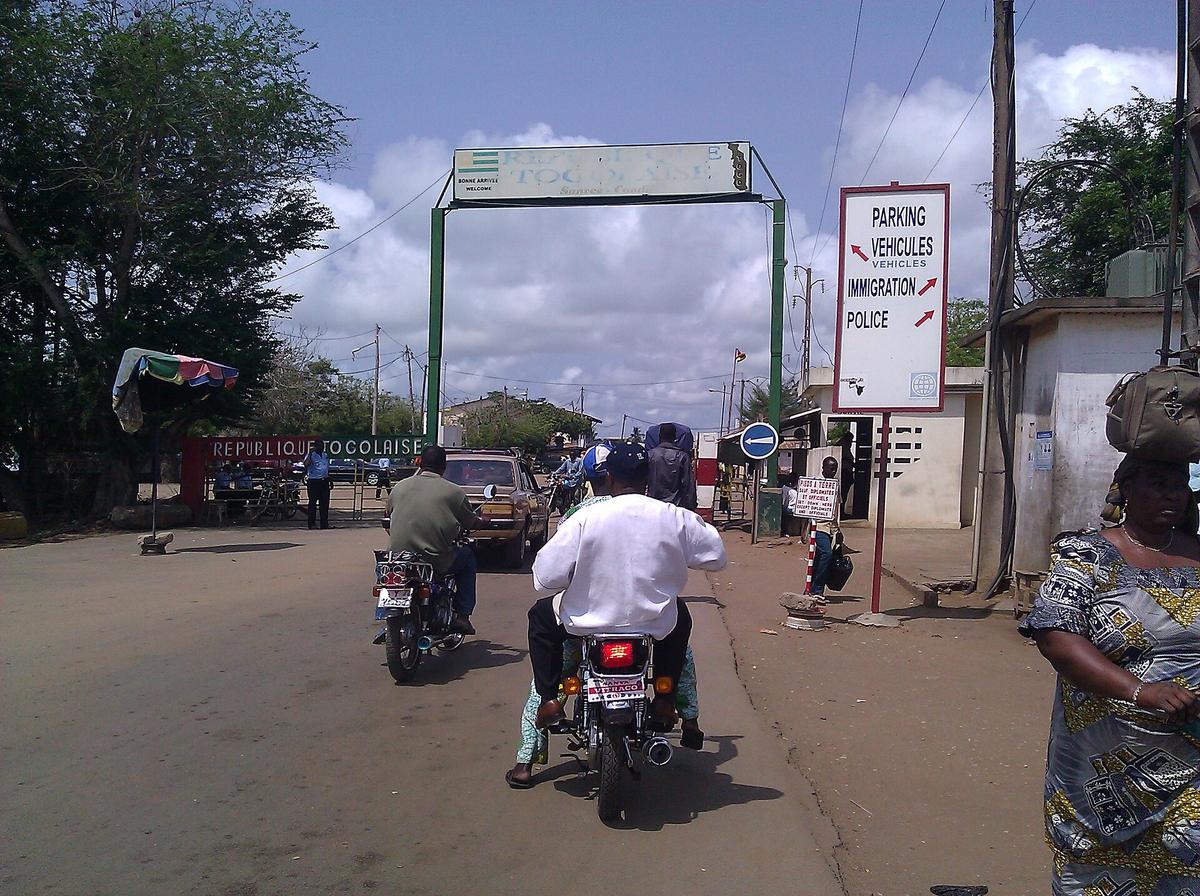

The first big choice for a West Africa newcomer
If you are planning your first independent trip to West Africa and have narrowed the options to Benin or Togo, you are already making a sensible call. Both are compact, coastal francophone countries with manageable overland distances, UNESCO-listed cultural sites, and visa processes that can be completed online before you fly. They also share a border, a currency, and a dry-season travel window that runs roughly from November to April.
The decision between them is not about which country is better. It is about which one aligns more closely with the kind of trip you want to take, the entry logistics you are willing to navigate, and how much time you have. This comparison walks through the practical differences that matter most for a first-time visitor, using only verifiable official requirements and publicly documented infrastructure. No guesswork, no traveller anecdotes, just the facts you need to make your own call.
Visa process and cost
Both countries require non-ECOWAS passport holders to obtain a visa before arrival. There is no walk-up visa-on-arrival option in either case at the time of writing, and the Togolese government has explicitly suspended its express and visa-on-arrival procedures until further notice. This means your pre-trip paperwork is non-negotiable for both destinations.
Benin operates a dedicated e-Visa platform. A single-entry 30-day tourist e-Visa costs €50. If you plan to cross into Togo or Nigeria and return, a 30-day multiple-entry e-Visa is €75, and a 90-day multiple-entry version is €100. Official guidance says processing can take anywhere from one hour to 96 hours, and the immigration directorate advises applying at least seven days before travel, but no more than 90 days in advance.
Togo prices its visas in CFA francs rather than euros. A single-entry visa valid for up to 15 days costs 25,000 CFA francs. A multiple-entry visa covering 16 to 30 days costs 45,000 CFA francs, and a 31-to-90-day multiple-entry visa costs 65,000 CFA francs. The government asks travellers to submit applications at least six working days before arrival and states that processing takes a maximum of five working days.
Neither country is a clear winner here. Benin’s fee structure is simpler if you are budgeting in euros and want a full 30 days on a single entry. Togo’s entry-level visa is shorter but may cost less depending on the prevailing exchange rate. Our advice: check the current CFA-to-euro or CFA-to-dollar rate on the day you apply, and pick the visa length that matches your actual itinerary rather than the cheapest option.
Flight connections and arrival hubs
Your first independent trip in West Africa often starts with a single question: how many flights get me there without a marathon layover? Lomé-Tokoin International Airport in Togo and Cotonou Cadjehoun Airport in Benin serve very different route networks.
Lomé is the larger hub. It offers non-stop connections to 22 destinations across 19 countries, served by seven airlines. ASKY Airlines, which uses Lomé as its base, operates the largest share of those routes with 16 non-stop destinations. This gives Lomé a meaningful advantage if you are flying from elsewhere in Africa or want a one-stop connection from Europe or the Middle East via an ASKY partner.
Cotonou’s airport handles a smaller network: ten non-stop international destinations served by 12 airlines. The busiest route from Cotonou is Abidjan, which suggests the airport functions more as a regional connector than a continental hub. You may find fewer direct options and a higher likelihood of connecting through Lomé, Abidjan, or a European gateway.
Flight schedules, airlines, and frequencies change seasonally. Before booking, confirm current routes directly with the airline or check an up-to-date flight mapping service. If your priority is minimising connections, Lomé’s broader network is the safer starting point.
Cultural landmarks and what you can actually visit
Both countries hold UNESCO World Heritage inscriptions that are central to their tourism identities, but the accessibility of those sites differs sharply under current security guidance.
In Benin, the Royal Palaces of Abomey are a UNESCO site inscribed in 1985. The property preserves the remains of twelve royal palaces of the Kingdom of Dahomey, which ruled from 1625 to 1900. Abomey lies in southern Benin, well outside the areas subject to active government travel warnings. For a first-time visitor sticking to the country’s southern corridor, this site is reachable without contradicting official safety advice.
Togo’s UNESCO offering is Koutammakou, the Land of the Batammariba, inscribed in 2004. It is a living cultural landscape in north-eastern Togo, famous for its mud tower-houses known as takienta or sikien. However, the U.S. Department of State advises against all travel to areas north of Kande, and Koutammakou sits in the Kara region, which lies north of that line. Multiple Western governments also warn against travel near Togo’s border with Burkina Faso. A traveller who follows official security guidance may find Koutammakou effectively off-limits.
This is a decisive difference. Benin’s flagship cultural site is accessible under current advisories. Togo’s is not. If a UNESCO-listed cultural experience is a non-negotiable part of your trip, Benin is the stronger choice right now.
Safety advisories and where you can go
Both Benin and Togo carry a Level 2 travel advisory from the U.S. Department of State, meaning “Exercise Increased Caution.” The reasons are similar: crime, terrorism, and kidnapping risks. But the geographic restrictions within each country are not identical, and they shape how much of the country a first-time visitor can responsibly explore.
In Benin, the UK Foreign, Commonwealth and Development Office advises against all travel to Pendjari National Park, W National Park, and any area within five kilometres of the border with Burkina Faso. The Government of Canada adds further restrictions, warning against all travel to Benin’s border area with Togo in Atacora Department west of the Boukoumbé-Tanguiéta axis, and to within 50 kilometres of the Burkina Faso and Niger borders. Southern Benin, including Cotonou, Porto-Novo, Ouidah, and Abomey, remains outside these restricted zones.
In Togo, the U.S. Department of State advises against all travel to the northern border region near Burkina Faso and to areas north of Kande. This effectively removes the entire northern third of the country from a security-conscious itinerary. Lomé and the coastal regions are not subject to the same blanket warnings.
Security advisories are updated periodically by individual governments. Before committing to either country, check the latest advice from your own foreign ministry or embassy. The key editorial takeaway is this: Benin’s restricted zones are concentrated in the far north and along specific border strips, leaving a larger contiguous area of the south open for travel. Togo’s restriction cuts the country roughly in half. If you want more geographic freedom without contradicting official guidance, Benin currently offers more room to move.
Language, health, and seasonal timing
French is the official language of both Benin and Togo. It is the language of administration, education, and tourism in both countries. English is not widely spoken. If you do not speak French, plan to rely on translation apps, phrasebooks, or local guides who can bridge the gap. This is not a differentiator between the two destinations; it is a shared reality you should budget for regardless of which country you pick.
Both countries require a yellow fever vaccination certificate for entry. This is a hard requirement, not a recommendation. Carry the original International Certificate of Vaccination or Prophylaxis with you; border officials may ask to see it on arrival.
Togo’s official tourism authority identifies the best season as November through April, during the dry season, with average annual temperatures between 27°C and 30°C. Benin’s climate pattern is broadly similar, and the same dry-season window applies as a practical rule of thumb for both countries. If you are choosing between them, the seasonal timing does not tilt the scale either way.
Making your choice
If you are travelling to West Africa independently for the first time and have narrowed the field to these two neighbours, the decision comes down to three practical questions.
First, how important is a UNESCO cultural site that you can visit without contradicting official safety advice? Benin’s Royal Palaces of Abomey are accessible. Togo’s Koutammakou is in a region subject to “do not travel” warnings from multiple Western governments. On this point, Benin has a clear advantage.
Second, how much does your flight routing matter? Lomé’s airport connects to more than twice as many non-stop destinations as Cotonou’s. If you want to minimise connections or fly directly from an African hub, Togo is easier to reach by air.
Third, how long is your trip and what does the visa cost you in your own currency? Benin’s 30-day single-entry e-Visa is a flat €50. Togo’s shortest tourist visa covers only 15 days at 25,000 CFA francs, and its 30-day option is a multiple-entry visa at 45,000 CFA francs. Run the exchange rate on the day you apply and compare the real cost for your intended length of stay.
Neither country is the wrong answer. Pick Benin if cultural access and a larger safe travel zone matter most. Pick Togo if flight convenience and a shorter, hub-based itinerary suit your style. In both cases, verify visa rules, flight schedules, and security advisories on official government platforms before you book anything.
Sources and verification
- dei.gouv.bj — Research source checked for this guide
- evisa.bj — Research source checked for this guide
- beta.voyage.gouv.tg — Research source checked for this guide
- voyage.gouv.tg — Research source checked for this guide
- travel.state.gov — Research source checked for this guide
- travel.state.gov — Research source checked for this guide
Read next
-
 Central African Republic
The Central African Republic recorded honestly: what travel is possible, what is not, and what the country asks of anyone who still decides to go.
-

 Botswana
 is more than the Okavango Delta—its large villages, museums, and long roads reveal a country of deep history and quiet cultural riches.
-

 Nigeria
’s ancient cities—Kano, Zaria, Jos, Abeokuta, and Aba—each hold a distinct history and rhythm that independent travellers can reach with patience and local guidance.
-
 Democratic Republic of the Congo
Lubumbashi, Kisangani, Mbuji-Mayi, and Kolwezi are the DR Congo’s distant urban realities—mining towns and river ports with their own rhythms, far from Kinshasa.
-
 Burkina Faso
 offers Ouagadougou's film festival, the Banfora escarpment, and Sahel trading towns, but security constraints now define any journey here.
-
 Angola
’s interior rewards the determined with the Kalandula Falls, the cool Huambo highlands, the Serra da Leba switchbacks, and the faded Portuguese towns of the coast.
-
 Mwinilunga Travel Guide to Zambia’s Northwestern Borderlands and Markets
Plan Mwinilunga around its markets and overland routes, with candid advice on transport, accommodation, border access, and connectivity.
-
 Getting to Nauru, the Pacific State Where Air Schedules Define Your Stay
A logistics briefing on reaching Nauru by air — covering weekly flights from Brisbane and Honiara, visa-on-arrival requirements, and planning around fixed departure dates.
-
 Nauru, the Pacific Republic That Phosphate Built and Nearly Erased
Nauru is one of the Pacific's most overlooked republics. A candid guide to topside, Buada Lagoon, colonial history, and how to actually get there.