The Banfora Bobo Road Shared Taxis Bush Taxis and When the Laterite Is Bad
A practical guide to The Banfora Bobo Road Shared Taxis Bush Taxis and When the Laterite Is Bad.

The route at a glance
The Bobo-Dioulasso to Banfora run follows the RN7, a paved national road that covers 84.7 kilometres through southwestern Burkina Faso. It is a short corridor by regional standards, but it connects two important hubs and feeds into routes heading toward the Cascades region and the border with Côte d'Ivoire. Because the road surface is sealed, the RN7 remains open throughout the year, even when heavy rains turn unpaved laterite tracks into impassable mud channels between roughly June and September. That year-round passability is a practical advantage for anyone planning a trip outside the dry months, though it does not mean the journey is always fast or smooth.
In March 2026 the Burkinabe government launched a full rehabilitation and reinforcement project for this stretch, known by its French acronym PRéBBO. The contract was awarded to the company SOROUBAT, with supervision handled by the consortium TECHNI CONSULT and ACIT GEOTECHNIQUE. The works carry a budget of approximately 63 billion CFA francs excluding tax and a stated completion deadline of 24 months. By early October 2026, roughly 40 percent of that contractual timeline had elapsed, but physical progress sat at around 20 percent. Travellers should expect the road surface to be in an active state of repair at least into early 2028, which makes it wise to check conditions with the Ministry of Infrastructure and Decentralisation shortly before departure.
Scheduled coach services
Two bus companies publish timetables for the Bobo-Dioulasso to Banfora route, and their offerings differ markedly in price and frequency.
Rahimo Transport lists five daily departures from Bobo-Dioulasso: 06:00, 08:30, 13:45, 17:00 and 21:00. The published fare is 2,000 CFA francs. The spread of departure times means a morning, afternoon or evening crossing is possible without an overnight wait, though the late evening service arrives in Banfora at night. Because schedules and fares can change, Rahimo Transport is the correct operator to contact for current details before you commit to a ticket.
Rakieta Transport publishes two departures on the same route, at 07:30 and 16:30, and lists the distance as 85.5 kilometres. Its fare is 1,000 CFA francs, half the price of the Rahimo service. The trade-off is a thinner timetable: miss the morning coach and the next one does not leave until late afternoon. Both companies offer a fixed departure time and a known fare, which makes budgeting and planning simpler than relying on shared taxis.


Bush taxis and shared taxis
Shared taxis, often called taxis-brousse or bush taxis, fill the gaps between scheduled coaches. They do not run on a fixed timetable. Instead, a vehicle leaves when it is full. The typical rolling stock on this route is either a Peugeot 504 station wagon configured for seven passengers or a Toyota Hiace minibus that seats between 15 and 20 people. The fare sits around 2,000 CFA francs, and the journey usually takes between two and three hours once the vehicle is moving.
The absence of a schedule is both a weakness and a strength. You cannot plan around a precise departure, but you also do not need to fit your day to a bus company's clock. If you arrive at the taxi rank shortly after a vehicle has filled and left, the wait for the next one to fill can be unpredictable. The fare is comparable to the Rahimo coach but double the Rakieta ticket, so the choice often comes down to whether you value a guaranteed seat at a known hour or the flexibility of leaving as soon as the taxi is ready.
The train alternative
A passenger rail service operated by SITARAIL calls at Banfora once a week on Tuesdays. The train runs in the Ouagadougou to Niangoloko direction, departing the capital at 09:00 and stopping at intermediate stations that include Bobo-Dioulasso and Banfora. The one-way fare for intermediate destinations between Bobo-Dioulasso and Niangoloko is 3,000 CFA francs, which covers the leg to Banfora.
This is the most expensive option among the public transport choices on the corridor, and it is also the least frequent. A single weekly departure means a missed train results in a long wait or a switch to road transport. SITARAIL passenger schedules are subject to change or suspension, so confirming current operations directly with the railway before relying on the train is essential. For travellers who enjoy slow overland rail journeys and can align their plans with a Tuesday departure, the train offers a different rhythm and a view of the countryside that road travel does not replicate.
Road conditions and the rainy season
The Bobo-Dioulasso to Banfora road is paved, which sets it apart from the laterite tracks that crisscross rural Burkina Faso. Those unpaved routes become soft, rutted or completely impassable during the rainy months, roughly June through September. The RN7, by contrast, stays open. That does not mean it is immune to weather. Standing water, reduced visibility and the general wear that heavy rain brings to any road surface can slow progress, but the route does not close.
The larger variable right now is the ongoing rehabilitation work. With only about 20 percent of the physical works complete as of early October 2026 and the project scheduled to run into 2028, sections of the road may be torn up, reduced to a single lane or subject to short diversions. The contractor SOROUBAT and the supervising consortium are responsible for managing traffic through the work zones, but the precise state of the surface will shift as the project advances. Checking with the Ministry of Infrastructure and Decentralisation before travel is the most reliable way to understand what delays or rough patches to expect.
Choosing your transport
Each option on the Banfora Bobo corridor involves a different trade-off between cost, certainty and comfort. The Rakieta coach at 1,000 CFA francs is the cheapest published fare, but with only two departures a day it demands that you fit your schedule to the bus. Rahimo offers five daily departures at double the price, giving more flexibility for a higher fare. Bush taxis match the higher fare and add schedule uncertainty, though they can depart at almost any hour if enough passengers gather. The train is the most expensive at 3,000 CFA francs and runs only on Tuesdays, making it impractical for most trips but appealing as a one-off experience.
If budget is the overriding concern and the 07:30 or 16:30 Rakieta departure suits your timeline, that is the clear choice. If you need a specific departure window that Rakieta does not serve, the decision sits between Rahimo's fixed timetable and the bush taxi's fill-and-go model. During the rainy season or while the PRéBBO rehabilitation is active, allowing extra time is sensible regardless of which vehicle you board.
Sources and verification
- primature.gov.bf — Research source checked for this guide
- aesinsider.com — Research source checked for this guide
- rahimotransport.com — Research source checked for this guide
- timbu.com — Research source checked for this guide
- visiearth.com — Research source checked for this guide
- burkina24.com — Research source checked for this guide
Read next
-
 Sindou Peaks
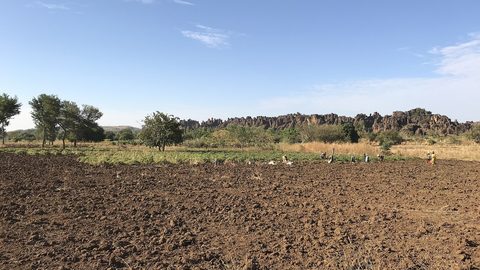
The Sindou Peaks are a jagged limestone massif near Banfora, Burkina Faso, walkable without a guide if you know the entry point and route.
-
 Lake Tengrela
Lake Tengréla near Banfora offers reliable hippo sightings by pirogue at dawn, when the animals are still in the open water before the heat sets in.
-
 Burkina Faso Travel Guide Ouagadougou Banfora and the Sahel Region
Burkina Faso offers Ouagadougou's film festival, the Banfora escarpment, and Sahel trading towns, but security constraints now define any journey here.
-
 Burkina Faso Cultural Sites and the Safety Checks to Make First
A practical guide to Burkina Faso Cultural Sites and the Safety Checks to Make First.
-
 Mwinilunga Travel Guide to Zambia’s Northwestern Borderlands and Markets
Plan Mwinilunga around its markets and overland routes, with candid advice on transport, accommodation, border access, and connectivity.
-
 Getting to Nauru, the Pacific State Where Air Schedules Define Your Stay
A logistics briefing on reaching Nauru by air — covering weekly flights from Brisbane and Honiara, visa-on-arrival requirements, and planning around fixed departure dates.
-
 Nauru, the Pacific Republic That Phosphate Built and Nearly Erased
Nauru is one of the Pacific's most overlooked republics. A candid guide to topside, Buada Lagoon, colonial history, and how to actually get there.
-
 Planning Independent Travel in the Wakhan Corridor, Tajikistan
Independent travel in Tajikistan's Wakhan Corridor: GBAO permits, road conditions from Ishkashim, realistic travel windows, and honest logistics for serious overlanders.