Benin Beyond Cotonou A Route Through Ouidah Abomey and Ganvie
A practical guide to Benin Beyond Cotonou A Route Through Ouidah Abomey and Ganvie.
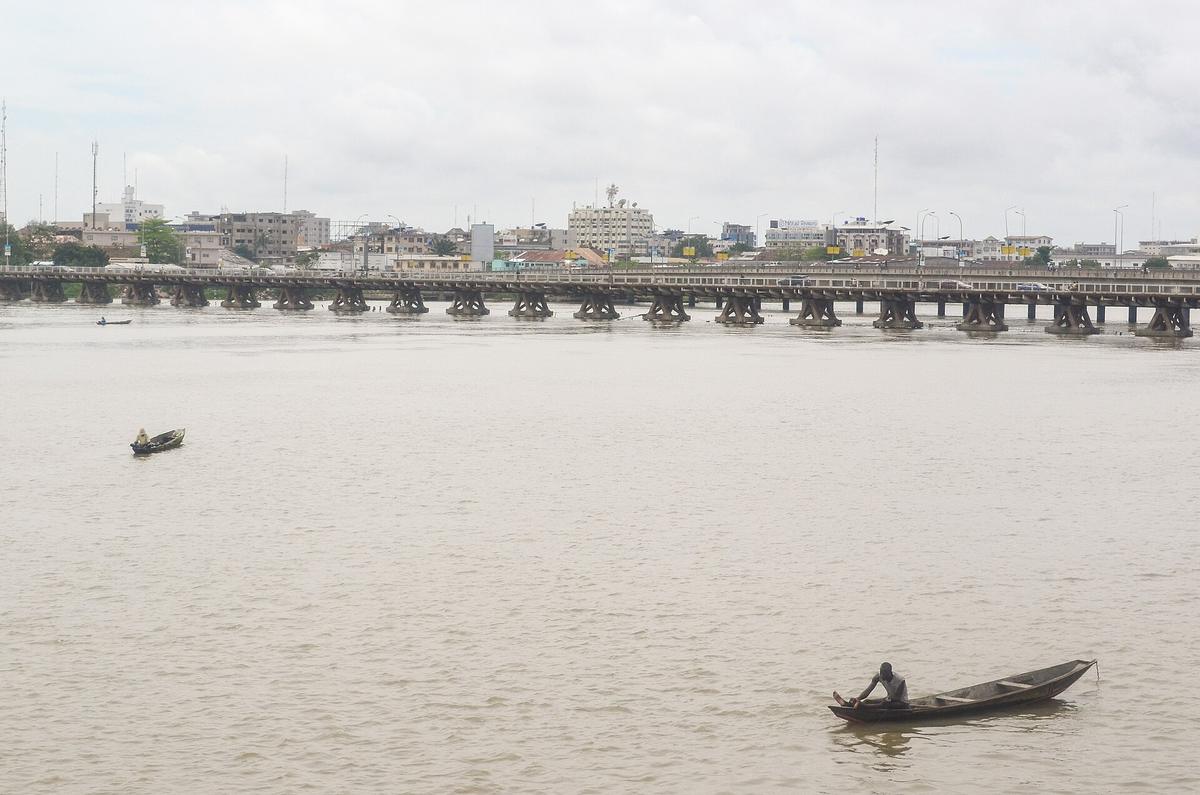

A Route Through Southern Benin
For travellers seeking country depth beyond the economic capital, a route linking Ouidah, Abomey and Ganvié opens a concentrated corridor of memory, belief and political power. This arc moves from the Atlantic coast through a lake settlement and up to the inland plateau, connecting three sites that define Benin's historical imagination. The distances are manageable, the roads are paved, and each stop answers a different question about how the past shapes the present.
This is not a comprehensive guide to Benin. It is a focused itinerary for a visitor who wants to understand the kingdom of Dahomey, the Vodun spiritual landscape and the transatlantic slave trade through places where those forces are still physically legible. The route works as a two- or three-day loop from Cotonou, with overnight stops possible in Ouidah or Abomey. Decisions about pacing depend on how deeply you want to sit with each site rather than on any logistical obstacle.
Ouidah and the Memorial Coast
Ouidah sits roughly 40 to 45 kilometres west of Cotonou on the paved RNIE 1 highway, a drive that takes between 45 and 60 minutes. The town presents a quiet contrast to the capital's bustle, but its calm surface conceals a dense layering of histories. Portuguese traders, the Kingdom of Dahomey, Vodun practitioners and the machinery of the slave trade all left their mark here within a compact urban core.
The central spine of any visit is the Route of the Enslaved, a four-kilometre memorial trail that begins at the Portuguese Fort and ends at the Gate of No Return on the Atlantic beach. Between those two points the path passes the Auctions Square, the Tree of Oblivion, the Zomaï Hut and the Zoungbodji Memorial. Walking the full route connects the administrative and commercial apparatus of the trade to its terminal point on the water, making the geography of the process uncomfortably clear. The Gate of No Return itself is a 17-metre-high monumental arch erected in 1995 as part of UNESCO's Slave Route Project and rebuilt and expanded in 2025. It stands directly on the beach, and the scale of the arch against the horizon does the work that explanatory panels cannot.
Two other sites in Ouidah operate on a different register. The Temple of Pythons is an active Vodun shrine housing several dozen royal pythons, located opposite the Basilica of the Immaculate Conception in the centre of town. The proximity of the two buildings, one a centre of indigenous spiritual practice and the other a symbol of introduced Catholicism, is a piece of urban geography worth noticing. A short distance away, the Sacred Forest of Kpassè is a grove of centuries-old iroko trees containing more than twenty monumental sculptures of Vodun deities. The site is linked to the legend of King Kpassè, who is said to have transformed into an iroko tree, and the sculptures give physical form to a cosmology that a visitor might otherwise struggle to picture.
The Portuguese Fort, built in 1721 and formerly housing the Ouidah Museum of History, is currently closed for renovation into the International Museum of Memory and Slavery, expected to open in 2027. Until then, the building itself can be viewed from the exterior but its collections are inaccessible. A traveller planning a visit should check the status of the fort with Bénin Tourisme, the official tourism authority, before relying on interior access.
Abomey and the Royal Palaces
From Ouidah or Cotonou, Abomey lies roughly 135 to 145 kilometres north, a drive of about two and a half to three hours via the RNIE 2 highway through Bohicon. The road climbs gradually from the coastal plain onto the red-earth plateau, and the shift in vegetation and air signals arrival in the historic heartland of the Kingdom of Dahomey.
The Royal Palaces of Abomey have been a UNESCO World Heritage Site since 1985. The property covers 47 hectares and consists of ten palaces built by successive kings between 1625 and 1900. The scale is not immediately obvious from the entrance, but the compound unfolds as a sequence of courtyards, throne rooms and ritual spaces, each tied to a specific reign. The Historical Museum of Abomey occupies the palaces of Kings Ghézo and Glélé and houses thrones, royal sceptres known as récades, weapons, appliqué hangings and ritual objects. However, the museum closed in 2024 for construction of the new Museum of the Kings and Amazons of Danxomè, abbreviated as MuRAD. Partial access to some palace areas may be possible, but this must be confirmed locally before visiting. The official tourism authority, Bénin Tourisme, is the appropriate source for current access information.
Even if interior access is limited, the palace walls and their bas-reliefs remain visible, and the site's presence on the plateau communicates the concentration of power that the kingdom once exercised. A visitor weighing whether to make the trip north should know that the closure affects the museum collections specifically, not necessarily the entire UNESCO-listed compound, but the distinction can only be clarified on the ground.
Ganvié and the Lake Village
Ganvié is a settlement built entirely on stilts on Lake Nokoué, founded in the sixteenth or seventeenth century by the Tofinu people. The origin story is specific and well-documented: the Tofinu took refuge on the water to escape slave raiders from the Kingdom of Dahomey, whose religious prohibitions prevented them from pursuing victims onto the lake. The result is a functioning town of houses, markets, schools and workshops all raised above the water on wooden piles.
Access requires a pirogue crossing from the public pier at Abomey-Calavi, which is approximately 18 kilometres from central Cotonou. The boat crossing takes between 20 and 35 minutes by motorised pirogue. There is no road alternative, and the approach across the open water, with the stilted skyline gradually resolving from the haze, is integral to the experience. The pier at Abomey-Calavi is the standard departure point, and pirogue fares are subject to change; visitors should verify current rates with Bénin Tourisme before setting out.
Ganvié rewards a slow visit. The interest is not in a single monument but in the sustained act of living on water, the dugout canoes navigating between houses, and the acoustic quality of a town with no motor traffic. It is a place that makes sense only when you stop moving and watch its rhythms.
Planning the Route
The three sites form a rough triangle with Cotonou as the base. Ouidah is a straightforward day trip from the capital. Ganvié is also reachable in a half-day from Cotonou, given the short drive to Abomey-Calavi and the manageable boat crossing. Abomey requires a longer commitment because of the drive time, and an overnight stay in Abomey or nearby Bohicon makes the visit more comfortable and allows an early start at the palaces.
A logical two-day routing would pair Ouidah and Ganvié on the first day, then drive to Abomey on the second. A three-day version could give Ouidah a full day, move to Abomey for an overnight and a morning visit, then return via the lake on the third day. Either way, the paved highways make self-driving or hiring a car with a driver straightforward, and the distances are short enough that no internal flight is necessary.
All foreign visitors to Benin, except nationals of ECOWAS and visa-exempt African countries, must obtain an e-Visa online before arrival via the official platform at evisa.bj. A 30-day single-entry tourist e-Visa costs 50 euros. There is no visa-on-arrival fallback for non-exempt passport holders, so the application must be completed before travel.
Sources and verification
- benintourisme.bj — Research source checked for this guide
- benintourisme.bj — Research source checked for this guide
- benintourisme.bj — Research source checked for this guide
- benintourisme.bj — Research source checked for this guide
- benintourisme.bj — Research source checked for this guide
- ouidahorigins.com — Research source checked for this guide
Read next
-
 Mwinilunga Travel Guide to Zambia’s Northwestern Borderlands and Markets
Plan Mwinilunga around its markets and overland routes, with candid advice on transport, accommodation, border access, and connectivity.
-
 Getting to Nauru, the Pacific State Where Air Schedules Define Your Stay
A logistics briefing on reaching Nauru by air — covering weekly flights from Brisbane and Honiara, visa-on-arrival requirements, and planning around fixed departure dates.
-
 Nauru, the Pacific Republic That Phosphate Built and Nearly Erased
Nauru is one of the Pacific's most overlooked republics. A candid guide to topside, Buada Lagoon, colonial history, and how to actually get there.
-
 Planning Independent Travel in the Wakhan Corridor, Tajikistan
Independent travel in Tajikistan's Wakhan Corridor: GBAO permits, road conditions from Ishkashim, realistic travel windows, and honest logistics for serious overlanders.