Navigating the Ouagadougou Grand Market: Rood Woko's Sections and Survival Tips
Ouagadougou's Rood Woko Grand Market is organised by section—fabrics, food, electronics, crafts—and knowing the layout helps you shop without getting overwhelmed.
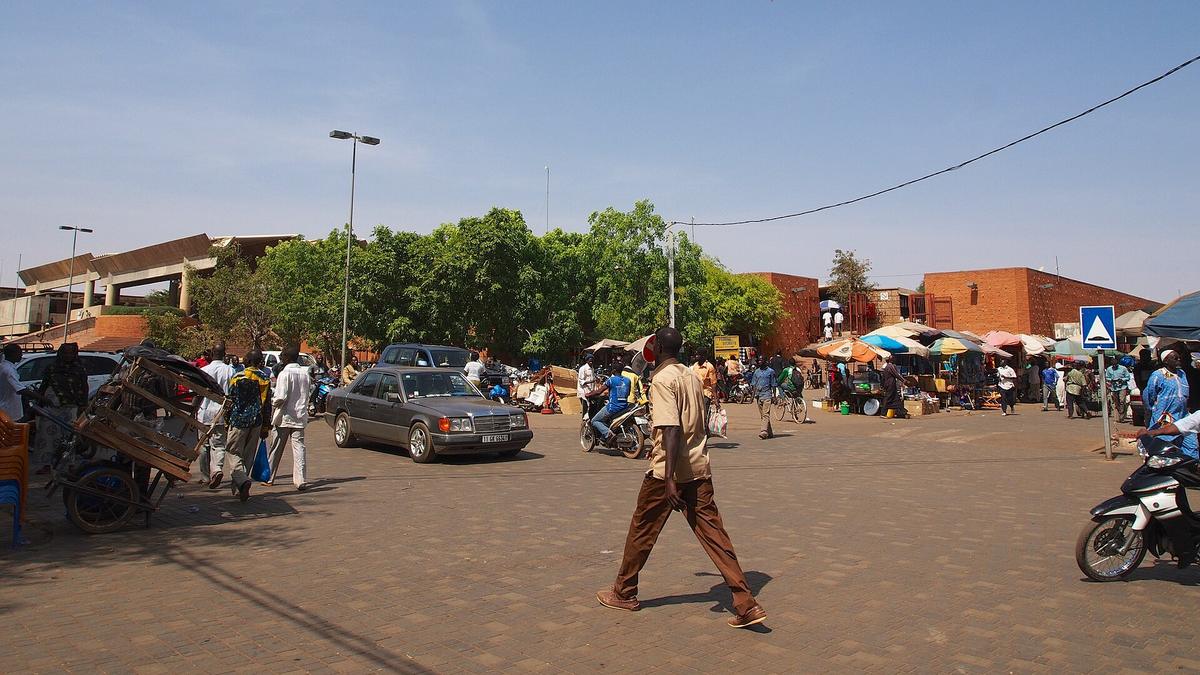

How to Tackle the Ouagadougou Grand Market: Rood Woko’s Sections and Survival Tips
You know the market is big, but you do not know how to split it. Here is the answer. The Ouagadougou Grand Market, called Rood Woko in Mooré, divides into four distinct zones, each selling a different set of goods. Knowing which zone you need is what separates a productive visit from an aimless wander. The 2003 fire that gutted the original structure forced a six-year rebuild, completed in 2009 with government funding. The result is a concrete block layout of roughly 6,000 m² and about 1,500 stalls. The ground floor eastern wing holds the fabric and tailor stalls. The ground floor rear section, facing Avenue de la Résistance, holds food and produce. The area near the main entrance on Avenue Kwame Nkrumah clusters electronics and SIM card kiosks. The upper floor western side holds bronze, metalwork, leather goods, and the craft and souvenir area for visitors.
Arrive by 08:00 on a weekday when the metal shutters go up and the aisles are still cool. Monday through Saturday the market runs 08:00 to 18:00. Sunday hours are reduced to 09:00 to 15:00. July and August are the hottest months in Ouagadougou; the harmattan season from December to February brings lower humidity but fine dust. Carry at least one litre of water per person.
- Name in Mooré: Rood Woko, meaning 'the big market' or 'grand market'
- Location: Central Ouagadougou, Avenue Kwame Nkrumah
- Year of major fire: 2003
- Rebuild duration and completion: 6 years, completed in 2009
- Rebuild funding: Government of Burkina Faso
- Total market area post-rebuild: Approximately 6,000 m²
- Number of stalls post-rebuild: Approximately 1,500
- Opening hours Monday to Saturday: 08:00, 18:00 (annual schedule)
- Opening hours Sunday: Reduced: 09:00, 15:00
- Pickpocket risk level: High in crowded aisles and near entrances
The Four Zones and What They Sell
Ground Floor Eastern Wing: Fabric and Tailors
This is the largest single section, dedicated almost entirely to Faso dan fani, the hand-woven cotton cloth that is Burkina Faso's signature textile. Faso dan fani is strip-woven in narrow widths of 10 to 15 cm, then sewn together selvedge-to-selvedge. Unlike printed cloth, where the pattern appears on one side with a plain reverse, Faso dan fani carries its woven stripes or patterns visibly on both sides. Prices per metre range from 3,000 to 15,000 XOF. The variation depends on thread count, pattern complexity, the dyer's reputation, and the seller's location within the market. Tailors working at adjacent stalls can take your measurements and sew a shirt, dress, or boubou within 48 hours. Negotiate the tailoring fee separately from the fabric price.
Ground Floor Rear: Food, Spices, and Produce
Facing Avenue de la Résistance, this open-air section is where local women sell millet, sorghum, dried fish, shea butter, and spices by the heap. The heat and smells are intense here by 10:00. Prices on food staples are fixed, not negotiated. Bring small denominations of XOF, 100 to 500 notes, because sellers rarely have change for large bills. Carry your own plastic bags for produce. Vendors do not provide them.
Main Entrance: Electronics and SIM Cards
Near the main entrance on Avenue Kwame Nkrumah, kiosks sell phone chargers, cables, memory cards, and SIM card top-ups for MTN and Moov Africa. Replacement phone screens and basic Chinese smartphones are common stock. If you need a local SIM card, buy it here or at the airport; prices are comparable. Test the item before paying, and confirm the warranty period, if any, in French.
Upper Floor Western Side: Bronze, Metalwork, Leather, and Souvenirs
Climb the concrete stairs to the upper floor for bronze figurines, brass jewellery, leather bags and belts, and carved wooden masks. This is the section aimed at visitors. Leather goods are also sold on the ground floor. Quality varies. Check stitching on leather items and test zippers before buying. Bronze pieces should feel heavy for their size; thin, lightweight castings are less durable. Photographing stalls or vendors here requires permission; some may request a small fee. Do not photograph military or police personnel or installations near the market.
How to Bargain Without Burning Out
Bargaining is expected for all non-food items. The seller's first price sits 30 to 50 percent above the final agreed price. Start your counteroffer at roughly half the initial asking figure and move up in small increments. Stay polite. Losing your temper resets the negotiation backward. Walk away if the price does not drop to a range you accept; the seller may call you back before you reach the stairwell. For Faso dan fani, compare prices across three stalls before buying. The same pattern can vary by 5,000 XOF within ten metres. If you continue southwest toward Banfora, the same Faso dan fani cloth often appears at lower prices in smaller town markets.
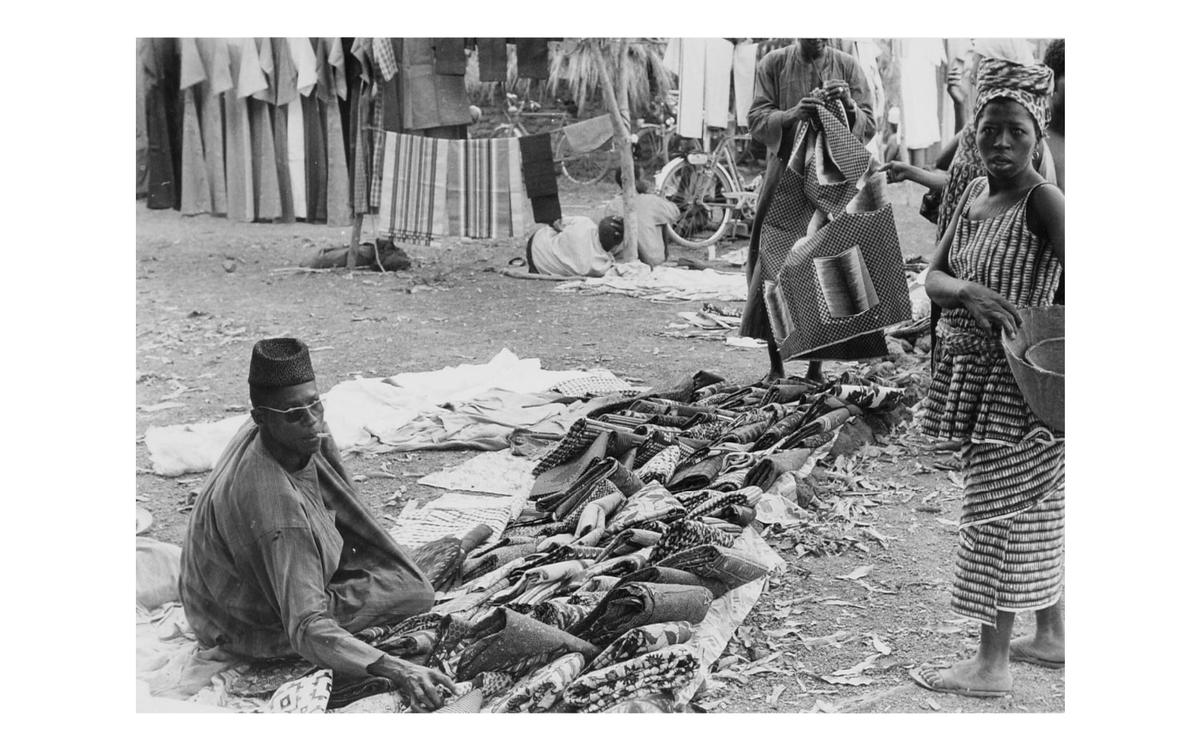

Survival: Heat, Touts, Pickpockets, and a Fixer
Beat the Heat
The heat inside the market is worse than outside. Corrugated metal roofing traps the sun, and narrow aisles block any breeze. By 11:00 the air is still and heavy. Plan to finish your visit by noon or return after 15:00 when the worst of the afternoon sun passes. Carry a handkerchief or scarf to cover your mouth against dust and the smell of dried fish.
Handle the Touts
Touts latch on at the gate and offer to guide you to a specific stall for a commission they collect from the seller. That commission inflates your price. If you want a guide, hire one before you arrive. A local fixer who speaks Mooré and French, and who knows the market's layout, changes the experience. They negotiate on your behalf, steer you to stalls with better quality, and handle the friction of the crowd. Without a fixer, expect to pay 20 to 40 percent more on your first purchase in each section. Budget 10,000 to 15,000 XOF for a fixer for a two-hour visit. Ask your hotel or guesthouse to arrange one the night before.
Protect Your Valuables
Pickpocket risk is high in crowded aisles and near the main entrance. Keep your phone and wallet in a front zip pocket or a money belt under your shirt. Do not pull out a large roll of cash in public. Carry two separate wallets: one with a small amount of XOF for bargaining, the other with your main money and passport securely tucked away. Use the main entrance on Avenue Kwame Nkrumah to enter and exit. The smaller side alleys are more crowded and harder to move through. Locate the exit before you need it; the layout can feel maze-like in the covered sections.
Common Questions
What is the best day to visit Rood Woko?
Tuesday through Thursday. Mondays are busiest with wholesale deliveries. Fridays and Saturdays draw the biggest crowds, which raises pickpocket risk. Sundays operate on reduced hours and many fabric stalls close early.
Should I bring my own bags?
Yes. Vendors do not provide shopping bags. Bring a reusable tote or backpack. Plastic bags are rarely available and the market generates significant waste. A backpack also keeps both hands free for negotiating and handling cash.
Is it safe to eat food from the market stalls?
Skip the raw produce and pre-cut fruit. The cooked food stalls near the rear section are safer: fried yam balls, grilled skewers, and beignets prepared fresh in front of you. Look for stalls where the frying oil is not dark brown.
How do I verify a Faso dan fani fabric is hand-woven?
Turn the cloth over. Hand-woven Faso dan fani shows the same pattern on both sides because the stripes are woven into the thread structure. Printed cloth has a plain white or solid colour reverse with no pattern visible.
Read next
-
 Burkina Faso Travel Guide Ouagadougou Banfora and the Sahel Region
Burkina Faso offers Ouagadougou's film festival, the Banfora escarpment, and Sahel trading towns, but security constraints now define any journey here.
Burkina Faso Travel Guide Ouagadougou Banfora and the Sahel Region
Burkina Faso offers Ouagadougou's film festival, the Banfora escarpment, and Sahel trading towns, but security constraints now define any journey here.
-
 Getting to Nauru, the Pacific State Where Air Schedules Define Your Stay
A logistics briefing on reaching Nauru by air — covering weekly flights from Brisbane and Honiara, visa-on-arrival requirements, and planning around fixed departure dates.
Getting to Nauru, the Pacific State Where Air Schedules Define Your Stay
A logistics briefing on reaching Nauru by air — covering weekly flights from Brisbane and Honiara, visa-on-arrival requirements, and planning around fixed departure dates.
-
 Nauru, the Pacific Republic That Phosphate Built and Nearly Erased
Nauru is one of the Pacific's most overlooked republics. A candid guide to topside, Buada Lagoon, colonial history, and how to actually get there.
Nauru, the Pacific Republic That Phosphate Built and Nearly Erased
Nauru is one of the Pacific's most overlooked republics. A candid guide to topside, Buada Lagoon, colonial history, and how to actually get there.
-
 Planning Independent Travel in the Wakhan Corridor, Tajikistan
Independent travel in Tajikistan's Wakhan Corridor: GBAO permits, road conditions from Ishkashim, realistic travel windows, and honest logistics for serious overlanders.
Planning Independent Travel in the Wakhan Corridor, Tajikistan
Independent travel in Tajikistan's Wakhan Corridor: GBAO permits, road conditions from Ishkashim, realistic travel windows, and honest logistics for serious overlanders.